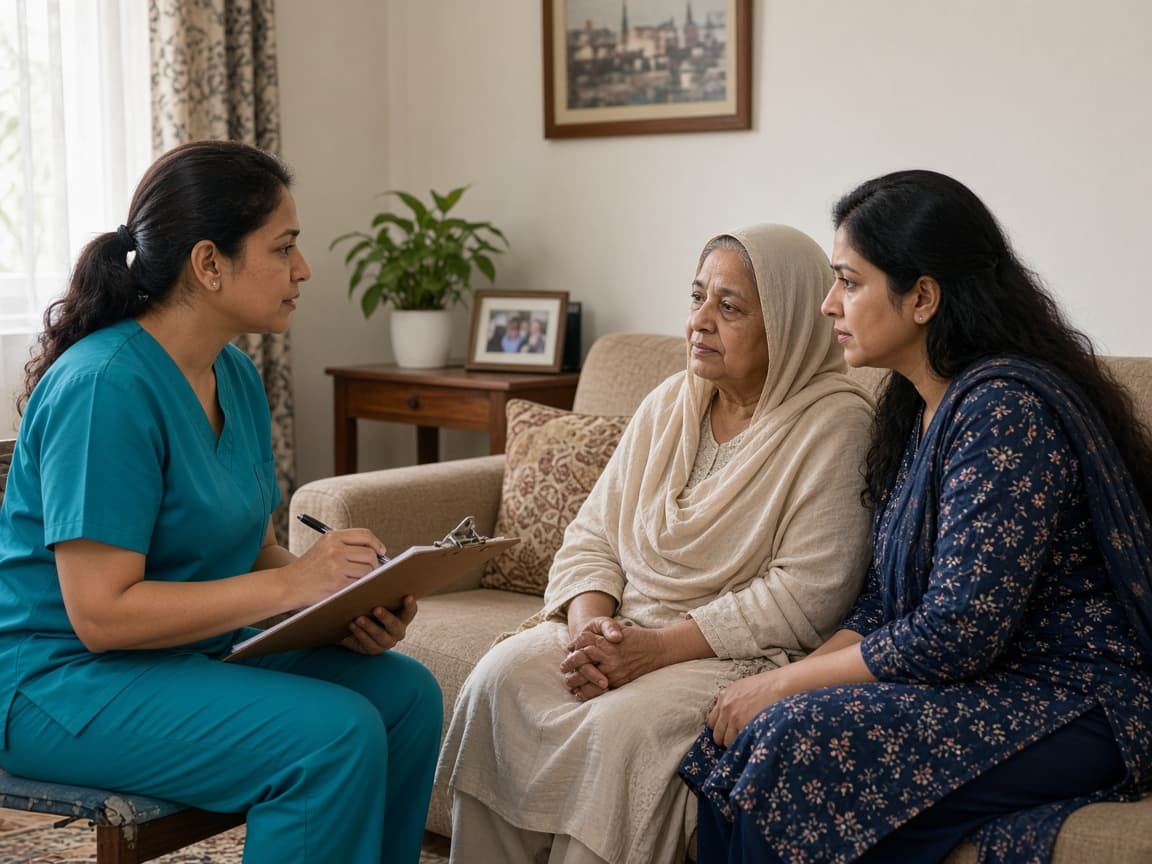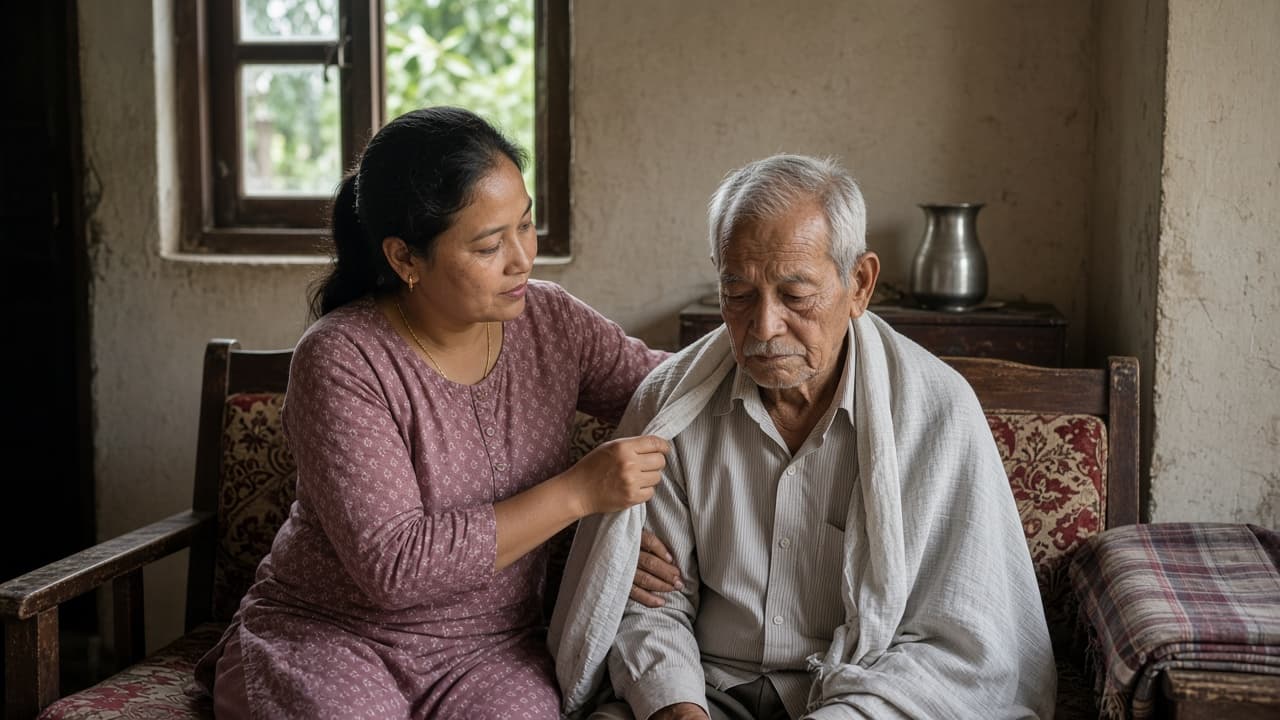
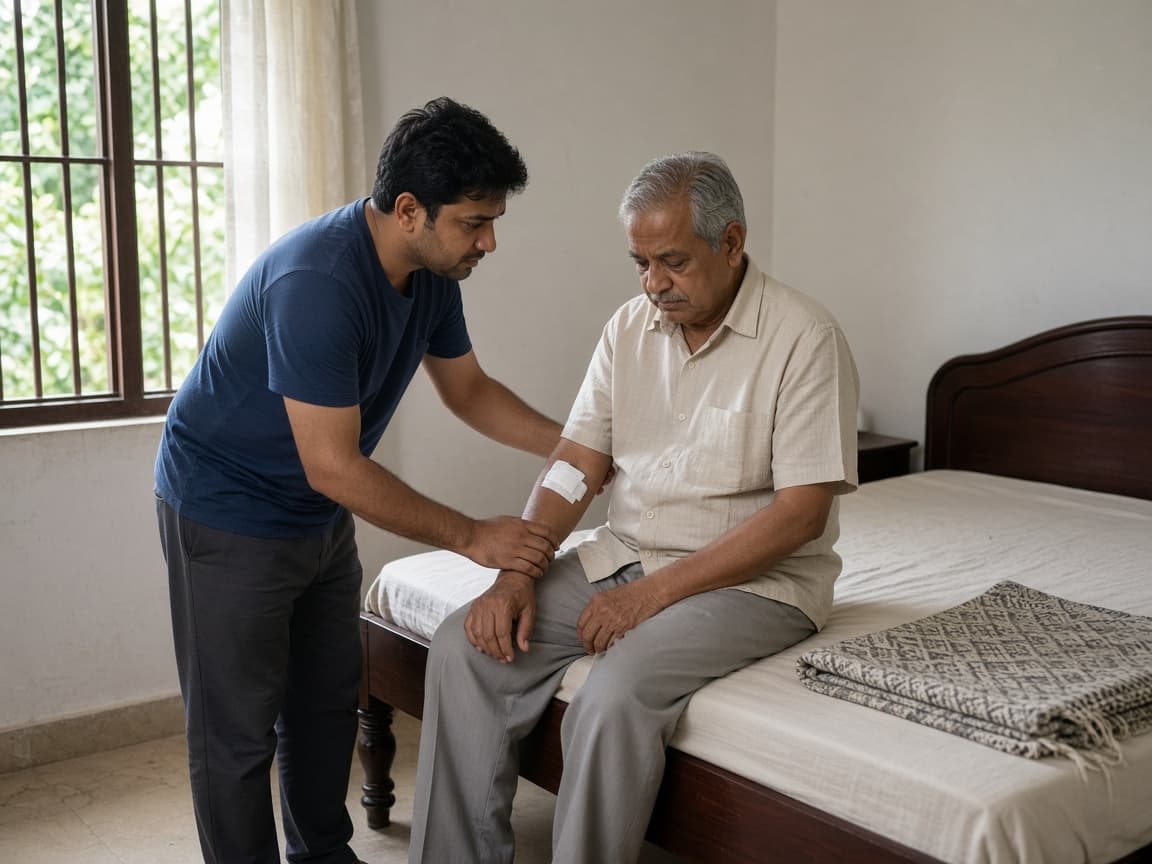
Home care in Bharatpur usually begins at a hospital door, not at the house. Bharatpur Metropolitan City, in Chitwan, is among the most populous municipalities in the 2021 census, and families come here from surrounding districts for treatment. The hard part is often the ride back: a dressing, a catheter, or a person who is weak, and then a hot room that is not next to the ward.
This page does not claim that any hospital runs a home-nursing programme, and it does not list private services or fees. It is about the questions to settle before you leave the city centre for the house where the care will actually happen.
Heat is part of the care
The Terai is hot and humid for much of the year. That changes wound care, skin care, and fluids. A dressing that was comfortable in an air-conditioned ward can soak through in a still room. Ask the discharging nurse what to do when the cover is damp from sweat rather than from bleeding, and write the answer. Basic wound care at home is the general method. The local addition is the heat: check the skin around the dressing for moisture, and do not wrap a limb tightly because the room feels messy.
An older person who is drowsy, passing little urine, or too weak to drink needs attention the same day. Dehydration at home explains the warning signs. Do not wait for a cooler evening to see if they "perk up," and do not force a large bottle of water into someone who is vomiting or too sleepy to swallow safely.
Fans and open windows help only if someone is there to notice when the person has kicked the sheet off or, in a cooler night, has become chilled under a wet cloth. Name that person.
The house may not be in Bharatpur
Many families say "Bharatpur" because the hospital is there. The bed may be in another municipality, or in a ward that floods or slows down in the monsoon. Tell the truth about the address before you agree a daily visit. A nurse who can reach the hospital area by mid-morning may not reach an outer ward by the time a catheter bag is overdue.
Care after hospital discharge is the paper you should not leave behind: medicines, the dressing plan, the follow-up date, and the danger signs. Carry enough prescribed medicine for the gap before the next clinic, especially if the house is a long ride and pharmacies along the way close early. Do not start, stop, or swap those medicines because a neighbour in the bazaar used something else.
Urinary catheter care at home has to be taught to the person who will be in the house at night, not only to the relative who sat in the ward. Ask them to empty the bag once under supervision. A closed system and a bag below the bladder still apply in a hot room. A bag left on a wet floor does not.
Choosing a home nursing service still applies if you hire help. Ask who directs the care, which tasks they will not do, and how you confirm the nurse's name. Willingness and a motorbike are not a qualification.
Movement, comfort, and the night
If a physiotherapist is part of the discharge, physiotherapy at home should be booked against the real floor and the real heat. Practice at the hottest hour, with no water and no one to steady the chair, is a fall waiting. Ask which movements are allowed this week and which must wait.
Palliative care at home, when that is the plan, needs the clinician's phone number in the house, not only in a relative's phone in another district. Pain, breathlessness, and bleeding are not problems to save for the next trip to Bharatpur.
When to visit a doctor is the split between a clinic and an emergency. If you are unsure, call the team that knows the person and ask them to say "clinic" or "emergency" in one word.
Families who then travel on to Kathmandu for another opinion should carry the same discharge note. A second city does not erase the first plan. Home care in Bharatpur works when the house, the heat, and the hours between visits are named before the car leaves the hospital.