A small clean cut can be washed and covered at home. A deep cut, a surgical wound, or skin that has already broken from pressure follows a different plan. NHS advice on cuts and grazes is simple for the small ones: clean hands, rinse the wound, cover it. The World Health Organization treats those clean hands as a basic part of stopping infection.
The plan changes as soon as the wound is large, dirty, from an operation, or getting worse.
A small clean cut
Wash your hands with soap and water. Rinse the cut under clean running water. A little mild soap on the skin around it is fine. Do not scrub the raw surface with a dirty cloth, ash, or soil. If grit is loose, water will carry most of it away. Grit that is stuck, or glass you can see, needs a clinician. Do not dig in the wound with a needle or a pin.
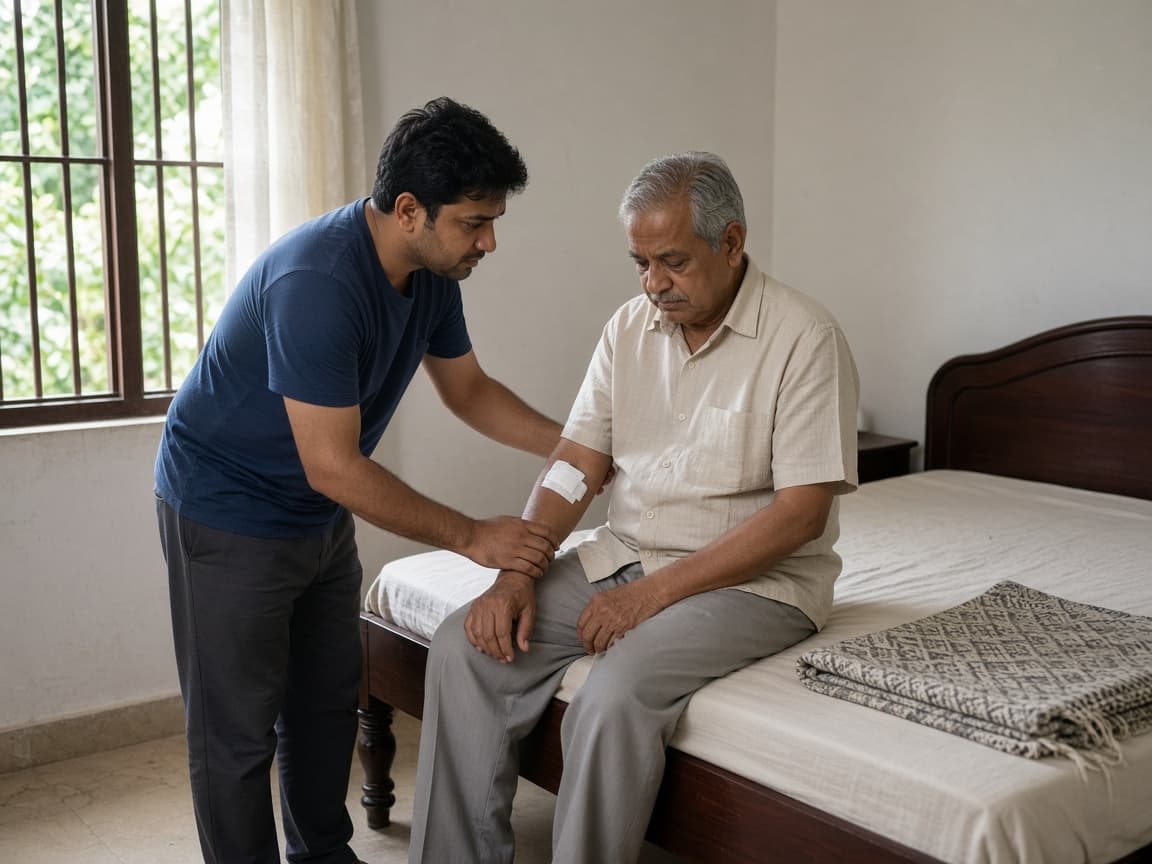
Pat dry the skin around the cut with a clean cloth or gauze. Cover it with a plaster or a clean dressing. Change the cover if it becomes wet or dirty. Wash your hands again after you finish. A dressing from a sealed packet is cleaner than a strip torn from an old sari that has been on a shelf.
Leave a small dry scab alone. Picking it because it looks ugly reopens the skin. A graze on a knee can weep a little clear fluid on the first day. Spreading redness is a different story, told below.
Ask the clinic whether a tetanus injection is due if the cut is dirty, deep, or from metal. Do not decide the vaccine schedule yourself. Animal bites and snake bites are not "small cuts." They need medical advice the same day, even when the puncture looks tiny.
What does not belong on the wound
Do not put toothpaste, ash, mud, turmeric paste, random antibiotic powders, or a neighbour's leftover capsule contents on a wound. These are common in houses and they irritate tissue, hide infection, and sometimes introduce dirt. If a clinician has named one ointment for this wound, use that one. A tube that "worked for a boil last year" is not that ointment.
Do not pour strong chemicals, kerosene, or undiluted antiseptic into a cut because the sting feels like cleaning. Pain is not proof of disinfection. Clean water is the first step NHS describes for ordinary grazes.
Butter, oil, and grease trap heat and dirt in a burn. A small burn from a kettle needs cool running water on the skin for a good while, then a clean cover, and a clinician if the area is large, on the face, or blistered badly. This article is about cuts. Do not transfer kitchen habits from one injury to the other.
Surgical wounds and deep wounds
An operation has its own instruction, written at discharge. Follow it about when the dressing may come off, when a shower is allowed, and who changes the gauze. Opening a surgical dressing at home because it looks damp can introduce infection. Post-surgery care at home walks through that discharge plan.
A deep wound, a wound with edges that gape, a wound you cannot clean, or a cut that keeps bleeding needs a clinician the same day. Stitches, glue, and proper packing are clinic or hospital work. Do not pack a wound at home with cloth, gauze, or cotton unless a nurse has trained the family on that exact wound and is still supervising. Packing pushed in by guesswork can leave material behind and can shove infection deeper.
Pressure ulcers are not kitchen cuts. Preventing pressure ulcers is about heels, the sacrum, and hips. Do not scrub a black or broken pressure area and do not treat it with the plaster you use for a finger.
Signs the wound is getting worse
Look once a day in decent light. Contact a clinician for redness that is spreading, pus, a bad smell, fever, red streaks, or a wound that opens. Pain that is increasing after the first day or two also belongs on that call. A dressing soaked with blood should be seen. Adding another layer and hoping is how a bleed gets missed.
Wash soiled cloth separately. Keep the dressing supplies in a dry tin, off the bathroom floor.
Write down when the wound happened, what you cleaned it with, and what you put on it. Honesty about the ash or the powder helps the clinician. They would rather hear it than guess why the skin looks worse.
While you wait to be seen
Keep the person sitting or lying with the injured part supported. Do not keep checking by peeling the cover every ten minutes. Offer a drink if they are fully awake and not bleeding heavily. If they feel faint, look grey, or the cloth will not stay dry because blood keeps coming, use the emergency number above and keep pressure on with a clean cloth. Do not remove a cloth that has soaked through and stuck. Add another cloth on top and keep holding.
The goal for a small cut is modest. Clean water, a cover, and a family who will notice if the skin around it turns angry. The goal for every other wound is the instruction from the person who is accountable for it.