Before a nurse comes to the house, write down the tasks you need. Then ask who will do them, which doctor is in charge, and what happens if the person gets worse that evening. The World Health Organization treats clear responsibility as part of patient safety. A kind voice on the phone is not that clarity.
This page names the questions to ask. It leaves agencies and prices alone. Services differ from one district to another. A hospital discharge desk, the treating doctor, or a nurse you already trust can point you to a named person. You still ask the questions below.
What you are hiring them to do
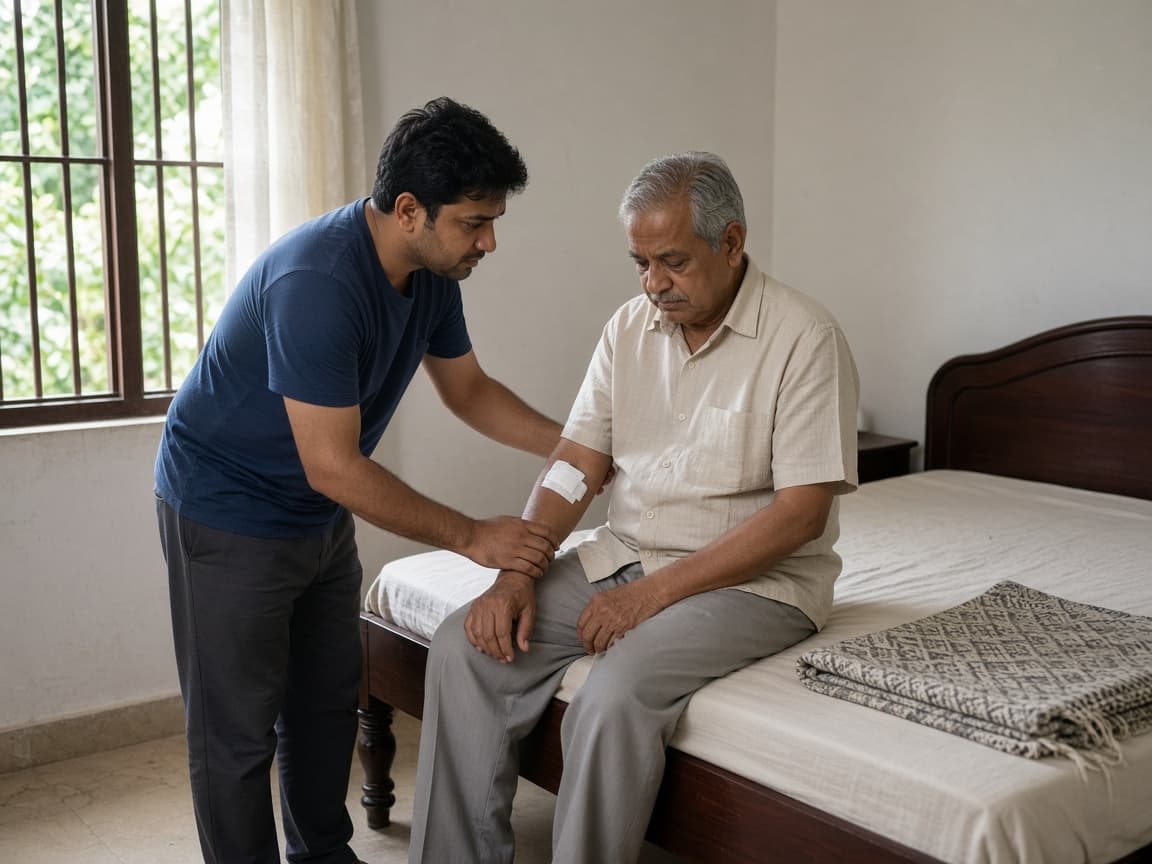
Say the tasks out loud. A dressing. A catheter. An injection. Help with a turn. Watching blood pressure with the machine you were given. Company and cooking may be what the family actually needs, and those are not nursing. Understanding home nursing separates the two. If you hire a nurse for clinical work and then ask them only to cook, you have misunderstood the visit. If you ask a cook to pack a wound, you have crossed a line.
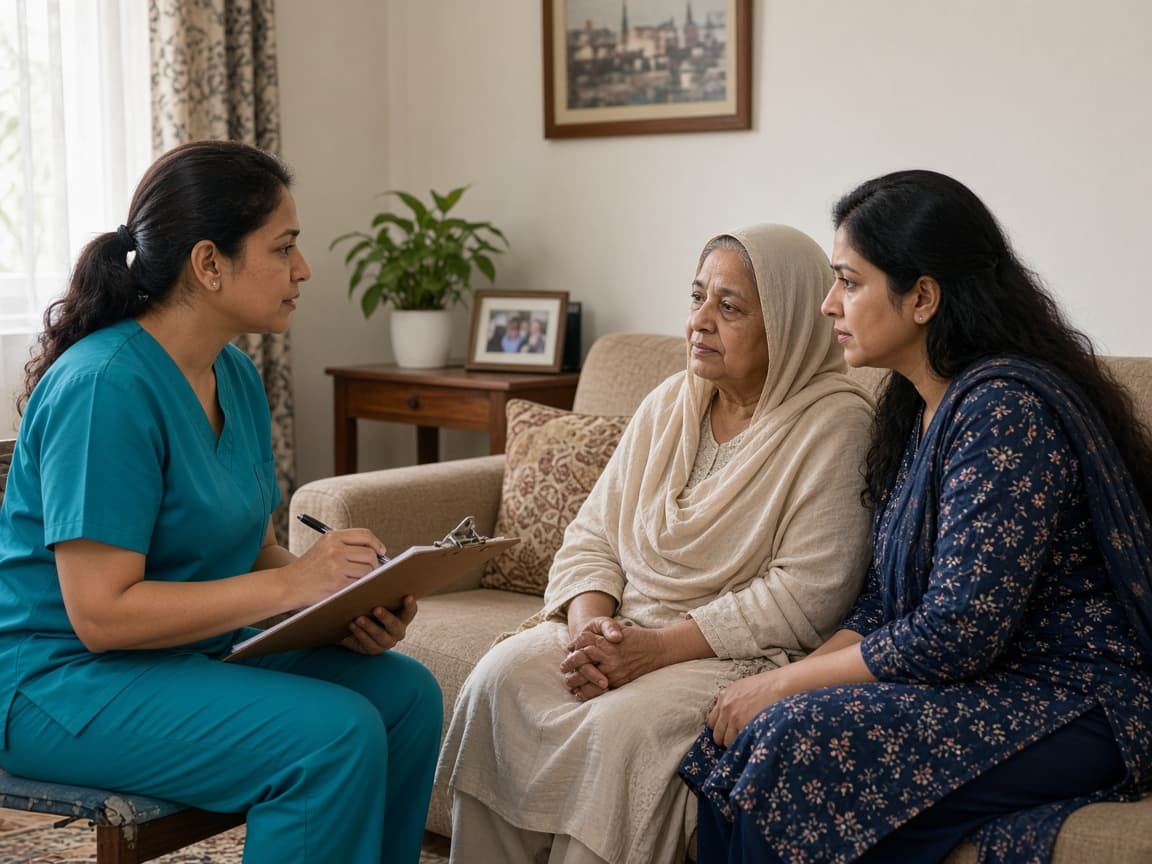
Ask which tasks the nurse will do on this visit, and which tasks the family must do between visits. Ask what training the family will get, and what they must not attempt. A useful answer names the task. "We will manage everything" is not an answer.
Ask how long the visit is, and whether the same nurse returns. Handover between two nurses should include the wound, the medicines, and the phone number for the doctor. If a stranger arrives for the second visit, you are allowed to pause and confirm who they are before they open a dressing.
Who directs the care
Home nursing follows a clinician's plan. Ask which doctor is directing it, and how the nurse reaches that doctor. A nurse who will "decide the antibiotics if needed" without a prescriber is outside safe practice. Reporting a fever is their job. Starting a new drug on their own is not.
If the person has just left hospital, the discharge note is the script. Post-surgery care at home starts from that paper. Show it to the nurse. Ask them to tell you which lines they will follow, especially about the dressing, the shower, and walking.
Rehabilitation, such as walking practice after a fracture, may need a physiotherapist. A nursing visit does not automatically include that work. The World Health Organization describes rehabilitation as care aimed at functioning. Ask who does that part. Do not assume the nurse's visit includes exercises unless someone qualified has prescribed them.
If the person gets worse
Ask this before you need it. If breathing worsens, if the wound opens, if pain escapes the prescribed plan, what will the nurse do today, and what should the family do when the nurse has left? You want a name and a number that works after dark. "Go to hospital" can be the right answer. It should be said in advance, with which hospital. A panic is a bad time to learn the name.
Ask what the nurse will not handle. Oxygen changes, a seizure, heavy bleeding, and a person who has collapsed are not problems to watch until morning. The family should hear that plainly.
Write the agreed plan on the same page as the medicine list. The next relative on duty should not have to reconstruct it from memory.
How to confirm who is in your house
Ask for the nurse's full name, and the name of the person or organisation that sends them. If you have any doubt, call that organisation on a number you looked up yourself. Match the name to the person at the door.
You do not need to be rude. "The hospital asked us to confirm who is visiting" is a complete sentence. A genuine nurse will have heard it before. Someone who refuses to give a name, mocks the question, or asks to be paid only in cash with no record, should not start the task. Payment arrangements are between you and the service. This page will not invent a fair price. It will say that no receipt and no name is a bad pair.
Watch the work once, without hovering in a way that breaks sterile steps they have explained. They should wash their hands, read the discharge note, and tell you what deteriorated looks like. A visit that is only a social call, with no look at the wound you hired them to see, is a visit to question.
After they leave
You should know the next visit time, the danger signs, and what was done. A line in the home notebook is reasonable: date, name, task, anything new. Keep that notebook with the clinic folder.
If the nurse and the doctor disagree, call the doctor who is responsible. Do not average two opinions and invent a third dressing routine. If the fit is wrong, you can stop and ask the hospital or the doctor for another name. Loyalty to a visitor matters less than the person's breathing, wound, and pain.
The same questions change shape with the city. Traffic and stairs dominate home care in Kathmandu. Distance inside the municipality dominates Pokhara. Lalitpur, including Sanepa, is not a Kathmandu ward. Ask for the ward either way. A service that cannot repeat your address has not agreed to come.