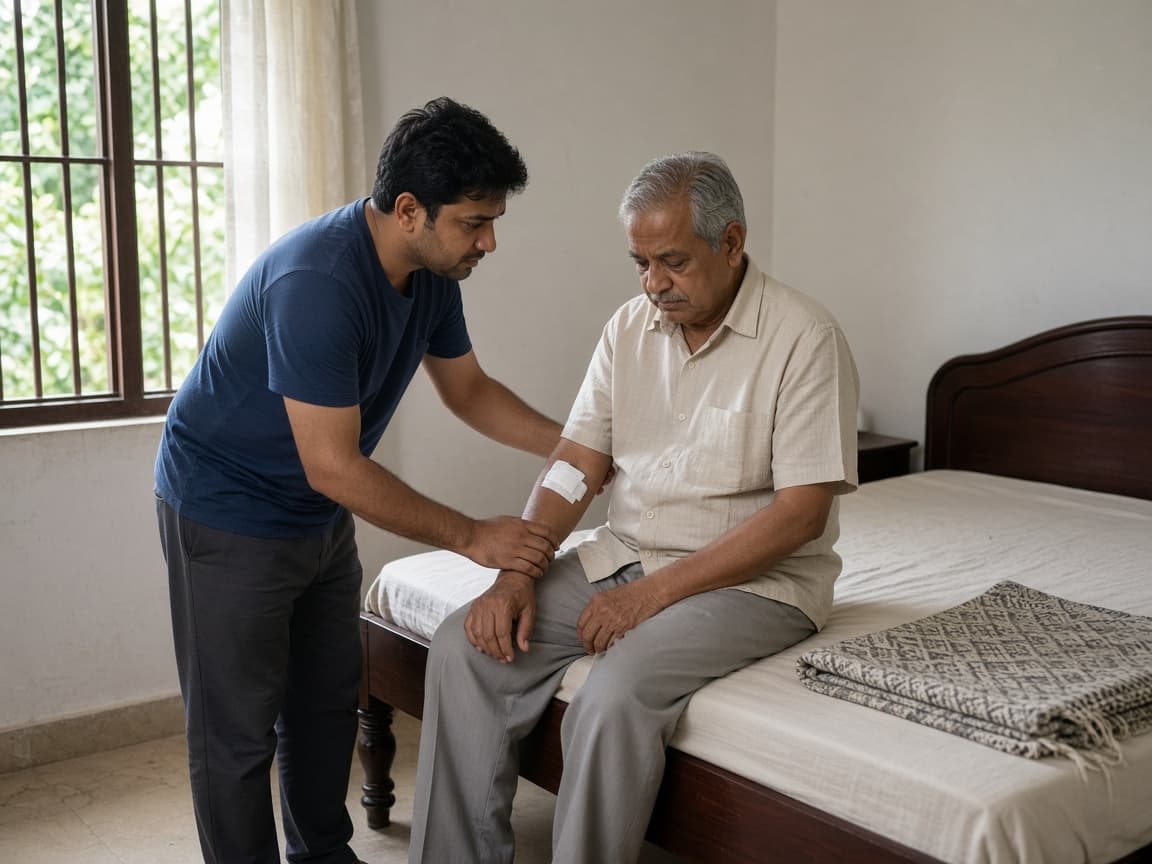

The plastic bag on the bed holds a stack of papers, a new strip of tablets, and the clothes the person wore on the way in. A relative is now in charge of the night. The World Health Organization treats clear information at discharge as part of patient safety, because this is where instructions get lost and medicines get doubled. The safe plan is the one written on the discharge paper: which medicines changed, when to be seen again, who to call, and what the wound should look like.
Read it before you leave the ward if you can. A corridor is a bad place to discover that nobody knows the follow-up date.
Medicines that changed
Hospitals often stop some tablets and start others. The names may differ from the brands you had at home even when the drug is the same, and sometimes the drug really has changed. Reconcile the new strips with the old ones so nobody gives both.
Put every medicine on the table. For each one, ask: is this still to be given, has it been replaced, or has it stopped? If two strips share an ingredient, giving both can double the dose. A pharmacist can check that with you if the ward is rushing you out. Mark the stopped ones and store them away from the current tin, or return them, so a helpful relative does not "finish the old packet" next week.
The habits that keep the right strip with the right person are in safe medication use at home. Do not restart a medicine the hospital stopped because the person "always took it," and do not stop a new one because it was not in the house before. If a dose is unclear, call the number on the paper before the evening round of tablets.
Write allergies on that same paper if they are missing. Say them again at the pharmacy when you buy anything new.
The follow-up, the night number, and the wound
Find the follow-up date and where it is: the same hospital, a local clinic, or a test that must happen before the visit. If the date is blank, ask before you go through the gate. Transport in Kathmandu or outside the valley is hard to invent on the morning of a missed appointment.
Ask who to call at night, and write the number in large digits. A switchboard that does not answer is a fact you want to learn while you are still in the building, so you can ask for another contact. Ask which problems should come back to emergency care and which can wait for that number in the morning.
Ask what the wound should look like. A little redness at the edge and a small amount of old blood on a dressing may be expected. Spreading redness, pus, a new smell, or bleeding that soaks the dressing should be reported. Do not invent a dressing routine that contradicts the paper. If the stay was after an operation, the practical wound, walking, and pain points are in post-surgery care at home.
Ask how much walking is wanted, which chores to skip, and when washing the area is allowed. Write the answers on the paper before you leave.
A nurse visit that was promised
Ask before leaving if a nurse visit was promised. Who is coming, on which day, and for what: a dressing, an injection, a catheter, or a check of medicines? If the family is arranging nursing themselves, ask what skill is needed before anyone is hired.
A promised visit that does not arrive should be chased the same day if a dressing or an injection was due. Do not leave a wound open because the nurse was late, and do not ask an untrained relative to give an injection they have never been shown.
At home, put the discharge paper where the night carer can see it, with the medicine list. Tell every adult in the house which tablets have stopped. The first evening is when two conscientious people both give the "right" dose.
If something on the paper contradicts what a doctor said on the round, ask which one to follow before you leave. A household should not have to choose between a verbal remark and a printed list at midnight.