When to see a doctor is usually the evening question. Can this wait until morning, or should someone be on the way to hospital now? The split is practical. Some problems need emergency care immediately. Others need a clinician today or tomorrow, and will not be helped by a night of watching from the doorway.
The lists below are short on purpose. They are the patterns that change what a family should do next.
Emergency now
Call emergency services or go to the nearest emergency department for:
- Chest pain or chest pressure, especially with sweat, nausea, or breathlessness. More on that pattern is in heart attack symptoms.
- Sudden weakness or numbness on one side, a drooping face, trouble speaking, sudden loss of vision, or a sudden severe headache. Those stroke signs, including ones that fade, are in stroke warning signs.
- Severe breathlessness, or blue or grey lips.
- Heavy bleeding that will not slow with direct pressure, or bleeding in pregnancy.
- A seizure, or a collapse with abnormal breathing.
- A child who is hard to wake.
Do not stop for tea, a second opinion in the family group chat, or a trial of a home remedy. Do not give aspirin for a suspected stroke or heart attack unless a clinician who is caring for this episode has told you to. Do not give food or drink to someone with stroke signs or to someone who is too drowsy to swallow.
If the sick person is the only driver, find another way. A neighbour, a relative, or the ambulance is safer than them driving themselves through chest pain or weakness.
Clinic today or tomorrow
These can usually go to a clinic the same day or the next, sooner if the person is worsening:
- A fever that is not settling, or a fever in a baby. While you arrange that care, use light clothing, fluids if they can drink, and the fever medicine already advised.
- A wound that looks worse: more redness, more pain, pus, or a smell that is new.
- New confusion in an older person, even if there is little or no fever.
- Blood in the urine or blood in the stool.
- Unexplained weight loss that continues over weeks.
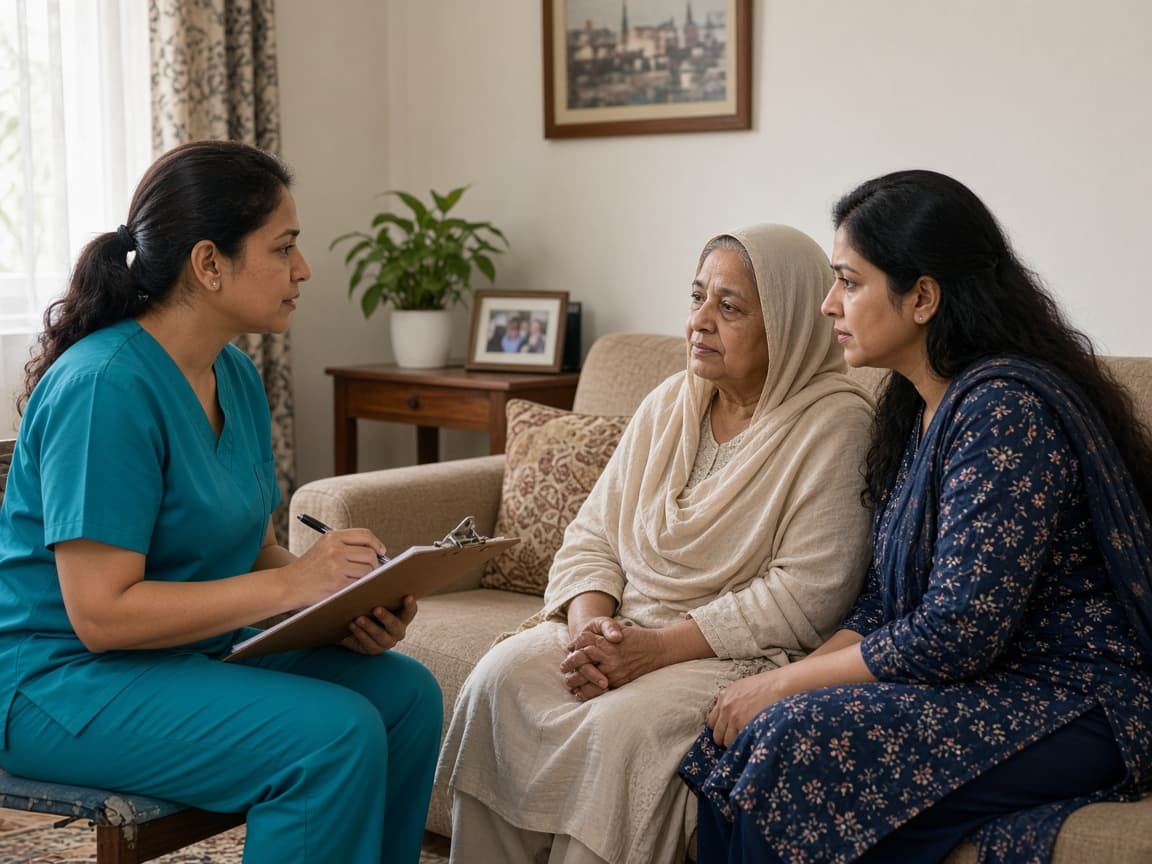
Call the clinic and say what you are seeing, how long it has lasted, and what medicines the person takes. If they tell you to come straight to emergency care instead, follow that. A receptionist or a nurse who knows the history may move a "clinic soon" problem onto the emergency list because of pregnancy, chemotherapy, a recent operation, or a long-term illness.
How to decide in the grey minutes
Worsening is its own signal. A cough that was manageable at noon and is causing a struggle to speak by evening has changed category. So has a headache that becomes the worst of someone's life, or a wound that was clean yesterday and is red and hot today.
Write three lines before you leave, if you can do it quickly: when it started, what has changed, and the medicine names. Take the discharge paper if they have just come out of hospital. Take a phone number for the relative who knows the history, in case you get separated at the gate.
Pregnancy changes the pace. Bleeding is on the emergency list. A severe headache, a sudden swelling of the face or hands, or a baby who is moving much less than usual should be assessed the same day. Say how many weeks pregnant the person is, if you know.
An older person who is newly confused, newly unable to stand, or suddenly much sleepier than yesterday should be seen soon, even when the thermometer is ordinary and nobody can name the illness yet. Phone the clinic if you are stuck between the two lists. Describe breathing, alertness, and whether they are passing urine. Ask them to say "come to clinic" or "go to emergency" in plain words, and write down which hospital they mean.
If you are unsure, and the symptom is on the emergency list, treat it as an emergency. A clinician can tell you afterwards that it was reflux or a migraine. You cannot reliably make that call from the sofa while the person is sweating and frightened.
After an emergency visit, ask what to watch for overnight and which hospital to call if it returns. After a clinic visit, ask what would mean you should not wait for the next appointment. Put that answer on the same page as the medicine list, where the night carer will see it.