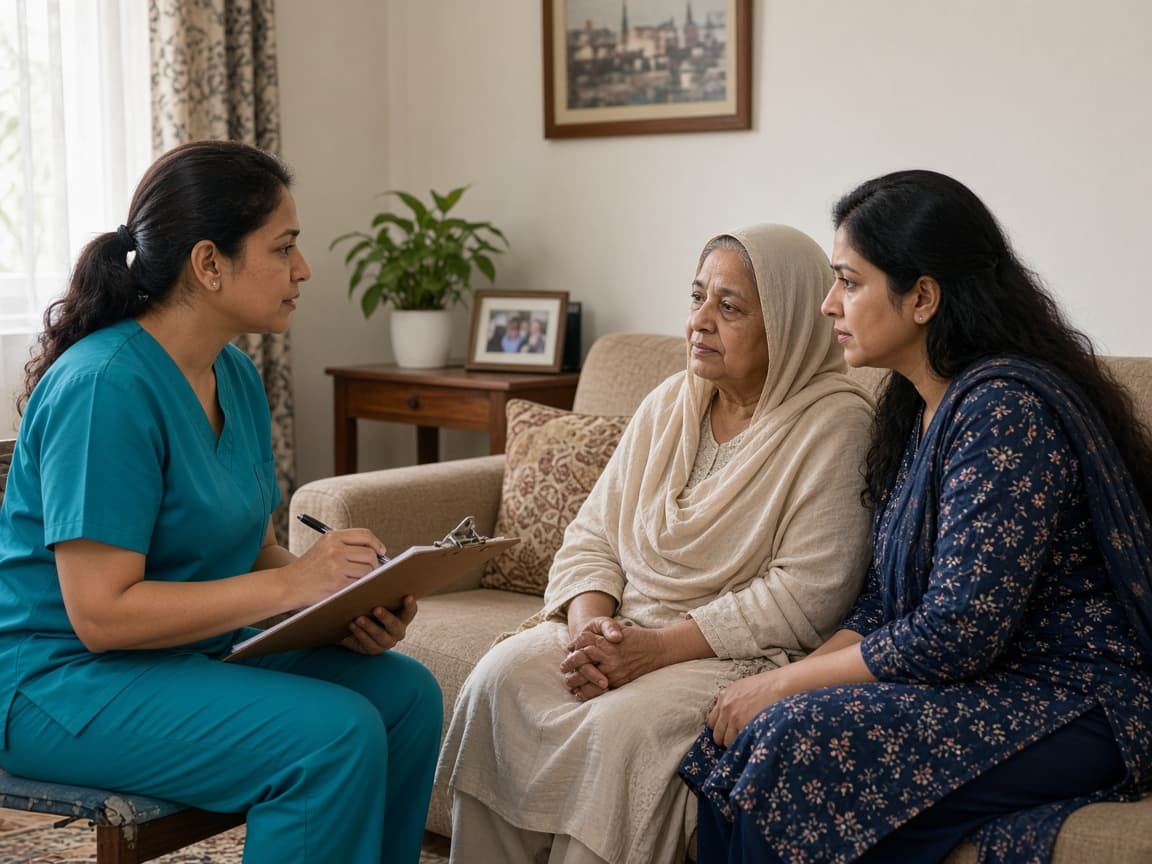

Home care in Pokhara is a travel problem as much as a nursing problem. Pokhara Metropolitan City is one of Nepal's largest municipalities in the 2021 census, and it covers a wide stretch of hills and lakeside settlements, not a single compact bazaar. A family that says "Pokhara" may mean a lane near the lake or a house on a slope that takes much longer once the road narrows. The nurse, the physiotherapist, and the ambulance all need the second version.
This page will not name a service or invent a fee. It tells you what to pin down so a visit is safe and so you know when the city name is hiding a delay.
Say where the house really is
Give the ward, the road, and a landmark a driver can use after dark. Ask the person coming to repeat the travel time back to you for the hour of the visit, not for a quiet morning. Monsoon rain changes hill roads. If the usual track is slippery or blocked, say so before someone promises a daily dressing.
Stairs matter here in a particular way. Many houses step up from the road, and the person who needs care may sleep above the ground floor. A therapist who plans walking practice on a flat corridor has not seen a stone stair in the wet. Physiotherapy at home should include a look at the actual path to the toilet and the door. The World Health Organization describes rehabilitation as help with everyday activities. The everyday activity in this house may be the stair, not a exercise list from a clinic.
If the person has just left hospital, read care after hospital discharge before the ride home. Carry the prescribed medicines for the days you might not get back to a pharmacy, and write the danger signs while a nurse is still in front of you. A lakeside hotel district and a family house in an outer ward do not have the same evening options. Do not assume they do.
What the visit has to cover
Ask which tasks are nursing and which stay with the family. Choosing a home nursing service is the full list: who directs the care, what happens if the person worsens after the nurse has left for another ward, and how you confirm the name at the door.
Urinary catheter care at home does not become optional because the ride was long. If a nurse can come only once a day, the family still needs to know bag position, handwashing, and the rule that a tube which has fallen out is not pushed back in. Ask them to watch you do the emptying once, so the evening is not the first attempt.
Basic wound care at home needs the discharge instruction and enough dressings for the gap between visits. If rain delays the next visit, you should already know whether the family may reinforce a cover or whether the wound must be seen. Guessing a new ointment because the nurse is stuck on the road is how a clean wound gets worse.
Dementia care at home and palliative care at home both depend on one person who can stay. In a city where younger adults are out at work or away, name the night sitter before you discuss a clinical schedule. The World Health Organization notes that families provide much of the daily support for older people. That support has to be a named person, not a hope that someone will turn up.
Cooler months in the hills are a different risk from Terai heat. An older person who is still in bed needs covers and a warm wash planned on purpose. Do not leave the window plan to whoever arrives.
When the road is the emergency
Decide the hospital before the evening you need it. Ask the treating clinician which emergency department should see this person, and how you describe the road to a driver who does not know the ward.
A nurse who cannot reach you is not a backup plan. Ask who you call instead, and whether that person is in Pokhara or is advising you to move the person. Write it down.
Families arranging the same kind of care in Kathmandu face traffic inside a dense valley. The Pokhara mistake is different: treating a large, hilly municipality as if every house were beside the lake. Name the ward. Then ask whether the visit is still realistic tomorrow morning if it rains.