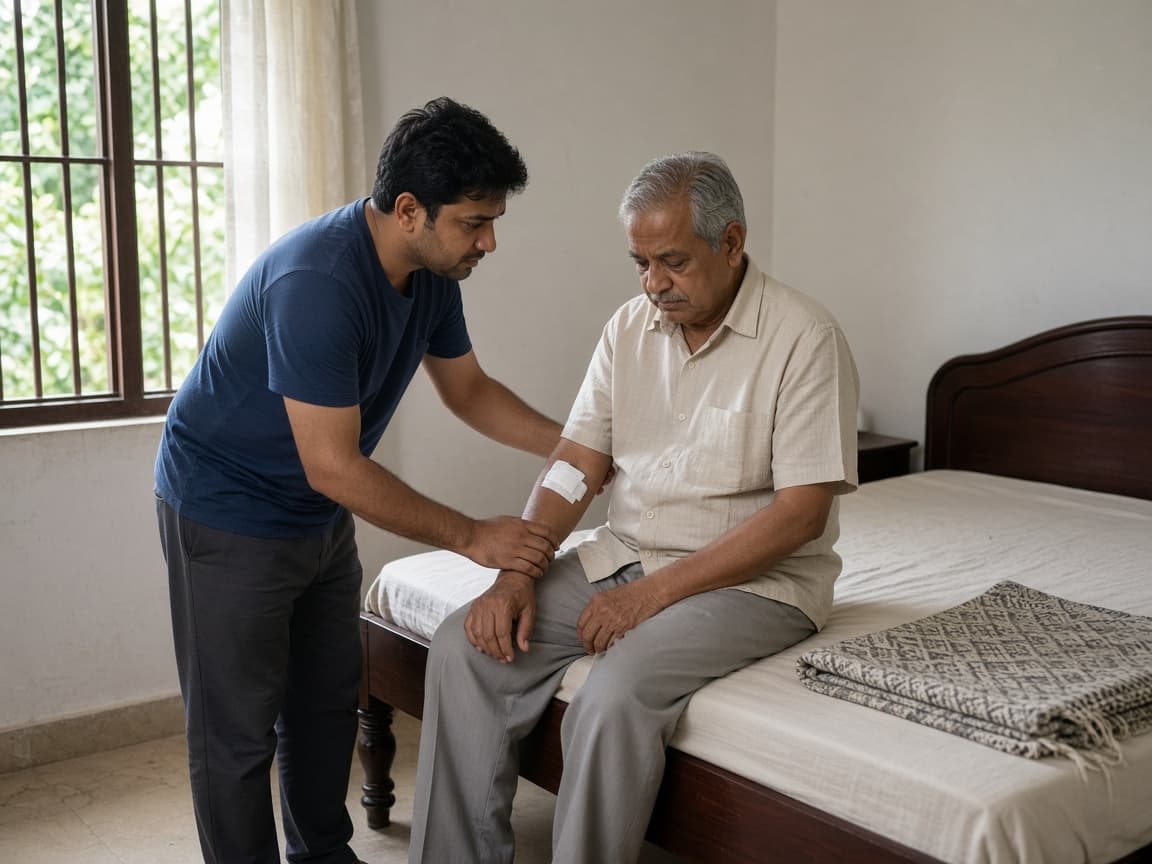

A urinary catheter is a tube from the bladder to a drainage bag. At home, the system stays closed. The bag stays below the bladder and off the floor. NHS guidance on urinary catheters and the World Health Organization’s infection prevention work agree on the unglamorous parts: clean hands, no unnecessary opening of the tube, and a call for help when the picture changes.
A family can empty a bag and wash around the tube if a nurse has shown those steps. Inserting a catheter, flushing it, and putting one back in are not family experiments.
The bag and the tube
Hang or stand the bag below waist level so urine drains downward. Urine flowing back toward the bladder raises the chance of infection. On the bed, the bag can hook on the frame. It should not lie on the sheet under the person's leg, and it should not sit on the floor where dust and feet meet the tap. When they walk, the bag comes along below the bladder, held so the tube does not yank.
Secure the tube to the thigh with the strap or tape the nurse provided, with a little slack. A tube under tension pulls on the bladder neck and hurts. Check that they are not lying on the tubing. A kink stops the flow, the bladder fills, and pain follows.
Look at the urine when you empty the bag. Pale or the colour the nurse described is the baseline. Cloudy urine, clots, a new red colour, or a smell that is much worse than yesterday goes in the notebook. Some smell is normal. A sudden change with fever is not something to rinse away.
Empty the bag into a toilet, or into the container the nurse specified, before it is tight and heavy. Wash your hands before you open the drainage tap and after you close it. Do not let the tap touch the toilet rim. Close it fully so the next hour does not leak into a shoe.
Hands and the closed system
Wash with soap and water before and after any contact with the catheter. The WHO hand hygiene campaign is the standard. Cover the hands, including the wrists. A quick pass under the tap leaves them dry. If you use gloves for emptying, throw them away and wash again. Gloves do not make a dirty tap clean.
Do not disconnect the bag from the tube for convenience. Every opening is a route for germs. Do not flush the catheter with water, saline, or anything else unless a nurse has taught that exact step and is still supervising the plan. Do not put powder, oil, or toothpaste where the tube enters the body.
Wash the skin around the entry with mild soap and water once a day, or as the nurse showed, and pat dry. For a tube that enters through the urethra, wash outward, away from the body, so you are not pushing germs inward. Women and men were shown slightly different cleaning in hospital. Repeat what you were shown. If you were not shown, ask for a demonstration before you invent one.
The leg bag and the night bag, if you have both, are changed on the schedule the service gave you. Keep spare bags supplied by them. A homemade join with tape is not a closed system.
Comfort and dignity
The tube is embarrassing. Close the door. Keep the bag covered with a cloth if they are sitting with guests, without folding the tube shut. Offer fluids unless a clinician has set a fluid limit. Drinking less to "make the bag stay empty" raises the chance of blockage and infection.
Constipation can press on the catheter. Mention a hard, painful abdomen and no stool, along with poor urine flow. Do not start a strong laxative from the shop on a guess.
Sex, bathing, and clothing questions should go to the nurse who knows which catheter this is. Ask before the first bath at home. A shower the nurse has allowed is a different situation from sitting in a tub with the bag submerged.
Understanding home nursing is why this task was given to a nurse in the first place. Preventing infections at home is the handwashing and linen around it. The catheter is a standing invitation to infection. Careful habits cut the risk. They do not remove it.
What to say when you call
Have the notebook ready. When the catheter was put in. When the bag was last emptied. Whether urine is flowing now. Any fever, shivering, pain over the bladder, or blood. Whether the person is confused, which in an older adult can be the first outward sign of a urine infection.
If the tube has come out and they cannot pass urine, say that first. A full bladder is painful and can damage the kidneys if it stays blocked. The family still does not push the tube back in. You can cover the person, keep them comfortable, and get to the service or the hospital you were told to use.
A sore at the entry site that is spreading, black, or foul should be seen. Do not pack or ointment the opening with a household product while you wait, unless the nurse already named the product.
Bring the discharge paper and the spare supplies to any urgent visit. The next clinician should see the same plan you have been following, including what you were told not to disconnect.