Home care in Dhangadhi is shaped by distance. Dhangadhi, in Kailali, is a major city of Sudurpashchim. Families here are often sent to hospitals farther east for a specialist opinion and then come home to heat, a ward that may not be in the city centre, and a follow-up date that is not a short taxi ride. A house people still call Attariya needs that landmark, not only the word Dhangadhi.
This page will not invent a local nursing roster or a fair price. The World Health Organization's point on patient safety is simpler: someone must be clearly responsible, and the family must know what to do when that person is not in the room.
Do the planning before the ride
Care after hospital discharge is the whole job if the hospital is far. Before you leave, you should have:
- The medicines, in the prescribed form, for as many days as the clinician told you to carry. Do not plan to "find the same strip in Dhangadhi tonight" unless they told you that you can.
- The dressing or catheter supplies for the gap before the next professional visit.
- The danger signs, written, including which ones mean you return to that hospital and which ones mean the nearest emergency department.
- A phone number that answers after you are home, not only a ward extension that closes.
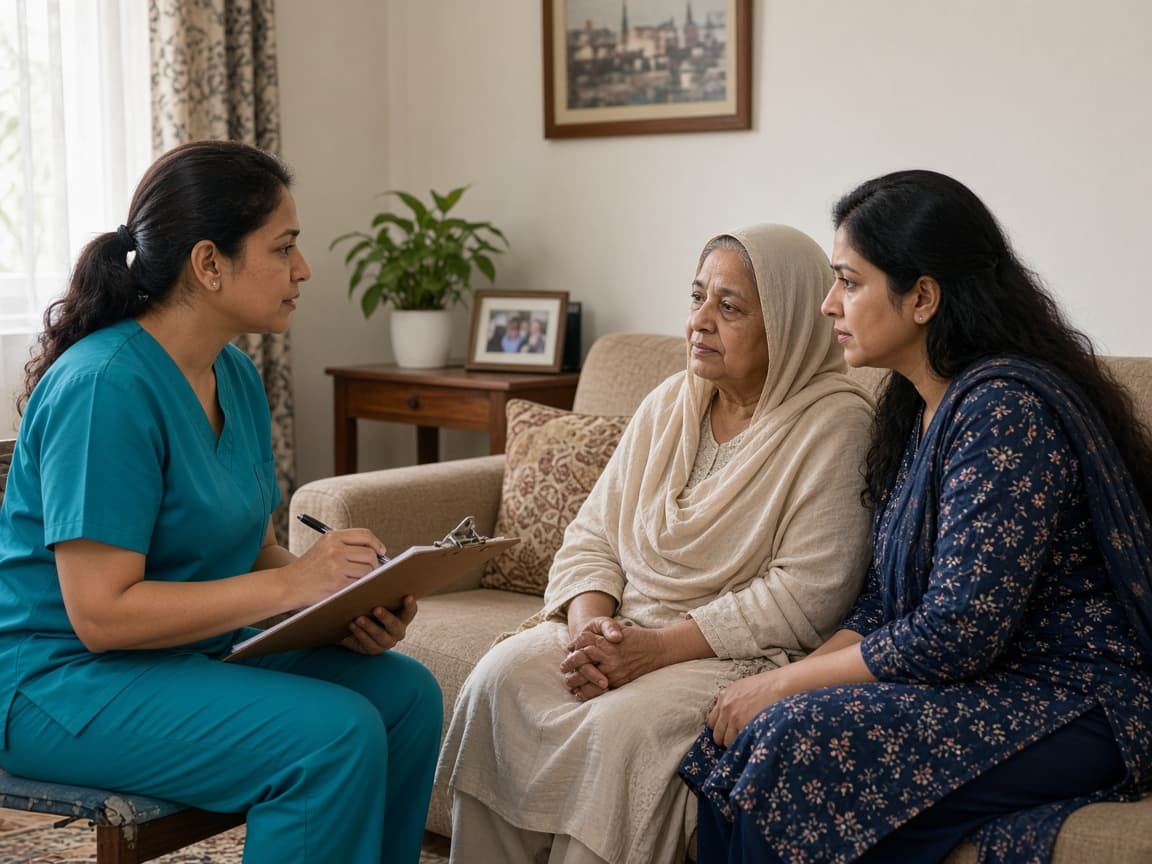
Read those lines back to the nurse. If the person going home is exhausted, a second relative should hear them. The National Statistics Office notes that a large share of municipal residents were born in another district. The person who knows the Dhangadhi roads and the person who understood the doctor may not be the same relative. Put them in the same conversation.
What the house has to handle
Urinary catheter care at home cannot wait for the next trip east. Teach bag position, emptying, and the rule against pushing a fallen tube back in. Fever, no urine, blood in the urine, or pain over the bladder is a same-day call.
Basic wound care at home follows the discharge note through the hot, dusty months. Ask what a sweat-soaked cover means. Keep gauze dry. Do not accept a market powder as a substitute for the named dressing.
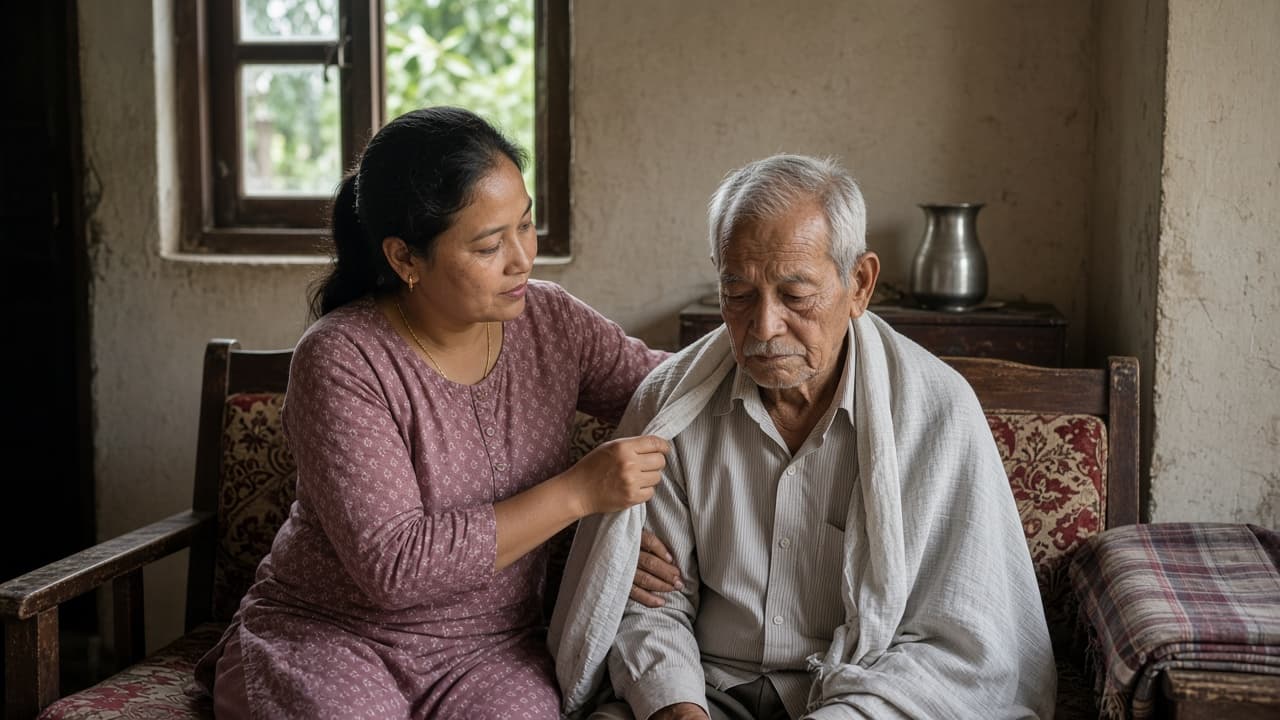
Dehydration at home is a standing risk in Kailali heat, especially for an older person who is weak after hospital. New drowsiness, a dry mouth they cannot fix by drinking, or very little urine needs a clinician the same day. If they cannot swallow, that is an emergency, not a home remedy.
Choosing a home nursing service still applies if you hire someone locally. Ask whether they can reach your ward more than once, who their directing clinician is, and how you confirm their name. A single introduction at the bus park is not a care plan.
Physiotherapy at home should be prescribed, not copied from a video, and it should match the courtyard or the room you have. If no therapist can come, ask the discharging hospital what the family must not attempt. Doing nothing unsafe is better than improvising a stair exercise.
Palliative care at home, if that is the agreed goal, needs the comfort medicines and the clinician's number in the house before you travel. Do not leave those decisions for the evening you arrive tired.
When you cannot get back to the same hospital tonight
Ask this in daylight: "If they worsen in Dhangadhi tonight, where do we go?" Write the place. A plan that only says "come back to us" is incomplete when the ride is long and the person is too unwell to make it.
Ghorahi raises a similar distance problem inside a large valley, but it is not your backup address. Home care in Dhangadhi is decided mostly before the vehicle leaves the hospital: supplies, danger signs, and a night plan a local relative can follow.