Home care in Birgunj has to work in heat, in a dense city, and often after a hospital stay that happened somewhere else. Birgunj Metropolitan City, in Parsa, is one of the six most populous municipalities in the National Statistics Office account of the 2021 census. Families here also live close to the Indian border. That geography does not create a special medical rule on this page. It does mean you should not assume a same-day trip to a hill hospital, and you should not invent a cross-border shortcut when the person worsens.
This is a family guide. It does not recommend a clinic across the border, name a local agency, or set a price.
Write the plan in the language of the night
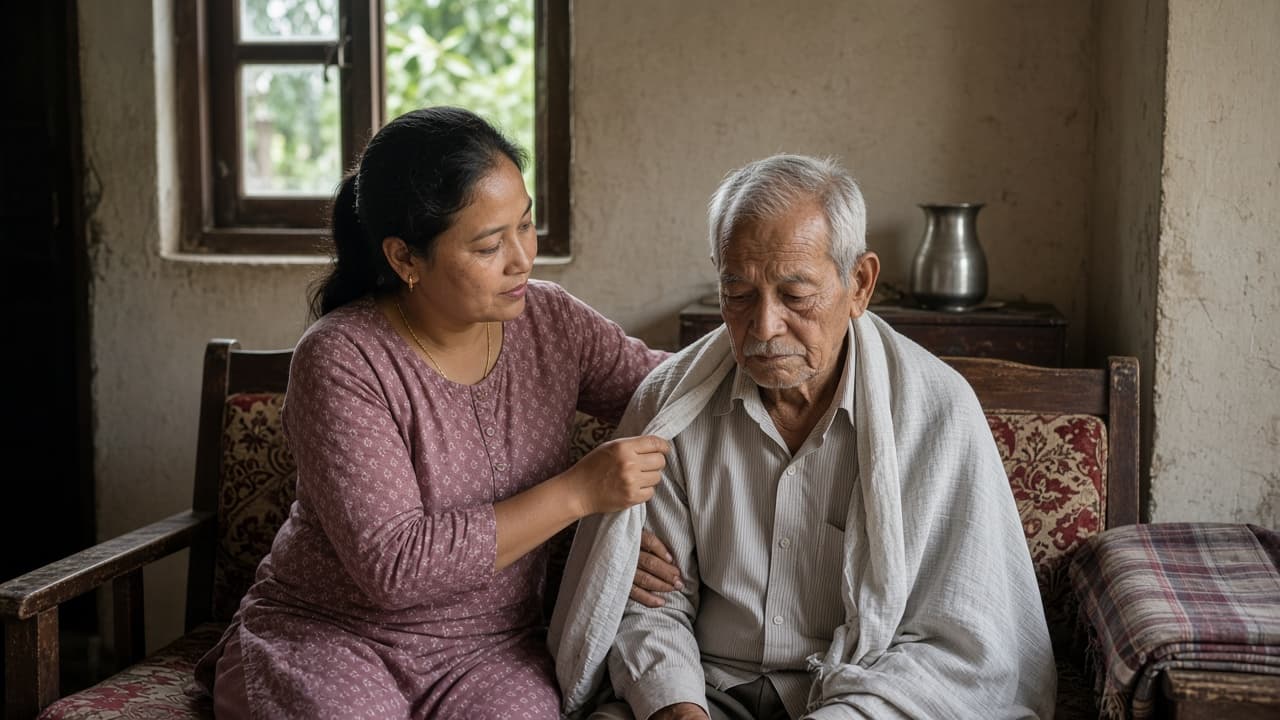
The person who sat with the doctor may not be the person who is awake at 2 a.m. In many Birgunj households that night person is more at ease in Bhojpuri than in the English or Nepali of a discharge slip. Ask the nurse to say the danger signs aloud in the language that person will use, and write them that way. A plan nobody can read at night is not a plan.
Care after hospital discharge is the paper to bring into the house: medicines, dressing changes, food and fluid limits, and the date you must be seen again. If the hospital was in another city, carry enough of the prescribed medicine for the journey and the first days back. Do not replace a prescribed tablet with a shop product because the strip looks similar.
Urinary catheter care at home should be demonstrated to the night caregiver. Heat does not change the rules. The bag stays below the bladder and off the floor. The system stays closed. If the tube comes out, nobody pushes it back in. Ask what "no urine for this many hours" means for this person, and write the number you were given rather than borrowing one from a neighbour.
Heat, wounds, and water
A damp dressing in humid weather is common. Ask whether sweat on the cover means you change it or whether you call. Basic wound care at home forbids household powders and ash. That prohibition matters when a shop in the market offers a jar as a favour. Decline it unless the clinician named it.
Dehydration at home is easy to miss when everyone feels hot. An older person who is newly sleepy, dizzy on standing, or passing little urine needs a clinician the same day, faster if they are too drowsy to drink. Do not "correct" it with extra sugar drinks or by stopping a prescribed fluid limit. If the clinic has set a fluid limit, for example for heart or kidney disease, follow that limit and call them rather than improvising.
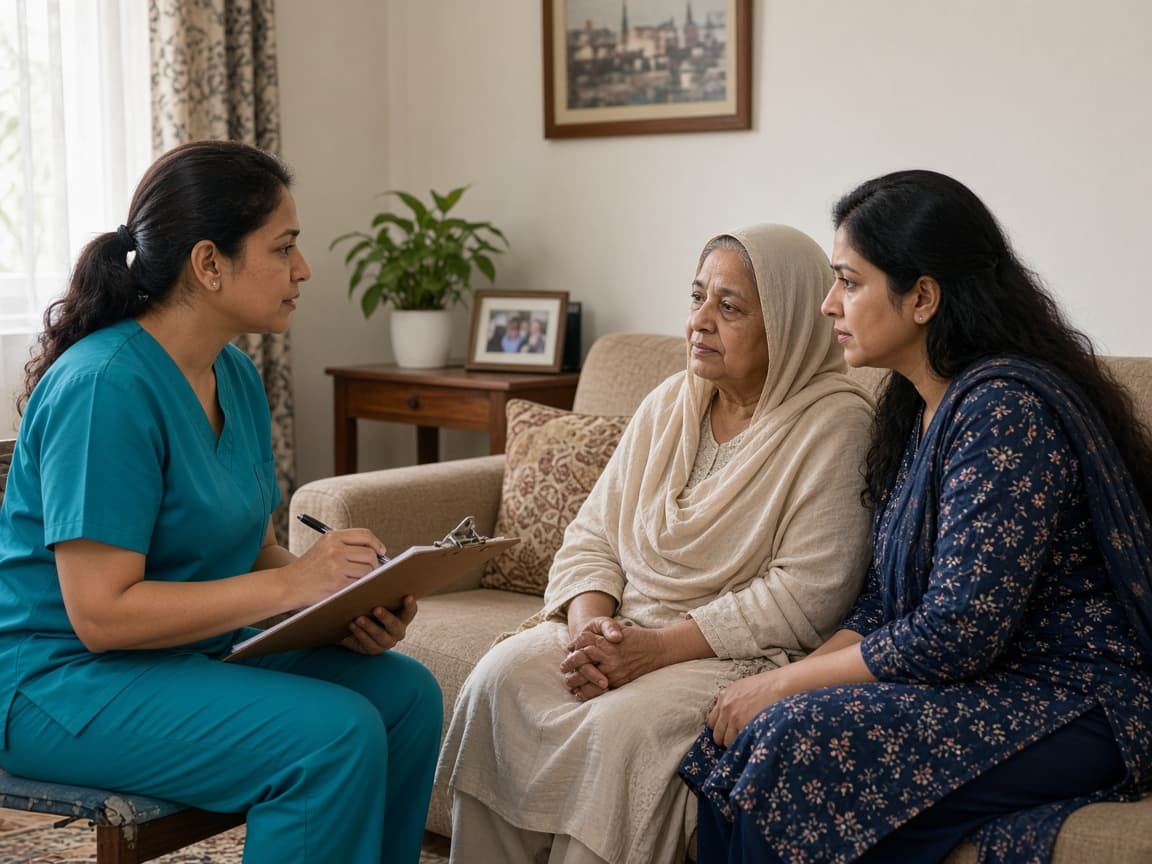
Choosing a home nursing service is how you hire help without confusing kindness with a qualification. Ask which doctor they report to, what they will not do, and how you check the name at the door. A visitor who will not give a name should not start a dressing.
Physiotherapy at home, if it has been prescribed, should avoid the hottest hour until the therapist says otherwise. The path to the toilet, the height of the bed, and a chair with arms matter more than a general exercise sheet. Dementia care at home needs the same household to keep the route familiar. Sudden new confusion is a same-day call, including in hot weather, because infection and dehydration can look like a worse dementia day.
Which hospital, and how you get there
Ask the treating clinician which emergency department to use from your ward, and what to say on the phone. Monsoon water on the road is something to mention when you call, not something to discover with a sick person in the car.
Janakpur is another Madhesh city where heat and language come up in the same way, but it is not a substitute address. Home care in Birgunj stands or falls on the night caregiver, the written danger signs, and a hospital you have already named.