
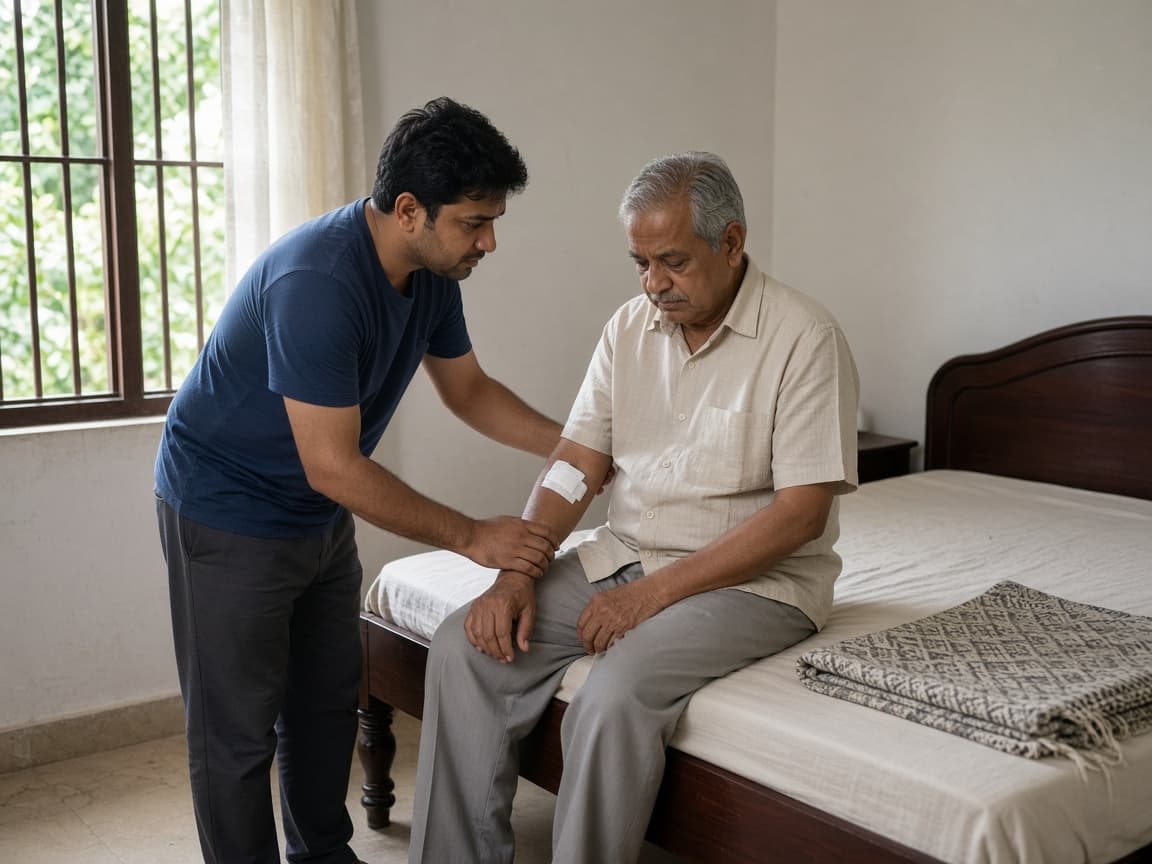
A few days in bed changes the body in ways families can see. The legs feel heavy. Standing makes the room dim. The person who walked into hospital may need two people to sit at the edge of the bed on the way out. The World Health Organization describes rehabilitation as the work of restoring everyday function after a health condition, and physical activity as part of health once a person is able to take part. The first moves after prolonged lying are clinical decisions, because blood pressure, breathing, and the reason they were in bed still govern what is safe.
Muscles weaken when they are not used. Joints stiffen. Breathing can stay shallow. Blood pressure can drop when the person sits or stands, because the circulation has grown used to lying flat and does not immediately send enough blood to the brain. The feeling is dizziness, fading vision, nausea, or a sudden need to lie down. That drop is a reason to stop and report, not a reason to push through a walk.
The first sit, and only when they are stable
Sitting on the edge of the bed is a common first step. It happens when a clinician says the person is stable enough: breathing is acceptable for the attempt, the blood pressure plan allows it, and any surgical or spinal restriction has been checked. A relative who sits the person up on the day they arrive home from intensive care, because the house feels like the right place to "start properly," is taking on a decision the ward team still owns.
Do not start a walking programme the day someone leaves intensive care. Getting home is already a large effort. The first day may be for rest, medicines, food, and the position the nurses used to protect the skin. Walking goals come after a review, often with a physiotherapist who has read the discharge note. Physiotherapy at home is how that review looks when it happens in the bedroom rather than on a ward.
If the person sleeps on a floor mattress, say so before the first transfer is taught. "Sit on the edge" assumes a bed with a side. On a mattress on the floor, the method changes, and a therapist needs to show it. Improvising with two relatives hauling under the arms is how shoulders and backs get injured, both the patient's and the helper's.
Stay beside them for the first sits. A helper on the side, feet on the floor if a bed is in use, and a chair ready only if the clinician has already included a transfer to the chair. Count the minutes they tolerate. A short sit that ends because of dizziness is information. It is recorded and reported. It is not repeated an hour later at double the time unless the team says so.
What else is weak besides the legs
Arms, trunk, and the muscles used to cough all lose condition. Rolling in bed may need a helper even when the person can still talk clearly. Teach that roll the way the ward did, with a bent knee and a reach of the arm, if that method was cleared. Skip any roll that twists a recent surgical wound or a healing fracture.
Breathlessness on a small movement needs the same respect as dizziness. Sit the person back, check them the way the discharge paper describes, and call if the breathlessness is new or severe. People with a recent chest illness may have an oxygen plan. Follow it. A sit-up session does not replace oxygen, and oxygen flow is not adjusted at home to make the sit "count."
Bedridden patient care checklist lists the daily work that continues while mobility is limited: mouth care, toileting, medicines, and watching the chest and the urine. Rehabilitation is added to that care. It does not crowd it out on a day when fever or confusion has appeared.
Skin does not get a holiday
Pressure areas are still at risk when the person starts to sit, and sometimes the risk shifts. Heels that were padded in bed may be forgotten. The tailbone takes a new load in the chair. Preventing pressure ulcers explains what to look for and how often to change position. A red area that does not fade, or a break in the skin, is a reason to reduce time in that position and to tell the nurse or doctor. Sitting for a long "exercise" while a pressure injury deepens is a poor trade.
Check the skin after the first few sits, not only at bedtime. A chair without a proper cushion can mark the skin within a single morning. Ask the team which seat is acceptable before the person spends the day there.
Building back toward ordinary movement
Once a clinician has cleared a progression, the order is usually small: tolerate sitting, then stand with the agreed help, then take the steps that have been allowed, often only as far as the toilet. The World Health Organization's rehabilitation approach is aimed at those real activities. A longer walk outdoors waits until indoor transfers are reliable and dizziness has been addressed.
Keep a simple log: how long they sat, whether vision dimmed, whether pain or breathlessness appeared, and what the skin looked like afterwards. Take it to the physiotherapist. Progress after bed rest is often slower than the family pictured on discharge day. A pause for dizziness is part of a safe return to activity. A collapse, chest pain, or breathlessness that does not settle is a reason for urgent medical help, using the contact the discharge paper gives, rather than another attempt at standing.