
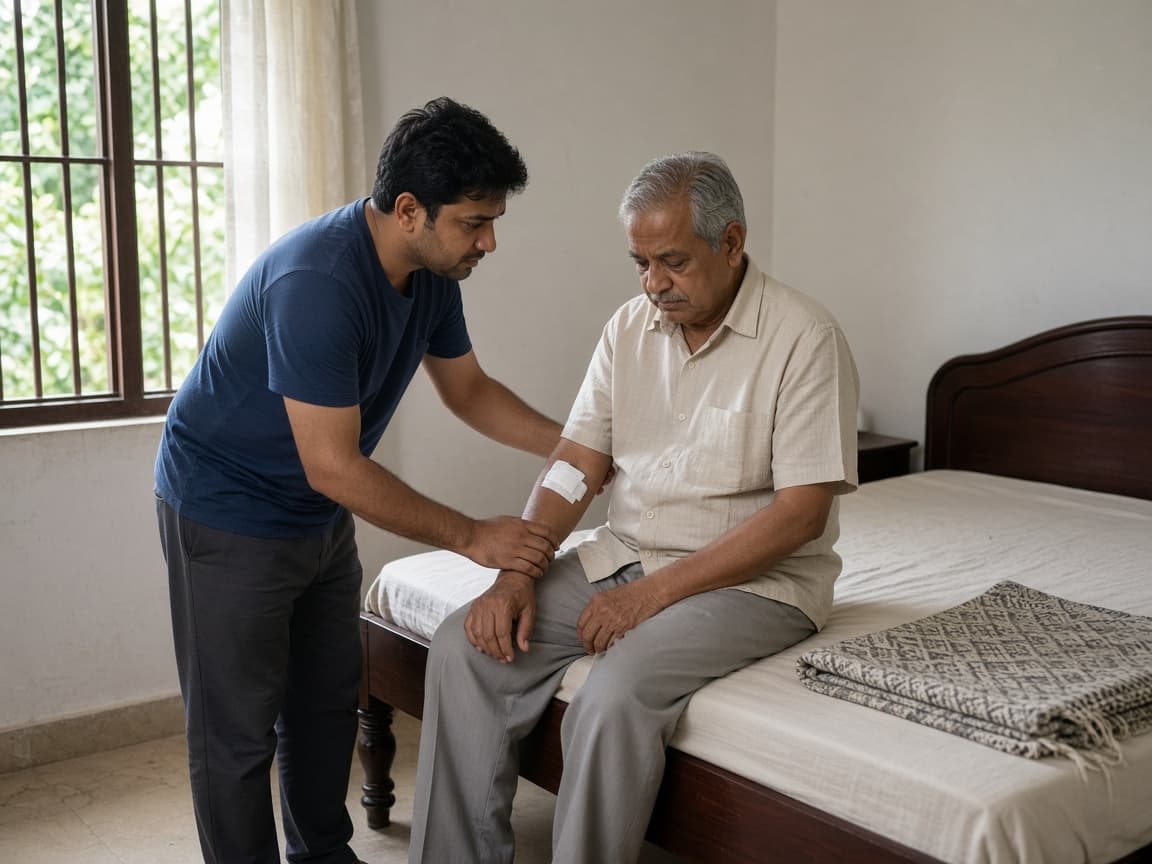
A bedridden day at home can sit on one sheet of paper. Position. Mouth. Eyes. Toilet. Food, only if the person is awake and swallowing safely. Medicines as labelled. A line for urine. A line for pain.
That paper is a household note. It is not a hospital chart, and it does not need colours, codes, or a relative pretending to be a ward clerk. The World Health Organization treats clear records and clean hands as part of keeping people safe. Both fit in a bedroom.
Morning
Wash your hands before you start. Look at the person before you look at the tasks. Are they easy to wake? Is their breathing the same as yesterday? A person who is newly hard to wake, or newly confused, needs a call to the clinic before the rest of the list.
Change position if the care plan says so. Heels, the base of the spine, and the hips need a look while you do it. Smooth the sheet. A wrinkled bed and a wet one both damage skin. Preventing pressure ulcers explains what to do with a red patch, and what not to rub.
Mouth care comes next, before or after a wash, while they are sitting up if that is allowed. Use their own brush if they can grip it. If they cannot, a soft cloth or a gauze wrapped on a finger, damp with water, can wipe teeth, gums, and tongue. Do this only if they are awake and you can see what you are doing. Do not push fingers deep into the mouth of someone who bites or turns away. Dentures come out, get brushed, and go back if they still fit. A dry mouth needs sips of water if swallowing is safe, not a sweet drink left to sit on the teeth all morning.
Eyes: wipe crust from the inner corner outward with a clean cloth and water. Use a separate part of the cloth for each eye. Glasses should be on their face if they want them, not lost in the blanket.
Toilet and washing
Ask about urine and stool early. People delay because they hate needing help, and then they leak, or they stop drinking. Offer the bedpan, the urinal, or the trip to the commode on a schedule they recognise, such as after waking and after meals. Close the door or hold up a sheet. Stay close enough to hear them.
Write what you see in ordinary words. "Passed urine twice before noon, pale." "Small amount, dark." "No urine since last night." Pain on passing urine belongs on the same line. You are not measuring a laboratory sample unless a clinician gave you a jug and a reason.
Wash soiled skin straight away. Hygiene and bathing for someone frail covers a bed bath when the bathroom is unsafe. Hands get washed again after the pad, the pan, or the sheet comes off. Soap and water beat a quick rinse under a tap you barely touched.
Food, drink, and tablets
Sit the person up for food if the care plan allows it. They should be awake, able to cough, and able to swallow their own saliva without constant choking. Offer a small amount. Watch the first spoon. Coughing, a wet voice, or food sitting in the cheek means you stop.
Water, tea, or dal soup can sit in a glass they can lift, or in a cup you help them hold. Note roughly how much they drank. "One glass at breakfast, refused tea" is a useful line. Thirst is a late signal in older people, so do not wait for them to ask.
Medicines stay on the labelled plan. Tick the time after they have swallowed, not before. If a dose was missed, do not invent a double dose at lunch. Call the pharmacy or the prescriber if the label does not tell you what to do. Keep the strips in the same tin so the night person is not hunting through a cupboard.
Afternoon and night
Pain needs words on the paper. Where it is. Whether it is new. Whether the usual prescribed dose, given as labelled, seemed to ease it. "Worse than yesterday, left hip, since turning at 4" is enough for a phone call. Do not borrow another person's pain tablet.
The move from bed to chair, if it is still allowed, is its own task with brakes and footing. If today they are dizzy when they sit up, leave them in bed and write that down.
Through the night, the list shrinks. Position, as planned. Toilet. A sip if they are awake and safe to swallow. The next person should be able to read your ticks without waking you for a briefing.
What the paper is for
By nightfall you should be able to say four things. The skin was looked at. They drank something, or they refused and you noted it. Urine happened, or it did not. Pain was the same, better, or worse.
Take that page to the clinic, or read it over the phone. It will beat a vague "they seem a bit down." If a nurse visits, leave the page where they can see it, and ask them to add anything the family should watch until the next visit.