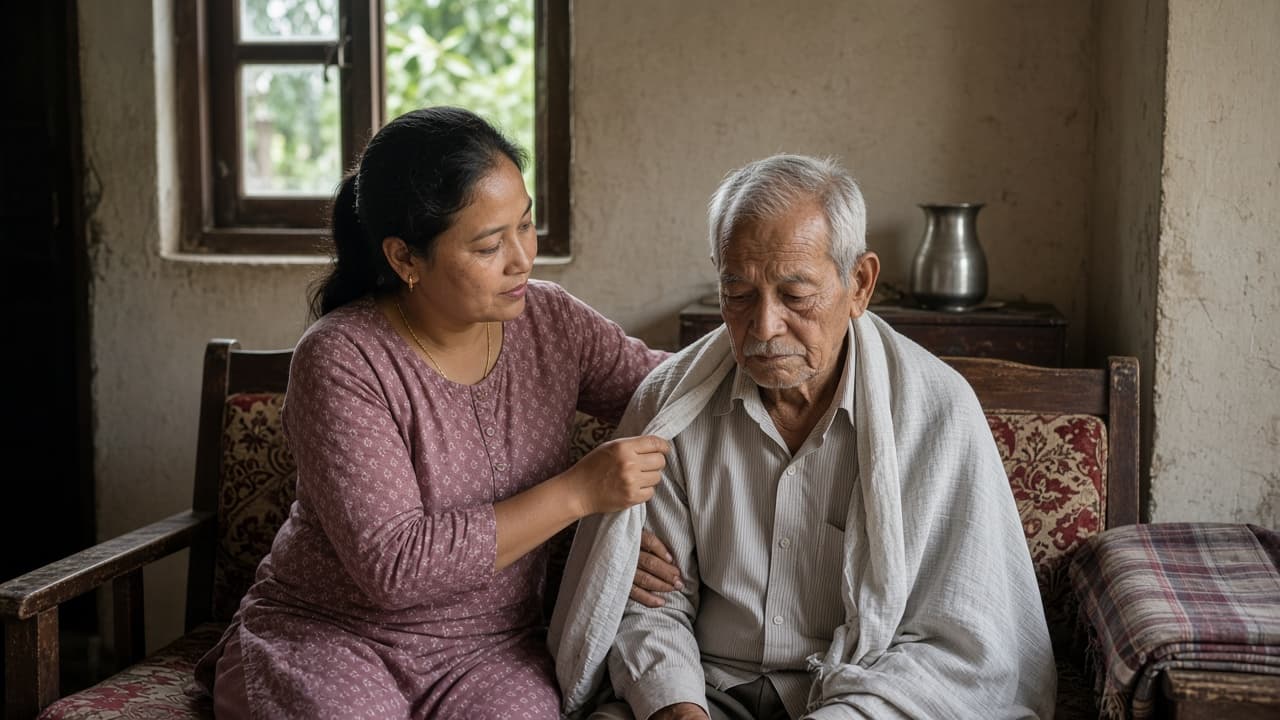
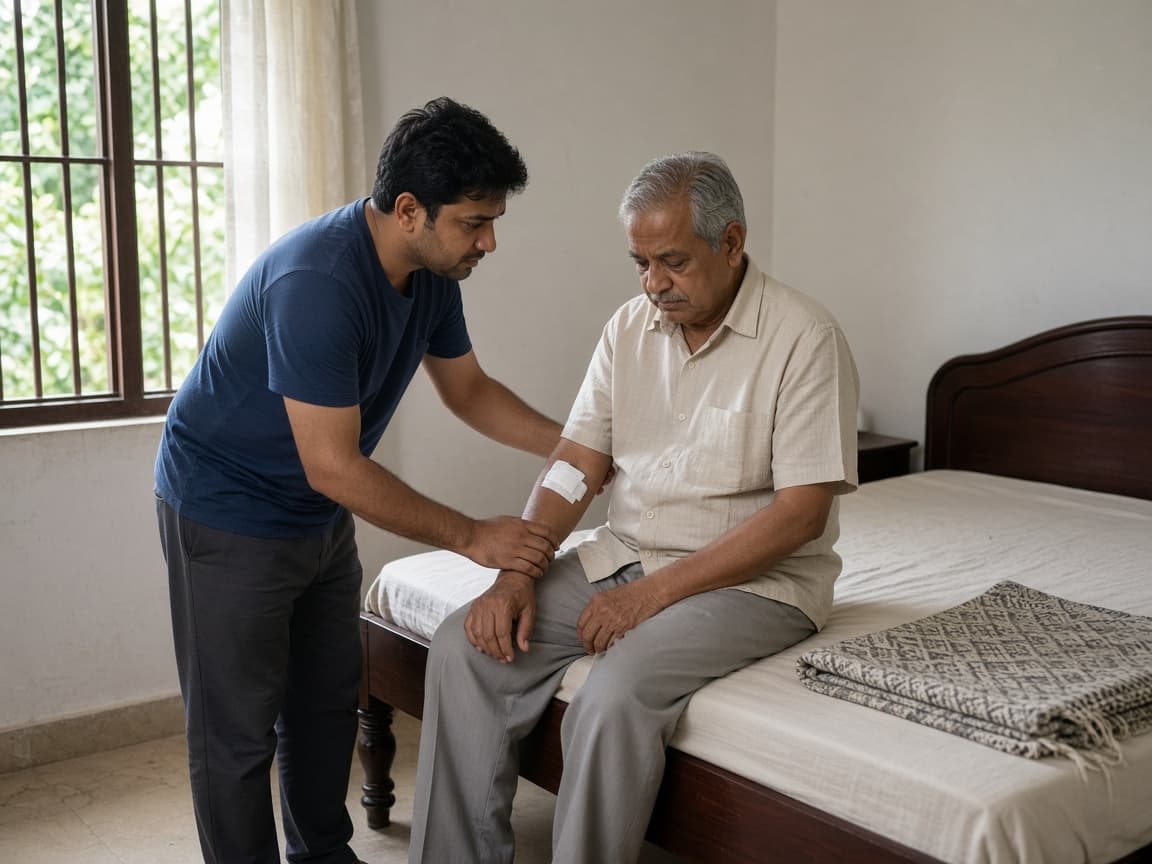
How to prevent bed sores starts where skin and bone press into a mattress or a chair and stay there. Heels, the sacrum at the base of the spine, and the hips are the usual places. Elbows, shoulders, and the back of the head can break down too if the person barely moves.
NICE guidance on pressure ulcers treats prevention as planned care: look at the skin, change position, keep the skin clean and dry, and ask for help early. A webpage cannot set the turning clock for your relative. A nurse who has seen the mattress and the skin can.
Where to look
Check skin in daylight, or under a bright bulb, at least once a day if the person spends most of the day in bed or in a chair. Lift the heel and look at the back of it. Roll the person, with help if needed, and look at the sacrum and both hips. A new red patch that does not fade after you take the pressure off is a warning. So is skin that feels warmer, cooler, firmer, or softer than the skin around it. On darker skin the colour change can be harder to see. Use your hand as well as your eyes. Compare one heel with the other.
Do not rub that red patch. Massage does not "bring the blood back" in a useful way, and it can tear fragile skin. Do not use a ring cushion, or a doughnut-shaped pad, under the bottom or the heel. Those rings shift pressure onto a smaller rim of skin.
Position
If the person cannot move themselves, someone else has to change their position. Families are often asked to do this about every couple of hours through the day and night. Follow that pattern only when it matches the care plan. If a nurse has written a different interval, use the written one. Do not replace their instruction with a rule you found later.
When you turn someone, keep the sheet smooth. Wrinkles and crumbs act like small stones. A pillow under the calves can lift the heels off the bed if a nurse has shown you that position. Do not put a hard object under the heel. Do not stack so many pillows that the person slides down and folds at the sacrum.
Ask the person to shift their weight in a chair if they can, even a little, when they are sitting for a meal. A plastic chair with a thin seat is a hard surface. Long sitting needs the same attention as long lying. If they slump to one side, the hip on that side takes the load.
The night is when pressure care fails. Agree who will turn the person after midnight, and write the times on a paper by the bed. A tick mark is enough. Bedridden patient care includes that tick in the rest of the day.
Skin, moisture, and food
Wash skin that is soiled with urine or stool as soon as you can. Use a mild soap, rinse it off, and pat dry. Moisture left in a fold softens the skin until pressure breaks it. A barrier cream belongs in the plan only if a clinician has named one. Do not grease a broken area with a kitchen oil because it is nearby.
Change a wet sheet. In the monsoon, damp linen does not dry on the line by evening. Keep a second sheet in the room. Powder, ash, and toothpaste do not protect skin. They cake in folds and hide colour change.
People who eat and drink poorly heal poorly. Offer the ordinary meals they already manage, with something that carries protein: dal, egg, milk, curd, or meat if they eat it. Nutrition and hydration for older adults is about small meals and drinks within reach. Tell the clinic if appetite has dropped. Leave any powder or supplement dose to the clinician.
What not to turn into a home project
Do not treat a pressure ulcer like a kitchen cut. Do not scrub it. Do not pack it with cloth. Do not decide on your own to leave it open to the air all day. A broken area from pressure needs a clinician to say how it should be covered, and how often.
If the hospital issued a special mattress or cushion, use that one. Do not swap it for a softer household mattress because the special one looks thin. Ask the nurse before you add an extra blanket under the sheet. Layers can cancel the effect of a pressure-relieving surface.
Tell the clinic what you saw
When you call or go in, say where the mark is, when you first saw it, and whether the person has fever or pain there. Mention urine leaking onto the skin, a new period of staying in bed, and any recent loss of appetite. Take a photo only if the person agrees and you can show it to the clinician. A photo is a memory aid for the clinician. The clinician still has to see the skin.
Keep the turning paper and bring it. The nurse can see whether the gap between turns is too long for this person, on this bed. That conversation is safer than quietly adding more hours because the night felt impossible.