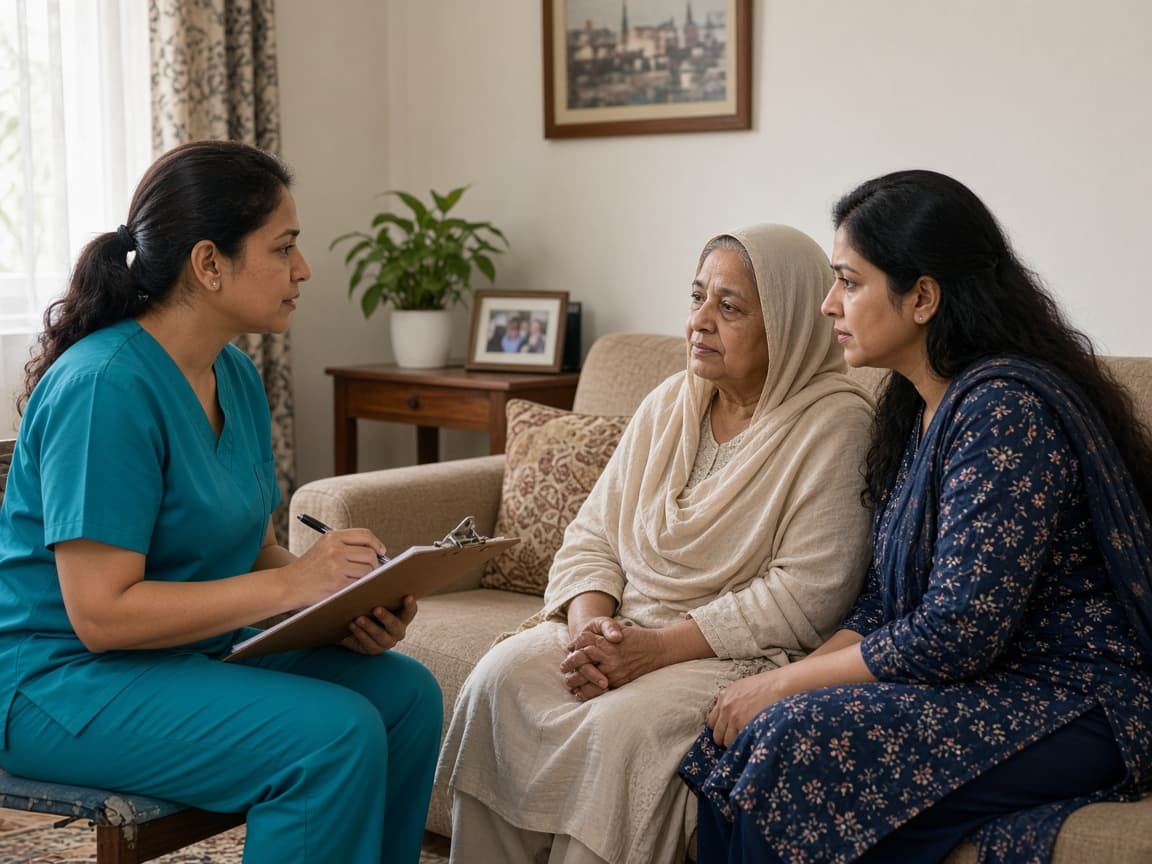
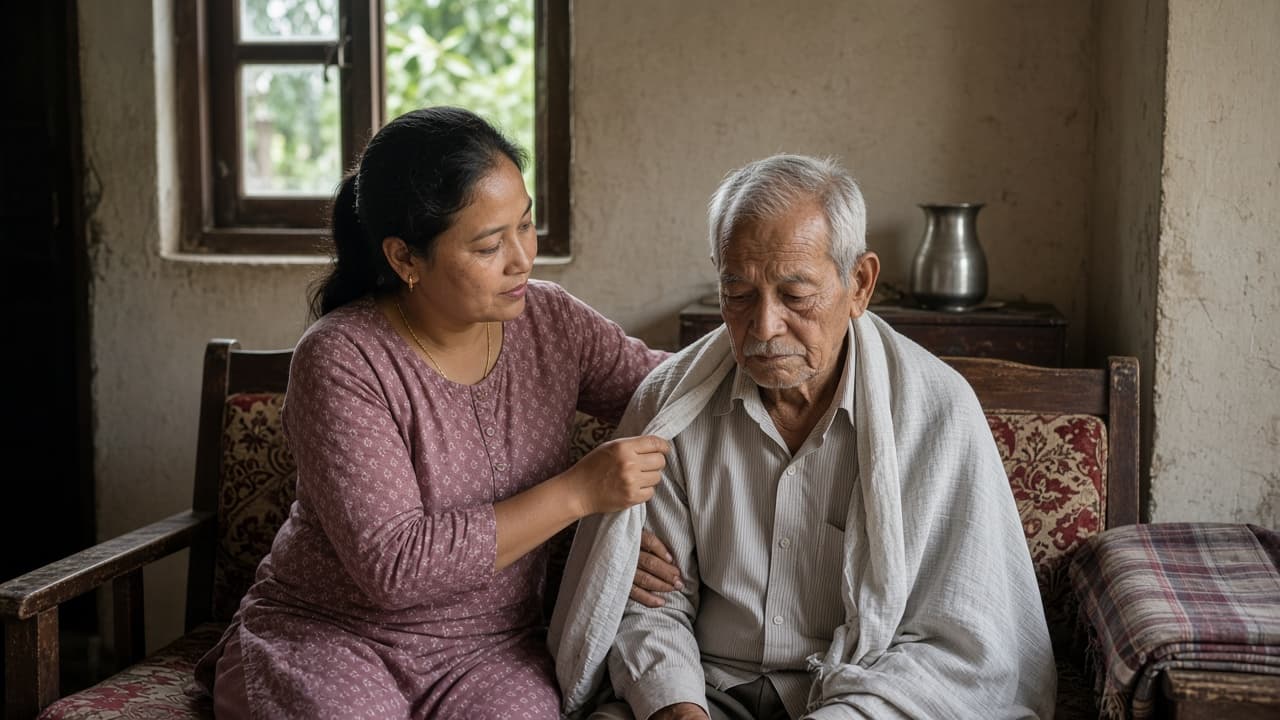
Palliative care at home is care for comfort when curing the illness is no longer the aim. The World Health Organization describes it as an approach that improves the day-to-day life of the person and the family. It can start well before the last hours. The person still decides things. Who comes into the room. Whether the window is open. What they want to eat, or to refuse.
This page is about those ordinary acts. It does not set doses, and it does not describe the last days as a list of frightening signs.
What they still decide
Ask, while they can answer. Some answers will be small. Tea in the usual cup. The radio low. Prayer at a certain hour. A friend allowed in, a distant relative asked to wait. Write the answers down so the night person does not reopen every question.
If speech is hard, offer two choices you can actually carry out. "Shall I call your brother today, or tomorrow morning?" A nod counts. When they cannot answer at all, use what they said last month, and what you know of their habits, and keep checking the face for pain or distress. Do not hold a family vote in the doorway about a private wish they already made.
Children in the house do not have to be sent away from a grandparent who wants to see them. Short visits, with an adult nearby, are often what the person asked for. If the person asks for quiet, end the visit without a speech about who travelled far to come.
Pain
Pain that the person can still describe should be told to the prescriber in plain words. Where it is. What it stops them doing. Whether it wakes them. Whether the medicine already prescribed, given exactly as labelled, takes the edge off or does nothing.
Do not raise a dose because the night was bad. Do not borrow a tablet from another patient. Strong pain medicines, including morphine where it has been prescribed, stay on the written plan. The family reports the effect. The prescriber changes the plan. If you cannot reach that prescriber and the pain is severe, contact the on-call service or the hospital that knows the person. Do not improvise from a leftover strip.
A sudden new pain, different from the usual one, needs a call. So does pain with a rigid abdomen, a new swelling in a leg, or trouble breathing.
Mouth, position, and food
Dry mouths are miserable. If they can swallow safely, offer sips. If they cannot, moisten the mouth with a clean damp cloth or a swab the nurse left, and put a plain lip balm on cracked lips if the skin outside is intact. Brush teeth or clean a denture when they will tolerate it. A foul mouth makes people refuse even a spoon of water.
Turn or sit them up as the nurse showed, so the chest is easier and the skin at the base of the spine is not pressed for the whole day. Pillows under the knees or behind the back should match that demonstration. A position that helps breathlessness for one person can worsen pain for another. If the taught position is not working, ask. Do not keep stacking household pillows until they are folded in half.
Food becomes a want. A mouthful of something they like is enough on some days. Do not force a full meal into someone who turns away. Tell the clinician what they refused. A cook has not failed when a very ill person eats only a mouthful.
The room and the family
Keep the sheet clean, the fan or the window as they prefer, and the medicines where a child cannot reach them. Visitors can wash their hands on the way in if there is a wound or a tube. One or two people at a time is usually kinder than a crowded room speaking over the bed.
The person doing the nights needs a break before they collapse into irritability. Caregiver burnout is the practical split: another adult, a written handover, your own tablets taken. Skilled tasks such as a syringe driver, a complex dressing, or oxygen changes stay with a nurse. Understanding home nursing helps you draw that line before you are alone with a device you were not taught.
What families sometimes fear asking
You can ask the clinician what to do if vomiting will not stop, if they have not passed urine, or if they seem frightened. You can ask which changes can wait until morning and which cannot. Write the answer beside the phone number.
Some changes near the end of life need that same clinician, because the right response depends on the illness and the medicines already in use. This article will not catalogue those changes. The four reasons above are enough to pick up the phone. If there is heavy bleeding, collapse, blue lips, or they are not breathing, get emergency help. In Nepal, 102 is the published ambulance short code and 100 reaches police.
Stay with them while you wait for advice. A familiar voice, a hand they can refuse, and a room that is not arguing, are care. They are also the part a family can do well.