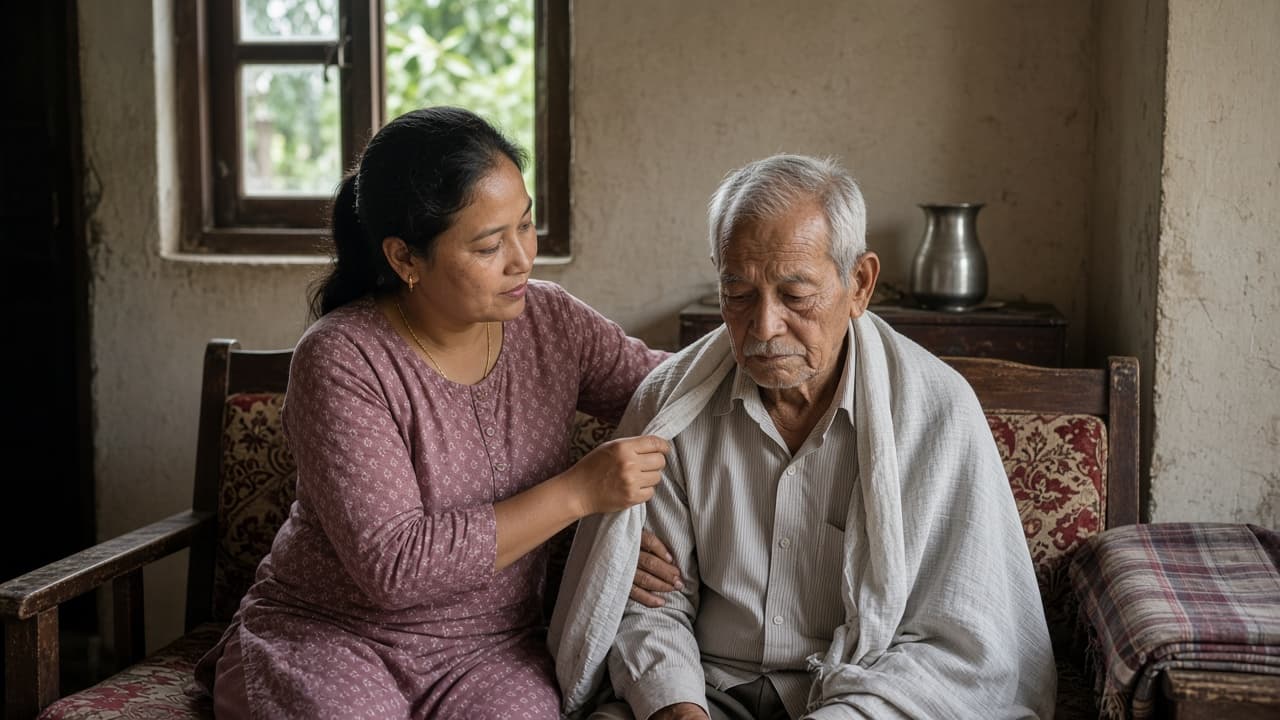
Caregiver burnout symptoms often show up at night. You are awake at 2 a.m. because your father needs the toilet, and at breakfast you snap at your sister over a steel plate. By the third week you have a sore throat you keep ignoring, and your own blood pressure tablets are still in the strip from yesterday.
That pattern has a plain name. Carers get exhausted. NHS pages on support for carers and on practical tips describe breaks, shared tasks, and looking after your own health as part of being able to carry on. They do not require a special personality. They require another adult and a rota you actually follow.
What it looks like in the house
Sleep comes in pieces. You lie half awake listening for a thud. In the daytime you forget the clinic time, then feel ashamed. Small requests annoy you. You speak more sharply than you mean, and the apology does not arrive because there is another task.
Some people get sick: headaches, a stomach that will not settle, a cough that lingers. Some stop seeing friends because explaining the schedule is tiring. Some eat the cold leftover rice standing at the sink and call that a meal.
Watch the medicines with your name on them. A carer who skips their own diabetes tablets, inhaler, or blood pressure medicine is on the way to becoming a second patient. Take your own dose at the same time you set out theirs, so it is tied to a clock you already obey.
If you drink to fall asleep, or you sit up after everyone else has gone because the quiet is the only hour that feels like yours, say so to someone in the family. Silence is how the nights stay glued to one person.
Split the night
Write the week on a paper where everyone can see it. Monday night: you. Tuesday night: your brother. Wednesday: a cousin who offered and then was never asked. A four-hour block is more honest than "help when you can." People can refuse a foggy request and still say yes to "sleep here Wednesday, I will sleep at your place."
Hand over with three sentences. What the person ate. Whether urine passed. Any pain, and when the next labelled dose is due. The medicine tin stays in one place. A handover that takes an hour of grievance will make the next person avoid coming.
If a sibling lives outside the city, give them a job that matches the distance. They can call the clinic, pay for a month of nappies or prescribed dressings, or sleep in the house for the week they are home. Money and presence are both work. Do not let either be dismissed.
A neighbour who will sit for one hour while you bathe, or while you walk to the pharmacy, is worth asking. Tell them what to do if the person tries to stand: stay beside the chair, and call you. Do not leave a casual visitor with a catheter, an injection, or a confused person who wanders, unless that visitor is the trained nurse.
When the care itself is too clinical
Some exhaustion is a mismatch. The family is doing a job a nurse should do: dressing a deep wound, managing a tube, staying awake because oxygen or breathing might fail. Understanding home nursing helps you name that mismatch. Asking for a nurse is a safety decision. It is also how you sleep.
Meals, washing, company, and the clinic folder are the daily work that can be shared. If the illness is now about comfort and symptoms that are hard to control, read palliative care at home and talk to the clinician who knows the person. Pain that is not controlled will wreck everyone's night. The prescriber needs to hear about it. The family should not be editing strong pain medicine in the dark.
Your own clinic visit
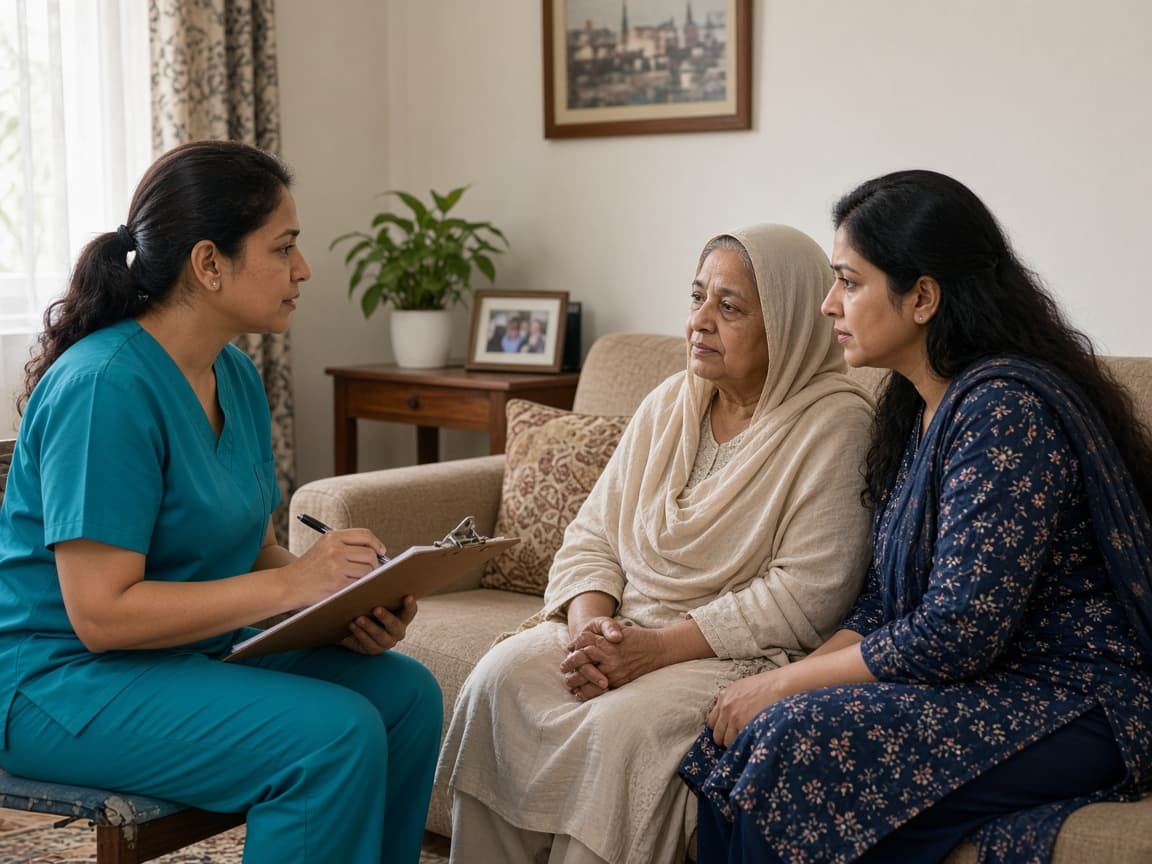
Book the appointment you have delayed. Tell the clinician you are caring for someone at home and that your sleep is broken. Mention low mood, weight change, and any medicine you have stopped taking. There is no need to perform strength in that room.
NHS carer pages talk about help that exists in the UK health system. Those phone lines and benefit rules do not travel to Nepal. Do not hunt a number from a foreign webpage and expect it to answer in Kathmandu or in a district hospital town. Use your local clinic, the person's own doctor, and the relatives you can actually reach.
If you feel you might hurt the person or yourself, leave the room, put the medicines up high, and get another adult into the house before you continue the day. Tell a clinician. That conversation is part of care, for both of you.