
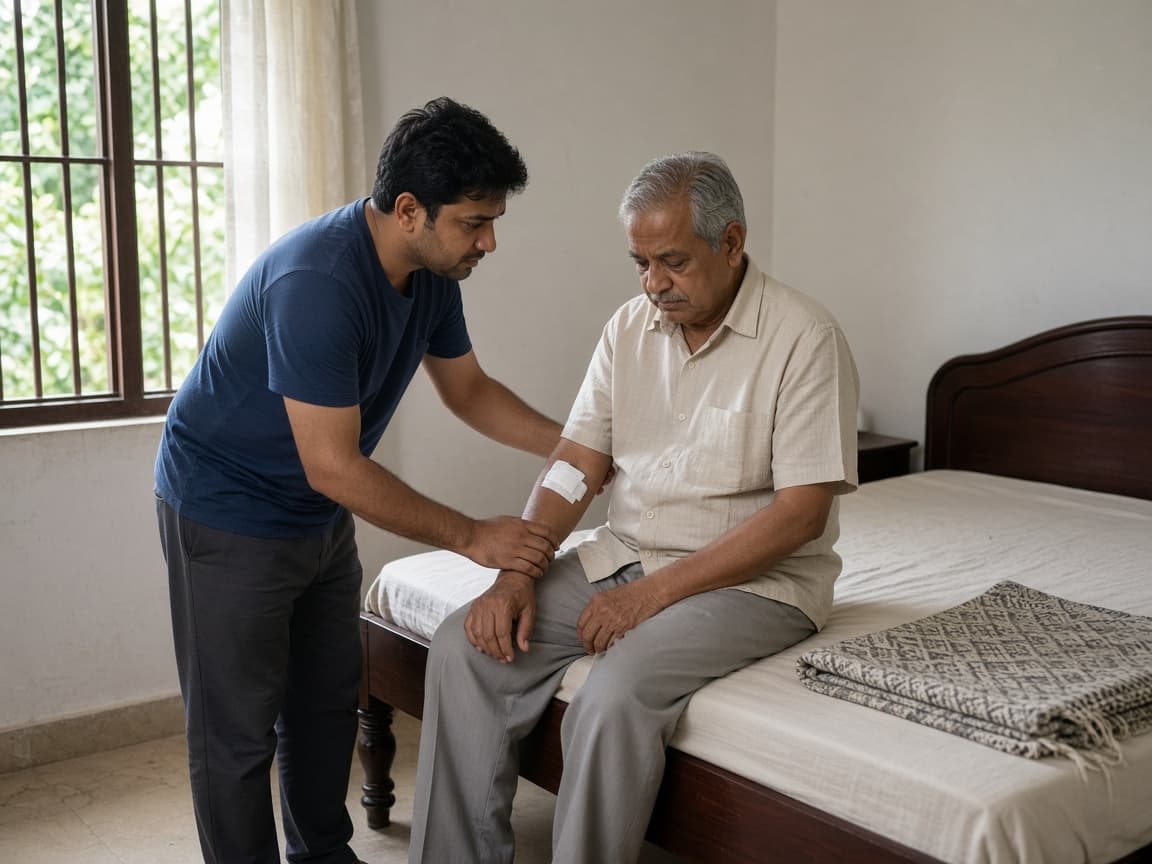
A safe move from bed to chair starts before anyone stands. Brakes on. Bed low enough that both feet reach the floor. The path clear of slippers, a water bottle, and the edge of a rug. NHS practical guidance for carers and the World Health Organization’s patient safety work both come back to the same idea: plan the move, and stop when the plan no longer fits the person in front of you.
If a hospital physiotherapist or nurse showed your family a method, use that method. A general article should not overwrite a demonstration done with this person’s hip, this person’s stroke, or this person’s pain.
Set the room
Put the chair close, on their stronger side if one side is weaker and a clinician has told you which side leads. A plastic chair walks backwards unless someone holds it or it is against a wall. Wheelchair brakes go on. Footplates fold up so they do not stab a shin.
Shoes with a back, or the footwear the physiotherapist approved, go on before standing. Loose rubber slippers fold under the sole. Socks on a smooth floor slide. The concrete may look dry and still be dusty enough to skid.
Tell them the order. "Feet on the floor. Sit for a moment. Then we stand." A surprise pull is how people stiffen and fall. Give the dizzy moment its time. Some people need a full minute after sitting up from the pillow. Rushing that minute is a common way to end on the floor.
Their strength first
Ask them to push up from the bed with their own hands, if the arms are allowed to take weight. Your hands go to a belt, a waistband, or the sides of the hips. A hand under the arm or in the armpit is a poor grip and it hurts. Do not pull on the arms, the wrists, or the fingers. Those joints are how you dislocate a shoulder in a "small" help.
Stand close, with your knees slightly bent, so you are not folding your back over them. Rock with a count they know: ready, and up. Once they are standing, pause. Ask if the room is spinning or if the hip hurts. If they sway, sit them back down. A second try after a rest is reasonable. A fifth try, with you taking more of the weight each time, is how backs and hips get injured.
Turn toward the chair in small steps. Do not twist their trunk while their feet stay planted. The chair should meet the back of their legs. They reach for the arms of the chair and sit slowly. You guide the hips down. You do not drop them the last few inches.
Two people are needed when the person cannot stand once they are on their feet, when they are much heavier than the helper, or when one helper is heavily pregnant, has a bad back, or is themselves unsteady. Agree who speaks. Two voices at once confuse everyone. One person stands on each side, hands at the waist or belt, chair already braced.
When to stop
Stop for dizziness, chest pain, new hip or groin pain, a knee that buckles, or a feeling that you are holding their full weight off the floor. Sit or lie them back. Write down what happened. Falls among older adults is the next page if they do go down. Do not practise the stand again that afternoon to "get it right" if pain started.
A person who cannot take weight through the legs should not be dragged from bed to chair by the armpits. That move looks common and it scrapes skin, pulls shoulders, and still ends with a collapse into the seat. Ask the clinic what transfer is safe. Until then, care for them in bed: washing, toilet, and meals sitting up as allowed.
Equipment you were actually given
A walking frame, a stick, or a belt the hospital issued should be used the way they showed you. Mobility aids discusses fitting. A borrowed frame that is too tall or too short changes the lean and can cause the next fall. Do not buy a hoist from a catalogue and teach yourself from a video. Hoists need the right sling, the right model, and a person trained on that hoist. The wrong sling is a fall from a height.
If the bed is a low wooden bed or a mattress on the floor, say so at the clinic. The sit-to-stand from a very low bed is a different task. Sometimes the safer fix is a firmer mattress at a height a clinician agrees. Hauling someone upward from a mattress on the floor injures backs.
After they are in the chair
Hips back in the seat. Feet supported. A drink or a meal only if they are awake and not dizzy. A person who slides forward in a plastic chair for an hour is collecting pressure on the sacrum and a route to the floor. A cushion they sink through can make that slide worse. Ask before you pad the chair with a thick folded quilt.
When it is time to return to bed, repeat the same order. Brakes. Feet. Their push. Your hands at the waist. The last move of the day is when helpers rush. That is also when people fall.