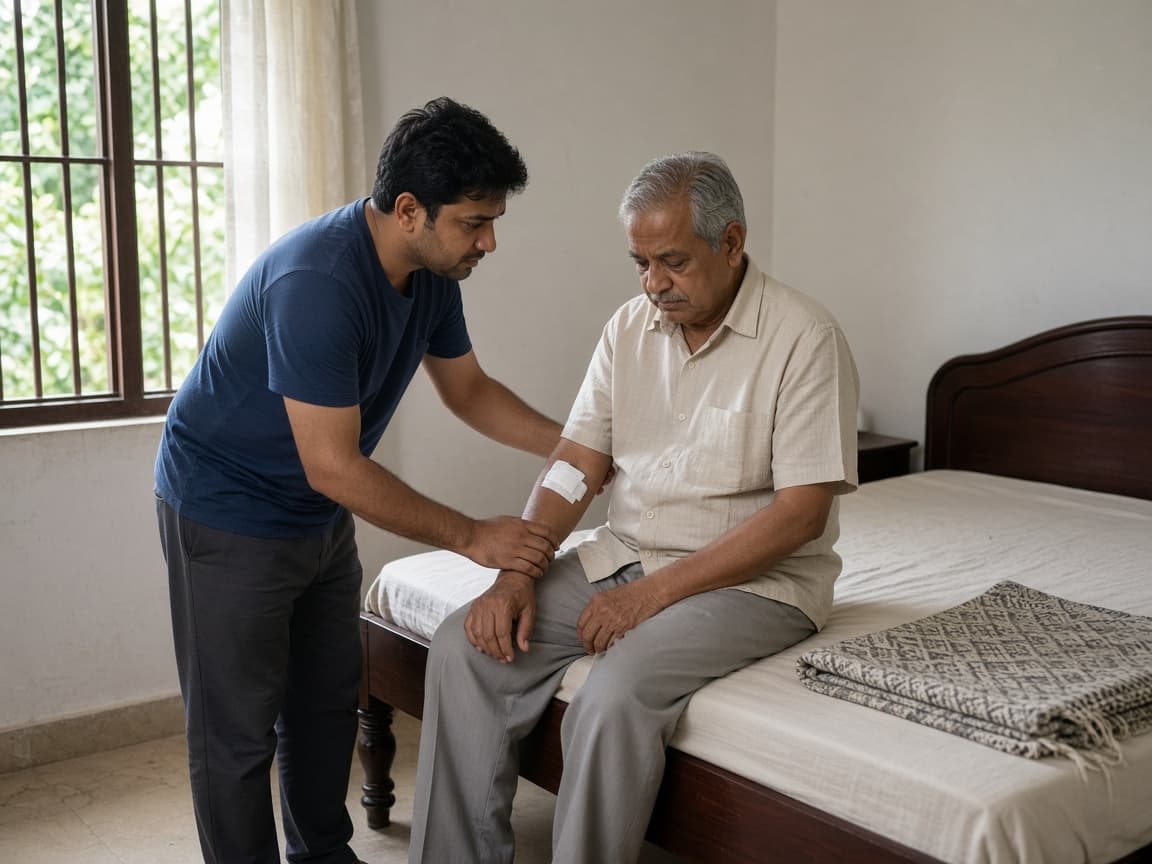

A cane, a walker, and a wheelchair are assistive products. The World Health Organization describes assistive technology as products that help people move, care for themselves, and take part in daily life, and stresses that the product needs to suit the person and the setting. A stick from a cupboard, cut for someone else, often fails that test. The World Health Organization also identifies falls as a leading injury risk in later life. An aid that is too tall, too short, or used with the brakes off is one way those falls happen at home.
Fitting means a clinician or a trained supplier looks at height, the weaker side, hand strength, the doorways, and the task. They watch the person walk or transfer. They adjust the aid and then watch again. Buying the model a neighbour praised skips that second look.
A cane
Usual teaching places the cane in the hand opposite the weaker or painful leg. If the right knee is the problem, the cane is often in the left hand, so the cane and the right leg move together and the trunk stays more level. A therapist should confirm this for the person in front of them. Some hands are too painful or too weak to hold the cane on the "usual" side, and some neurological conditions change the advice. Confirmation is the step that makes a general rule safe.
The top of the cane typically reaches about the wrist crease when the person stands with the arm relaxed, and the elbow is slightly bent when they take weight through it. That is the usual starting measurement a therapist checks. It is not a reason to saw a borrowed cane down on the doorstep without someone watching the person walk afterwards. A tip that is worn smooth slips. Replace it when the rubber is cracked or shiny.
On stairs, people are often taught a set order: the stronger leg and the cane have different jobs going up and coming down. Learn that order from the therapist on the actual stairs, once stairs are allowed. Hip fracture recovery is one situation where the surgeon may still be limiting how much weight the leg can take. The cane does not cancel that limit.
A walker
A walker should let the person stand upright. If the frame is too tall, they hunch, the shoulders rise, and they push the frame instead of walking within it. If it is too low, they lean and the frame runs ahead. Ask the therapist to set the handles so the elbows are slightly bent and the person can look forward, not down at their feet the whole time.
Wheels, ferrules, and brakes differ. A frame with wheels can roll away on a smooth floor if the person is not shown how to keep it close. A frame without wheels must be lifted, which some painful shoulders cannot do. The choice is an assessment, not a preference for the lightest frame in the shop.
Inside a small room, try the turn toward the toilet before the person is tired. A walker that cannot complete that turn will be abandoned at the doorway, which is where people fall. Moving between bed and chair should be practised with the same aid they will use at night, not with a different stick "because the walker is in the kitchen."
A wheelchair
Brakes go on before any transfer. Both brakes, checked by the helper, before the person stands or slides. A chair that creeps backward as someone reaches for the bed is a common fall. Feet rest on the footplates during movement, and the plates are moved aside, as taught, before a stand so the person does not trip on them.
Someone who sits in a wheelchair for most of the day needs a cushion suited to pressure care, not a folded blanket that compresses flat by noon. The clinic or the therapist should specify the cushion. Hips should sit at the back of the seat, and the feet should be supported so they do not dangle. Dangling feet pull the person forward and mark the skin behind the thighs.
Doorways, a step at the entrance, and a helper who can push safely all belong in the assessment. A wheelchair that fits the hospital corridor may not turn in the bedroom. If it does not, the honest plan may be a different chair for indoor transfers and the wheelchair for going out, decided by the team.
Keeping the aid in one piece
Check ferrules, loose screws, and brake reach once a week. A brake the person cannot operate with a weak hand is not a working brake. Report that, and ask for an adjustment. Do not tie the brake with string as a permanent repair.
Balance exercises for seniors discusses standing practice near a counter for people a therapist has cleared. An aid is not a substitute for that assessment, and balance drills should not be done while holding a wheeled frame that can roll unless the therapist set the session up that way.
Bring the aid to every clinic visit. The professional needs to see the wear, the height, and the way the person actually walks with it. A well-fitted cane that is left at home, while the person demonstrates two steps without it, produces advice for a walk that is not the one they do in the hallway.