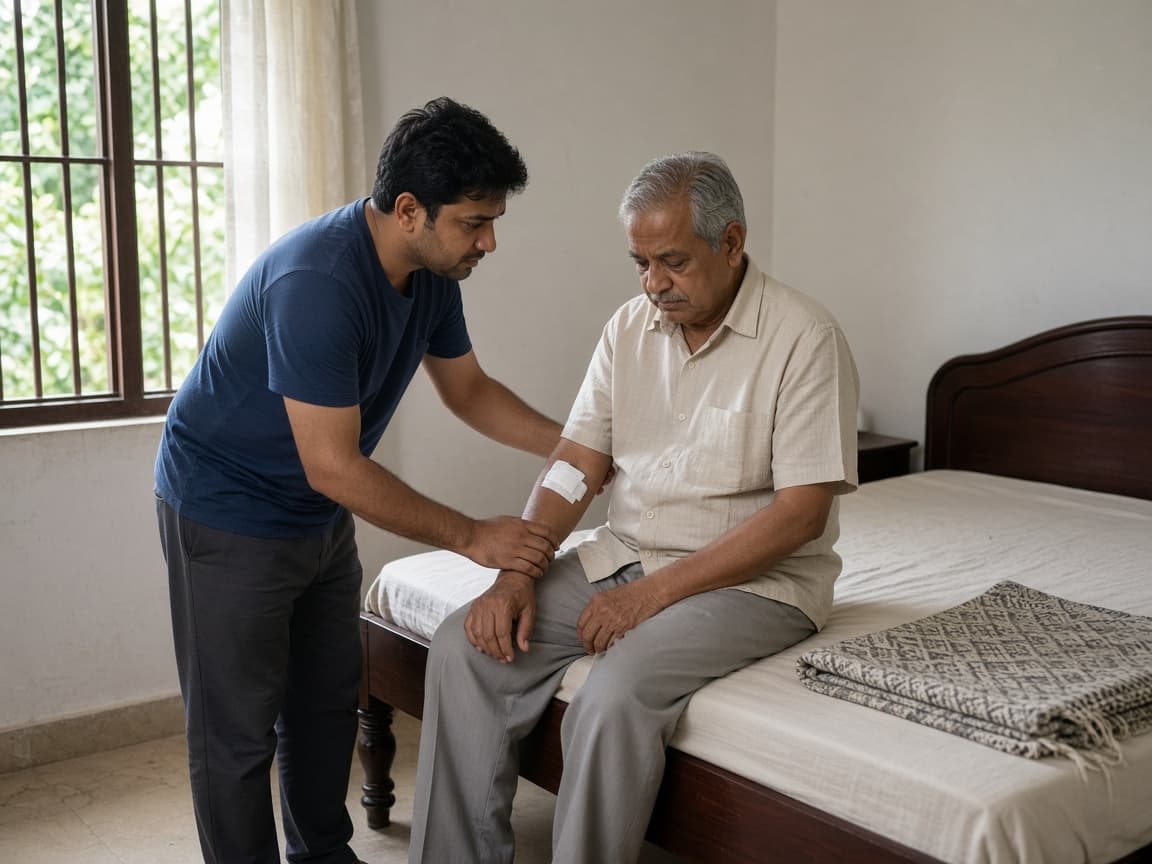
After a fall, leave the person where they are until you know they are not badly hurt. Talk to them. Do not haul them up by the arms. A pull under the shoulders can injure the shoulder and can twist a broken hip.
The World Health Organization identifies falls as a leading cause of injury in older people. NICE guidance on falls in older people treats a fall as a health event worth a proper look. The useful response is calm, warm, and willing to get help.
The first minutes
Kneel where they can see you. Ask what hurts. Look for bleeding, a limb that sits at a wrong angle, and whether they know where they are. If they are not breathing, or they are unconscious and you cannot wake them, get emergency help immediately. Do not spend those minutes looking for a chair.
If they are awake and talking, cover them with a blanket or a shawl. Concrete floors pull heat out of a body. A long wait on the floor also loads the skin and frightens people so much that they refuse to walk later. Cold, pressure, and fear are reasons to get help. Yanking them upright before anyone has looked at the hip can make an injury worse.
Do not offer tea or food while they are still on the floor, especially if they hit their head or seem drowsy. A swallow can go wrong when someone is stunned.
Ask one relative to fetch the medicine tin and the clinic folder. The person who stays keeps talking to them so they do not try to stand alone.
Signs that should change the plan
A shortened leg that has rolled outward, with pain in the hip or groin, can mean a broken hip. Do not straighten that leg to "make it look normal." Do not bundle them into a car seat by folding the hip if the pain is severe. Paramedics and emergency staff move people with a break more safely than a frightened family on a staircase.
A head knock matters more if they take a medicine that thins the blood. The scalp can look fine while bleeding inside is the danger. New confusion, vomiting, a worsening headache, or one pupil that looks different from the other needs medical care the same day, even if they got up and said they were fine.
Chest pain, trouble breathing, a seizure, heavy bleeding, blue lips, or sudden weakness on one side of the body are emergencies. Use the ambulance number above. Do not wait to see if a nap helps.
If they cannot get up, and none of those injuries are obvious, they still should not lie there for hours while the house finishes lunch. Long lies cause cold, pressure damage, and dehydration. Call for help. While you wait, keep them warm, pad under the head only if you can do it without twisting the neck, and stay with them.
If they can get up
Some people can stand with a chair after they have caught their breath, and a clinician has previously said that method is acceptable for them. Let them do the work. Bring a steady chair close. They roll onto their side, push up with their own arms, and rest on the chair before they try to walk. You steady the chair. You do not lift their whole weight by the wrists.
Stop if pain, dizziness, or a new limp appears. Sit them down and get medical advice anyway. A fall that "worked out" still belongs in the clinic note. Ask them to look at why it happened: medicines, blood pressure, feet, eyesight, and the house. Hide the fall and the next clinician will miss the pattern.
After they are safe
Write down the time, what they were doing, and what they hit. "Stood from the bed at night, no light, slipped where the bathroom floor was wet." That sentence is more useful than "he fell again."
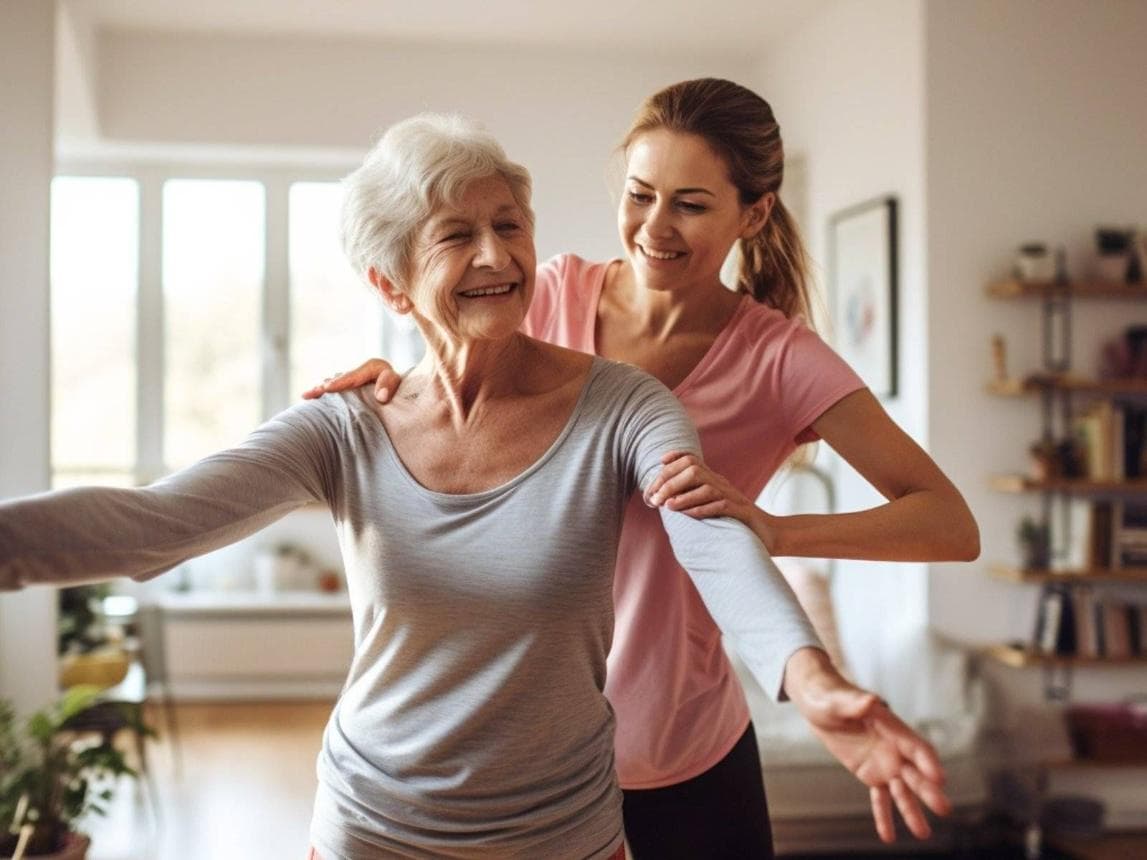
Look at the house the same day if you can do it without blaming them. Home safety for seniors is the mats, the stairs, and the footwear. If walking has become fearful, ask about assessment before anyone starts an exercise sheet from the internet. Balance exercises for seniors explains why a personal plan matters. A new limp or a hip that still hurts the next morning needs a review before anyone plans recovery from a break that has not been diagnosed.
Check the skin if they were down for a long time. Red areas on the sacrum or shoulder should be mentioned to the nurse. Offer a drink only once they are fully awake and swallowing normally. Then let them rest where you can hear them. Another fall in the same afternoon is common when people are embarrassed and try to prove they are fine.