
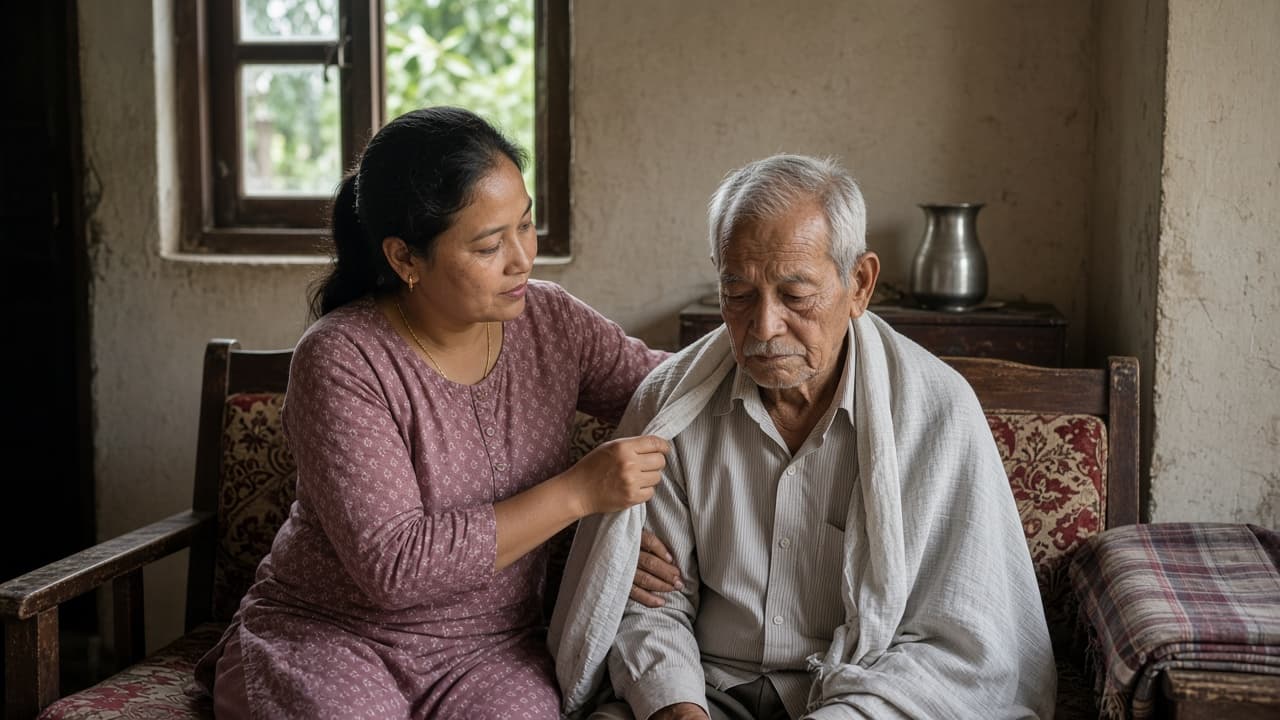
Home safety for seniors often comes down to a loose mat on a concrete floor. A wet patch outside the bathroom. A stair with the bulb gone. These are ordinary features of a house, and they are where older people fall. The World Health Organization links falls to the places people live, as well as to age. NHS and NICE guidance on falls both ask clinicians to look at the home. You can look this evening, with the lights you already own.
You do not need a trolley of sensors. You need a clear path, a dry floor, and a way to see the next step.
Floors
Concrete is hard. A fall that would bruise someone on a carpet can crack a bone here. Pick up loose mats, especially the ones that curl at the corner near the door. If a mat must stay, it should lie flat and not slide when you kick the edge with a shoe. The decorative runner on the stairs is a poor trade.
Wipe the bathroom floor while it is still wet. Waiting until everyone has walked through it leaves a slick path. A mug of water carried to the bedroom leaves a trail. In the monsoon, leave shoes at the door so mud is not walked onto the smooth indoor floor. A coconut-fibre doormat that bunches up is its own hazard. Shake it and let it lie flat, or move it out of the walking line.
Look down once a day as if you were walking at night. Buckets, a gas pipe, school bags, a toy, the dog's bowl, a coiled extension lead. Anything that catches a toe should move to the side. The path from bed to toilet is the one that matters most. Measure it by walking it yourself.
Stairs
Put a working bulb at the top and at the bottom. A switch only at the bottom means someone stands in the dark on the landing, holding the wall. If you cannot rewire a second switch this month, keep a torch on a nail at the top, with batteries that work. Test it on Sunday with the other chores.
A handrail that wobbles is worse than no rail, because people trust it. Tighten it or ask someone who can use a drill properly. Do not string a clothesline along the stair as a rail. It sags.
Mark the last step if people miss it. A strip of contrasting tape is enough. Piles of stored boxes on the steps will be tripped over on the day someone is carrying a child or a thermos. Store those boxes somewhere that is not a step.
Going down is when weak knees give way. If a clinician has said stairs are no longer safe, the person sleeps on the ground floor. Pride about "my own room upstairs" is understandable. A bedroom moved downstairs is a smaller change than a hip operation. Falls among older adults is what to do if the stair has already won.
Footwear and furniture
Slippers without a back heel fold under the foot. Wet rubber soles on a polished floor slide. Shoes that stay on, with a sole that bends but does not skate, are the everyday fix. Walking in socks on concrete is a slip.
Chairs should be high enough that the person can stand without a launch. A low foam sofa swallows them and then they ask to be pulled by the arms. That pull is how shoulders get hurt. A plastic chair with a back, set against a wall, is often safer than the soft seat everyone prefers for guests.
The bed should let both feet touch the floor when they sit on the edge. A very high bed means a jump down. A mattress on the floor means a long push up. Tell the clinic which one you have if standing has become hard.
Keep the light switch, a glass of water, and the glasses within reach of the pillow, so the first trip of the night starts with light.
Night
Most night falls are the toilet trip. Agree the route. A small lamp or a torch left on is kinder than a blinding tube light, which can dazzle them on the step. The bathroom door stays easy to open. A lock they cannot undo from inside is a trap if they feel faint.
If they are confused at night, the same route still helps, and so does company until they are steady. Dementia care at home covers wandering and the stove, which is the other night hazard. Gas knobs and a sleepy cook do not mix.
Do not leave a frail person to "be careful" as the only plan. Careful is not a handrail.
What a family can finish today
Move the mat. Dry the bathroom. Clear the stair. Put shoes by the bed. Check the bulb. That is the list.
Then watch them walk it once while you are in the house with them. Meals, washing, and the clinic folder fill the rest of the day. If they have already fallen, or they hold the wall the whole way, the clinic should know. Medicines, blood pressure, eyesight, and feet belong in that conversation, beside the loose mat you already picked up.