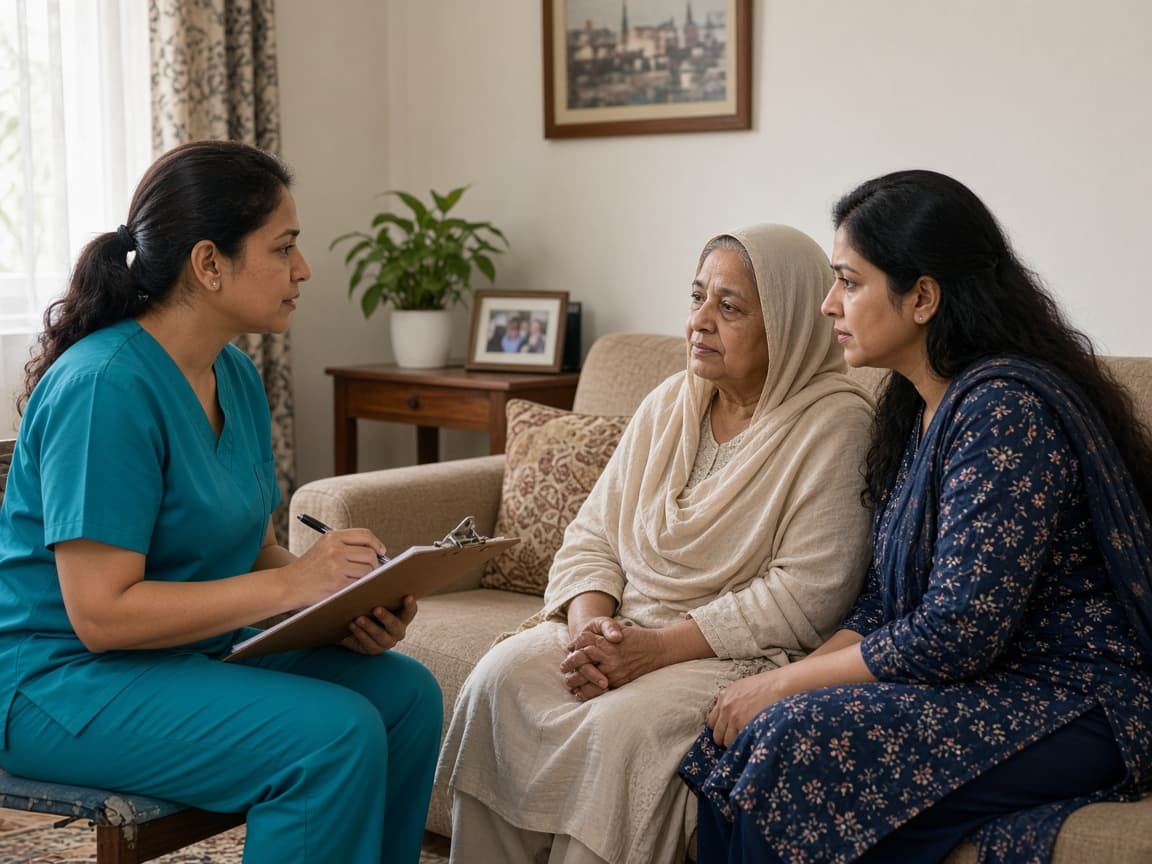
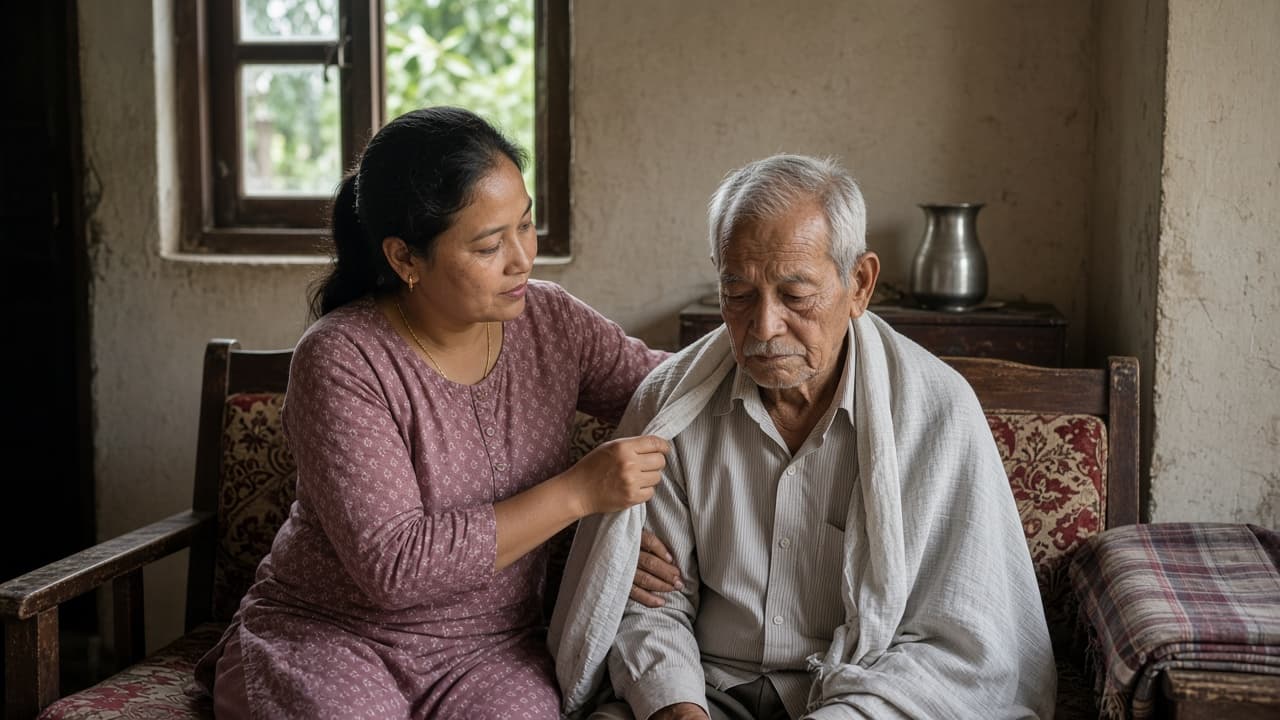
Caring for elderly parents at home still needs a plan for the ordinary day. Food. A wash. Medicines that are already prescribed. Someone who knows where the clinic papers are.
The World Health Organization describes healthy ageing as keeping the ability to do what matters, in the place the person lives. In many Nepali homes that place is a shared room, a kitchen, and a courtyard. Relatives are already there. Living together does not turn every relative into a nurse.
What the day includes
Ask what your parent can still do, and start there. If they can sit for a meal, use a chair with arms. Put the plate close enough that they do not have to lean off the seat. Rice, dal, vegetables, curd, an egg, milk, or a little meat if they eat meat, are normal food. You do not need a special menu copied from a poster. If chewing is hard, cook the meat softer and cut it smaller. Look at the teeth, and at the denture, before you decide they have lost interest in food.
Washing can be a bucket and mug. On a day when standing is too much, a cloth to the face, underarms, and groin is enough. Dry the skin under the breasts, in the groin, and between the toes. In hot weather a damp fold stays wet until evening and then becomes sore.
The toilet needs privacy and a clear path. Close the door if they are safe alone. Wait just outside if they are not. Shoes, a water bucket, and a coiled pipe should not sit between the bed and the bathroom. If the walk is long and a clinician has agreed a commode is safer, keep it covered when it is not in use. Empty it promptly. Smell and shame both make people drink less.
Company is part of the work. Sit while they eat. Walk as far as the door if they want to see who has come. Read the next clinic date out loud. Leave a quiet hour if they ask for it. A parent who is old may want the radio, or prayer, and not a stream of questions.
Medicines and the clinic folder
Keep prescribed medicines in one tin. Children should not be able to reach it. The tin should not sit on the damp wall beside the bathroom, or in steam from the rice pot. Write one list: the name on each strip, the time of day, and any tablet they also buy at the pharmacy. Take the tin and the list to the clinic. Memory of a dose is weaker than the strip in your hand.
Do not add a tablet that seemed to help an uncle. Do not stop a medicine because this week feels better. The prescriber makes those changes.
Put discharge notes, lab slips, and appointment cards in one plastic folder. The person who goes to the clinic carries that folder. If your parent wants to speak first, let them. You can add what you saw at home: less urine, a new cough, a night with no sleep, a stumble you nearly forgot by morning.
Work the family can do
Meals, drinks, clean clothes, and a dry sheet are family work. So is a reminder to take medicines that are already labelled. Walking beside the person is family work when a clinician has said the walk is safe. Noticing change is family work too.
Pick up a loose mat. Put a light where the night path to the toilet is dark. Home safety for seniors goes through the floor, the stairs, and that night path. Those fixes do not need a clinical licence. They need someone in the house to do them.
Write a simple split. Who cooks. Who does the morning wash. Who sleeps in the room. A sibling in another district can take a week when they visit, pay for the clinic ride, or sit for an afternoon. A neighbour who will stay for one hour while you collect medicine is real help. If the same person covers every night, the arrangement will fray.
Work that needs a nurse
Wound packing, catheter care, injections, and oxygen changes need a qualified nurse, even when a son or daughter has steady hands. Ask the clinic to name the tasks on paper. "Someone to help at home" does not say who turns the person, who looks at the skin, or which number to call if breathing changes.
Understanding home nursing separates those tasks from meals and company. If the hospital said a nurse should visit, keep that plan after you reach the house. The family can still cook and sit with the person around the visit.
When the usual day is not enough
Contact the clinic the same day for fever, a fall, sudden confusion, skin that has broken or turned black, trouble breathing, or pain that is worse than yesterday. Blood pressure, diabetes, and other long-running conditions still need their own visits. Those appointments stay on the calendar.
Watch your own sleep if you are the person doing most of this. Snapping at people you love, and skipping your own tablets, means another adult has to join the rota. The strain has a name, and it is worth reading about before you are ill yourself.
The note worth keeping at home is short. What they ate. Whether urine passed. Any new pain. Who is in the room tonight.