
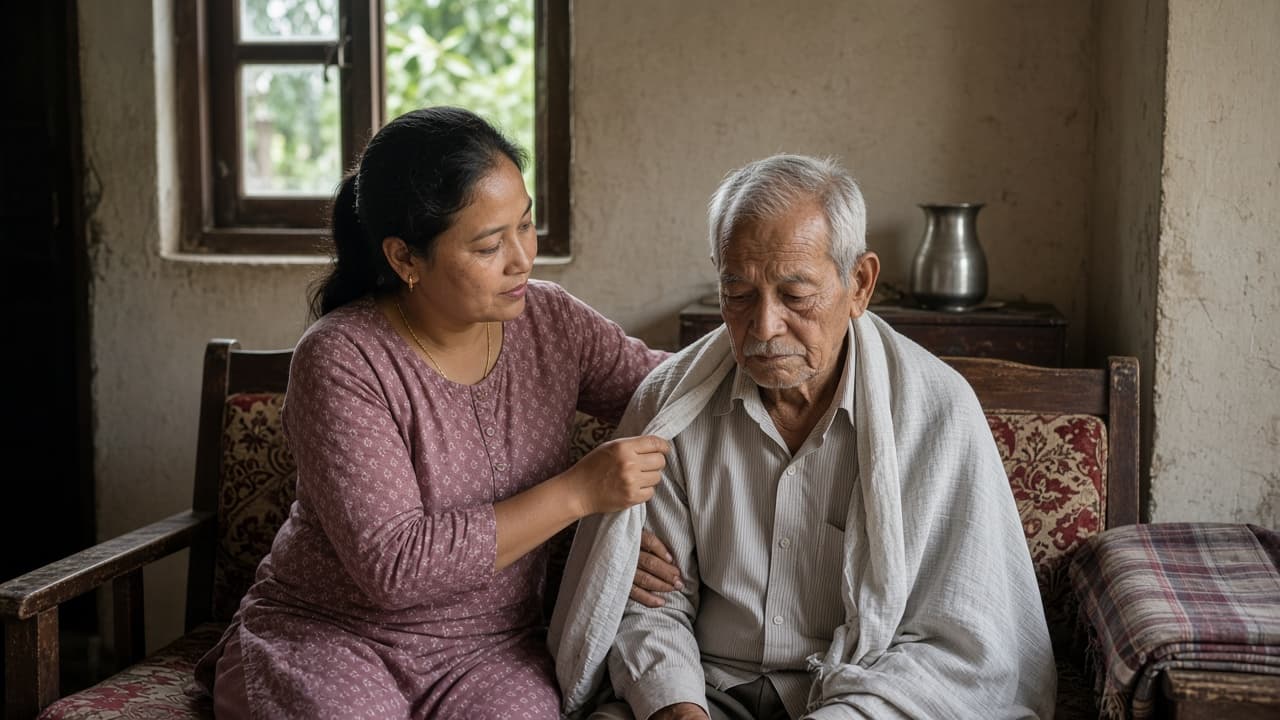
The same breakfast, the same chair, the same walk to the courtyard. A steady day is one of the most useful things a family can offer a person with dementia. The World Health Organization describes dementia as a syndrome that affects memory, thinking, behaviour, and the ability to manage everyday tasks. It is an illness. Forgetting a name once in a while, as many older people do, is a different matter. A diagnosis belongs to a clinician.
NHS guidance on staying independent with dementia favours familiar routines and a home that is easier to move through. You can do a lot of that with the furniture you already have.
How to speak
Use short sentences. One request at a time. "Come and eat" lands better than a paragraph about who cooked and why the timing changed. Point to the plate. Offer the shirt. Four choices at once are too many.
Give them time to answer. Fill the silence and you will answer for them, then wonder why they stopped talking. If they cannot find the word, supply it once and move on. Quizzes about the day of the week, used as a test, shame people. A clock and a calendar on the wall are kinder.
Look at them when you speak. Reduce the radio if it is competing. Hearing aids and glasses should be on, if they still use them. A lot of "not following" is a missed sentence, or a room that is too dark to see your face.
When the belief is not true
They may say a dead parent is coming, or that a neighbour stole the kettle. Arguing the fact rarely helps, and it can turn a sad moment into a fight. Respond to the feeling. If they are waiting for their mother, they may be lonely or hungry. Sit with them. Offer tea. You can say "You miss her" without pretending the chair will be filled, and without a sharp "She died twenty years ago."
Check the practical risk behind the belief. "Someone is in the kitchen" might be fear, or it might be the gas left on. Go and look. Hide nothing that they need for dignity, such as their glasses. Do store matches, cleaning liquids, and blades where they cannot be reached in a restless evening.
The house
The stove is the daily hazard. If they still cook, stay in the kitchen with them. If they switch the gas on and walk away, a family adult has to take over cooking. Knobs can be removed when the meal is finished, if you can do that without breaking the cylinder setup and you put them back in a place the cook can find. Do not rely on a lecture they will not remember at 5 p.m.
Wandering is similar. Some people leave the house to "go to the office" or to find a childhood lane. A bolt high on the door, out of habit's reach, can help at night if everyone inside knows how to open it in a fire. Do not lock a person alone in a room. An identity card in a pocket, with a phone number of someone who will answer, is worth sewing into a shawl if they will tolerate it.
Night needs a light on the way to the toilet. A dark corridor plus a full bladder is how people fall, and how they become more confused. Home safety for seniors covers mats, wet floors, and stairs. Those hazards land harder when memory is poor.
Keep medicines in a tin they cannot rummage. A person who does not remember the morning dose may take it again after lunch.
The rest of the day
Invite them into tasks they can still finish. Folding a towel. Shelling peas. Holding a grandchild on their lap while someone else stands close. Work that ends in failure will make both of you angry. Stop while it is still calm.
Caring for elderly parents at home is the meals, the wash, and the clinic folder around this illness. Pain, constipation, and a full bladder can show up as agitation. Check those before you decide the dementia "got worse this afternoon."
The person who does the nights will wear out. Share the waking. A sibling, or a neighbour for one hour, is practical help. Unchecked exhaustion shows up as illness and sharp words.
Clinic visits
Take a note of what changed, with dates. "Got lost on the usual road on Sunday. Left the gas on twice this week. Still knows us." That is more useful than "He is worse." Ask the clinician which changes should bring you back before the next appointment.
If they are frightened of the clinic, bring the familiar person, the usual shawl, and the medicine tin. One relative should speak. Three people correcting the story in the corridor will overwhelm them before the doctor starts.