
Home care in Banepa is a hill-town plan, not a Kathmandu plan with a different label. Banepa is a municipality in Kavrepalanchok, on the Araniko highway. Dhulikhel is the next town toward the east, with its own hospital. Kathmandu is the other direction, over the valley rim. Panauti is a different municipality again. Families lose time when they treat all of those as one service area.
Banepa is smaller than the metropolitan cities. A nurse who "comes from Kathmandu" may be a long ride, and a highway jam makes it longer. This page does not list who offers that ride, and it does not quote a fee. It tells you what to ask so you are not surprised at 7 p.m.
Say which direction help is coming from
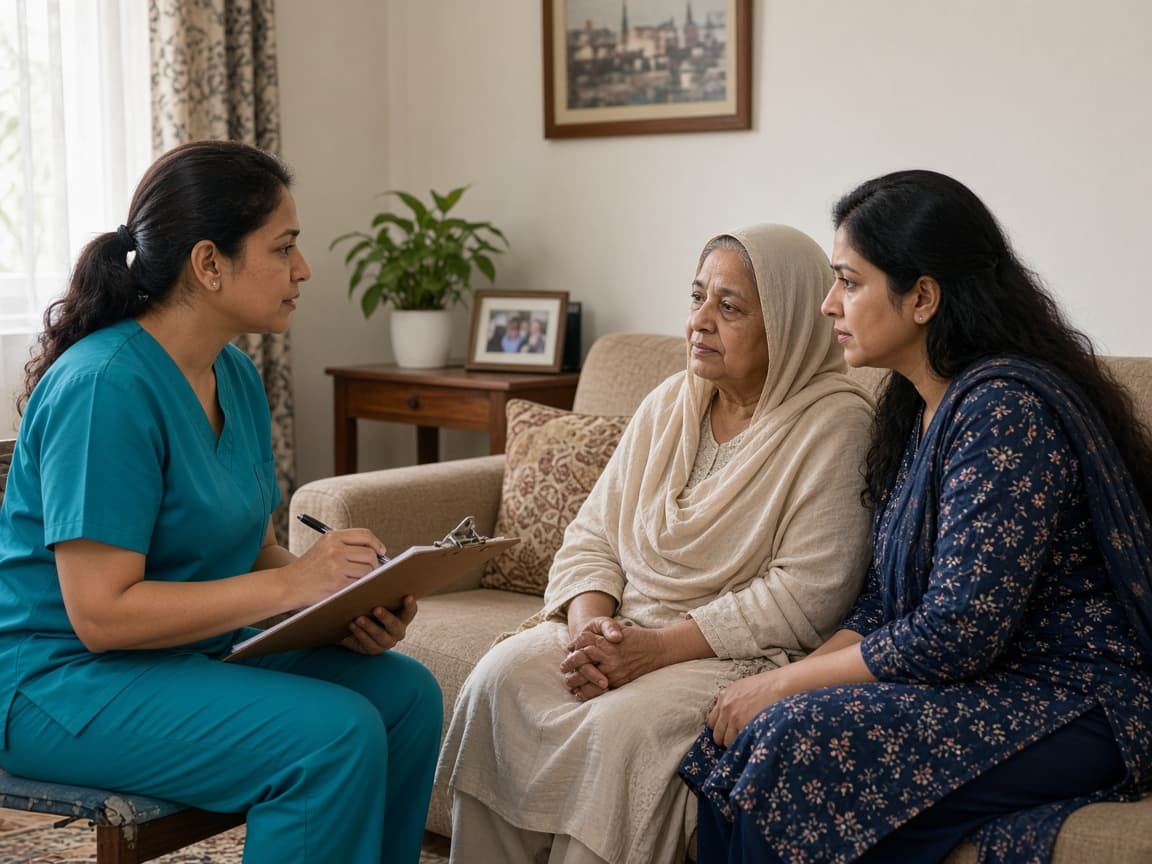
Ask the plain question: are you based in Banepa, in Dhulikhel, or in Kathmandu, and how long is the ride at the hour we need you? Write the answer, including the days they will not come. Choosing a home nursing service adds the clinical questions: which tasks, which doctor is in charge, what you do after they leave, and how you confirm the name at the door.
If the person has been discharged from a Kathmandu hospital or from Dhulikhel, do the paperwork before you start down or up the highway. Care after hospital discharge means medicines for the interval, dressing supplies, danger signs, and a phone number that still works in Banepa. Home care in Kathmandu describes the valley end of that journey. It is not a substitute for the house you are going back to. A Lalitpur or Sanepa address is a third place again. Do not book a Sanepa visit for a Banepa stair.
Winters are colder here than in the Terai, and many houses have a stair from the road. Tell the nurse the floor, whether the path is steep, and whether a wheelchair stops at the lane. A plan made for a valley flat will not survive an unheated upper room and a wet stone step.
What the family must be able to do
Because a visit may be once a day, or less, the person in the house needs to know the limits.
Urinary catheter care at home includes bag position and the ban on reinserting a tube. If the nurse is stuck on the highway, the family still should not invent a fix. Call the number you were given, or go to the emergency department you were told to use.
Basic wound care at home follows the discharge note through the gap. Ask what to do if the next visit slips by half a day. Do not open a surgical dressing early because you are worried and the highway is slow.
Physiotherapy at home should include the stair, or an explicit instruction that the stair is forbidden. The World Health Organization describes rehabilitation as support for daily activities. In Banepa the daily activity is often the step to the toilet or the yard, not a long flat corridor. Ask the therapist to watch the helper once. A list sent from Kathmandu without that look is incomplete.
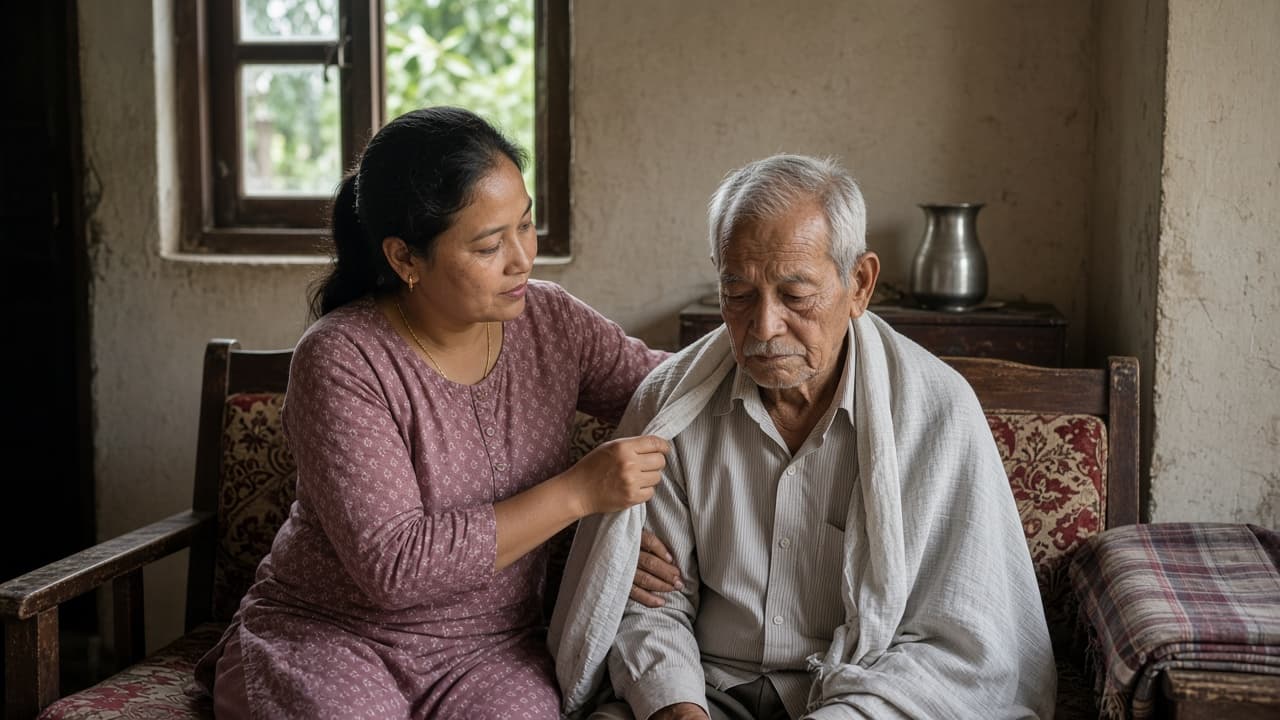
Dementia care at home needs the same helper most evenings. A parent left with changing relatives and a dark stair is a fall risk. Palliative care at home needs the comfort plan and the clinician's number in the house, not only in a child's phone in the valley.
Dehydration at home still matters in the warmer months, and a cold room matters in winter for a person who is not moving. Mention both to anyone who is writing a "routine" visit.
If they worsen while the highway is slow
Ask the treating clinician whether tonight's emergency department is in Dhulikhel, in Banepa, or back in Kathmandu. The answer depends on the illness and the hour. Get it before you need it. Home care in Banepa is possible. It starts with an honest ride time, a stair someone has seen, and a family who knows what not to do while they wait.