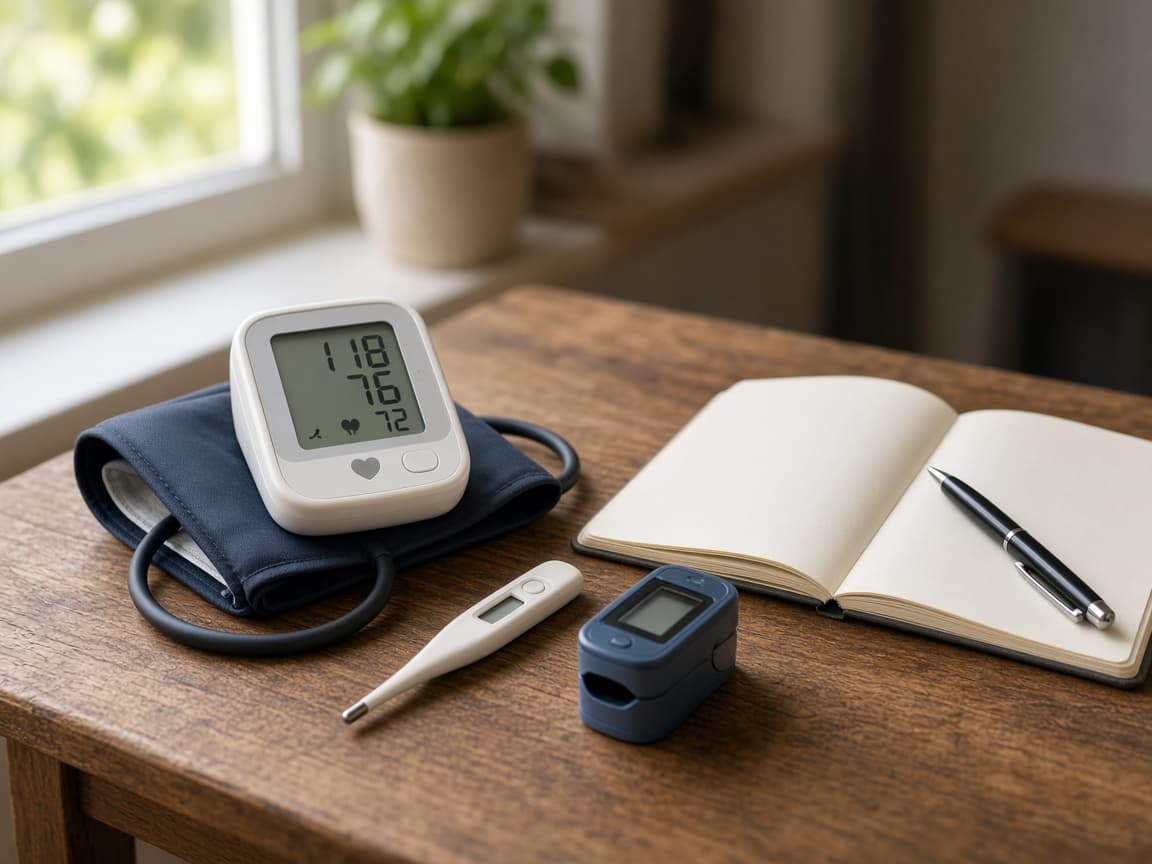
A household does not need a cupboard of gadgets to look after an older relative. A few tools, used the same way each time, are more useful than a device nobody trusts. This list is for families in Nepal who want a practical kit. Prices and brands change by market, so this article does not recommend a shop or a model.
None of these tools diagnoses a disease. They describe one measurement, at one moment.
A thermometer
Fever is a sign, not a diagnosis. Use a digital thermometer as the manufacturer describes, and clean it between people. Write the temperature, the time, and whether the person has chills, a rash, a stiff neck, confusion, or trouble breathing.
An older adult can be seriously ill with a small temperature rise or with a temperature that is lower than usual. Do not wait for a “very high” number if the person is hard to wake, has chest pain, or is struggling to breathe.
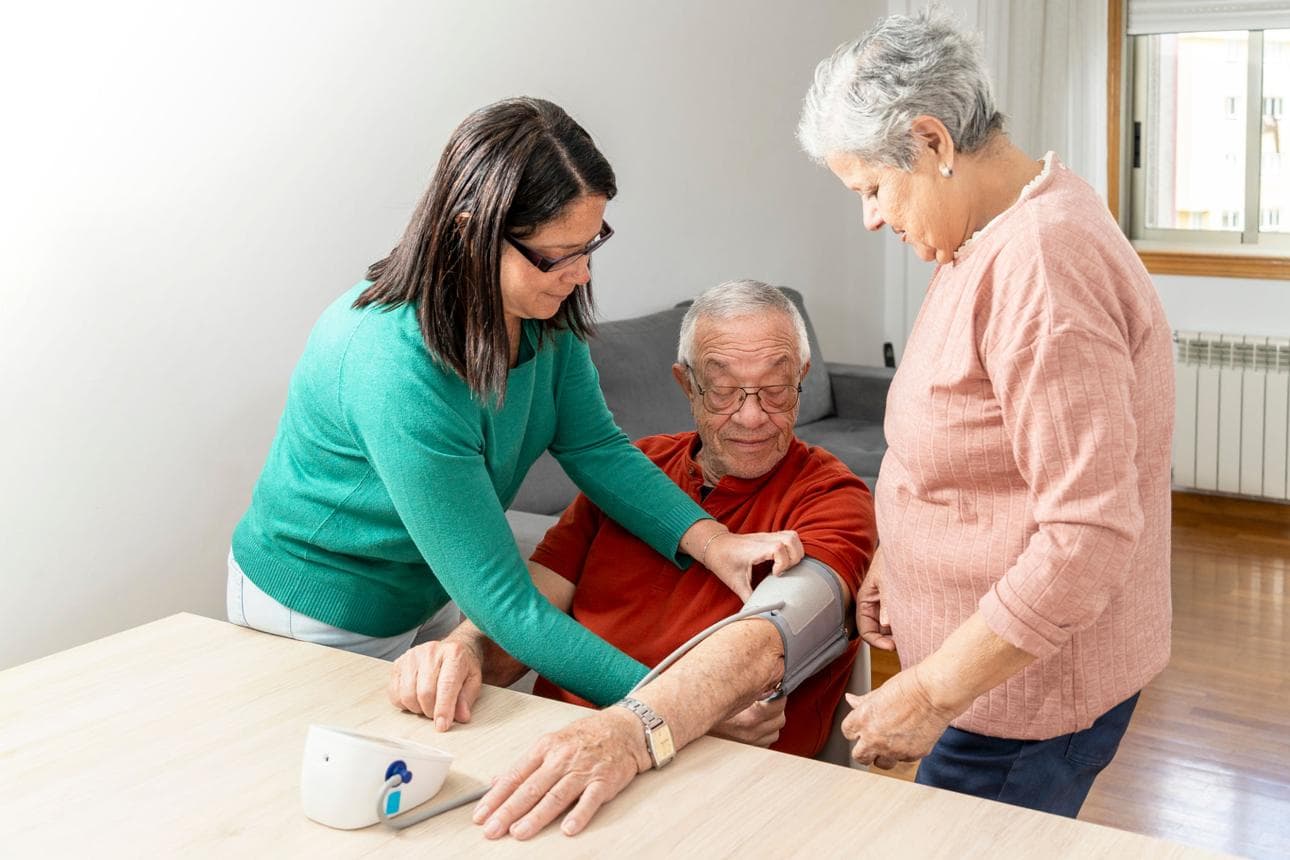
An upper-arm blood pressure monitor
Home blood pressure checks help people who are already being treated for hypertension, which the World Health Organization identifies as a major cause of early death worldwide. Choose a cuff that fits the arm. Ask a clinic to compare the home machine with theirs once.
Sit quietly first, support the arm at heart level, and record two readings. How to fold those numbers into diabetes and blood pressure care is covered in managing blood pressure and diabetes at home.
A monitor does not decide that a tablet should be skipped. It gives the clinician a pattern.
A blood glucose meter, if one was prescribed
Buy a meter only when a clinician has asked the household to test. Store strips away from heat and humidity, check the expiry date, and never share lancets. A meter without teaching is easy to misread, especially if the hands were not washed.
A pulse oximeter, used with caution
A fingertip oximeter estimates oxygen in the blood. The U.S. Food and Drug Administration has warned that readings can be less accurate with poor circulation, movement, nail polish, and for some people with darker skin. Cold fingers and anaemia also confuse the number.
Use it on a warm, still hand, and look at the person as well as the screen. Someone who is blue, gasping, or confused needs emergency care even if the device shows a reassuring figure. Someone who looks well does not need repeated checks through the night unless a clinician asked for them.
What else is reasonable
Keep soap, clean cloth, any prescribed dressings, and a written list of medicines and allergies. A torch helps you look at a wound or a pupil if the power cuts. Elastic bandages and neck collars should not be used as treatment for a fall or a road injury. Those situations need a proper assessment.
Skip unprescribed oxygen cylinders. Oxygen is a medicine. The flow rate has to be set by someone qualified, especially for people with chronic lung disease.
Caring for the tools
Replace batteries, keep manuals, and note the date you compared the blood pressure monitor with a clinic machine. If a screen cracks or a reading is wildly different from the person’s symptoms, stop using that device.
Families who have been asked to manage drains, catheters, or complex dressings may need a nurse rather than another tool. That difference is explained in understanding home nursing. After an operation, the discharge note outranks anything in the cupboard. See post-surgery care at home.
Frequently asked questions
Is a phone camera a medical device?
No. Photos can help you show a wound to a clinician. They do not measure oxygen, pressure, or glucose.
Do we need a nebuliser at home?
Only if a clinician has prescribed nebulised medicine and shown you how to use and clean the machine. A nebuliser is not a treatment for every cough.
How do we know a monitor is good enough?
Compare it once with a clinic device, use the correct cuff, and follow the same position every time. A higher price does not remove the need for technique.
Buy less, learn one method, and write the results down. That is the kit most families can actually use.