High blood pressure and diabetes often travel together, and both can be managed partly at home. The home routine does not replace a doctor. It helps a family follow the plan that a clinician has already made, notice change early, and arrive at the next visit with a clear record.
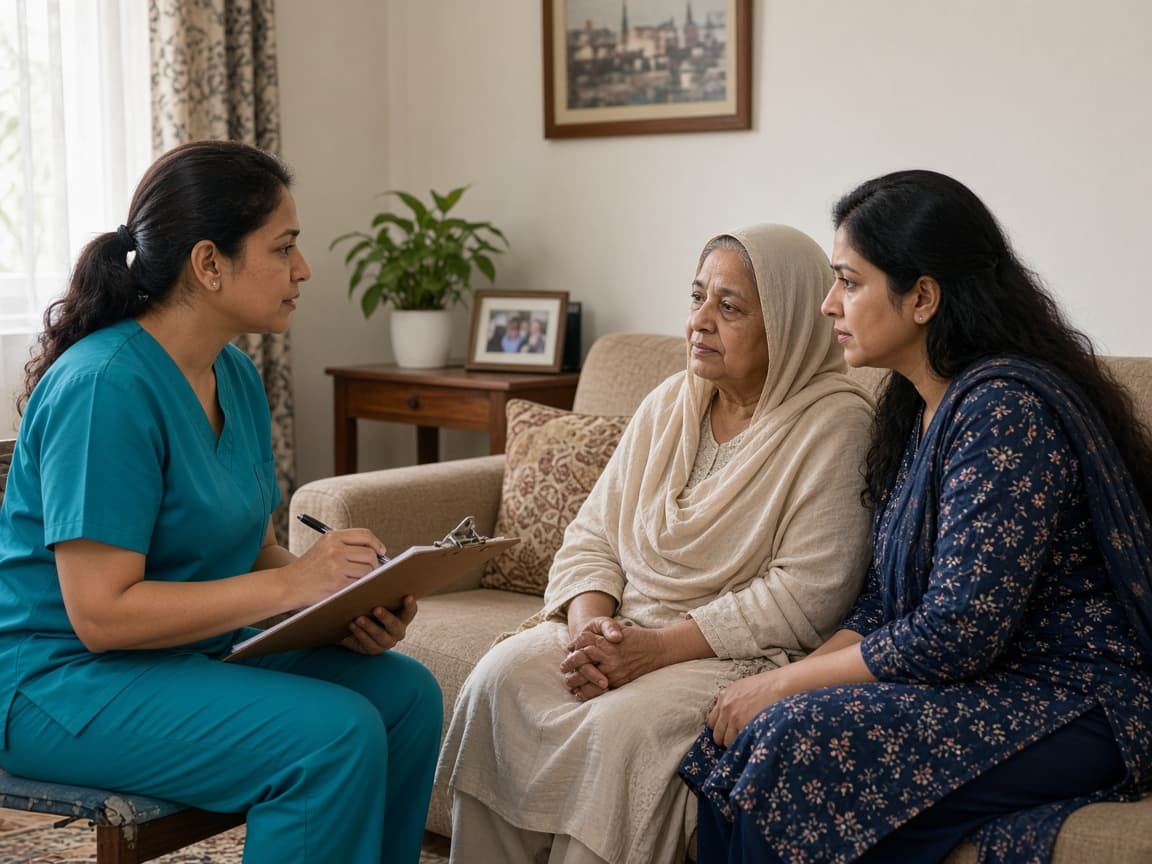
This guide is for adult children and spouses in Nepal who help an older relative check readings, take prescribed medicines, and decide when a symptom needs a clinic or an emergency service. It is educational. It has not been reviewed by a named clinician for this publication.
What families are actually managing
Blood pressure is the force of blood against the artery walls. Diabetes is a condition in which blood glucose stays higher than it should. The World Health Organization describes both as common, long-term conditions that raise the chance of heart attack, stroke, kidney disease, and other complications when they are not treated.
A single home number does not diagnose either condition. Diagnosis, medicine, and personal targets belong to a qualified clinician. Families can still do three useful things: measure carefully, keep the record, and know which symptoms mean the plan is no longer enough.
Measuring blood pressure at home
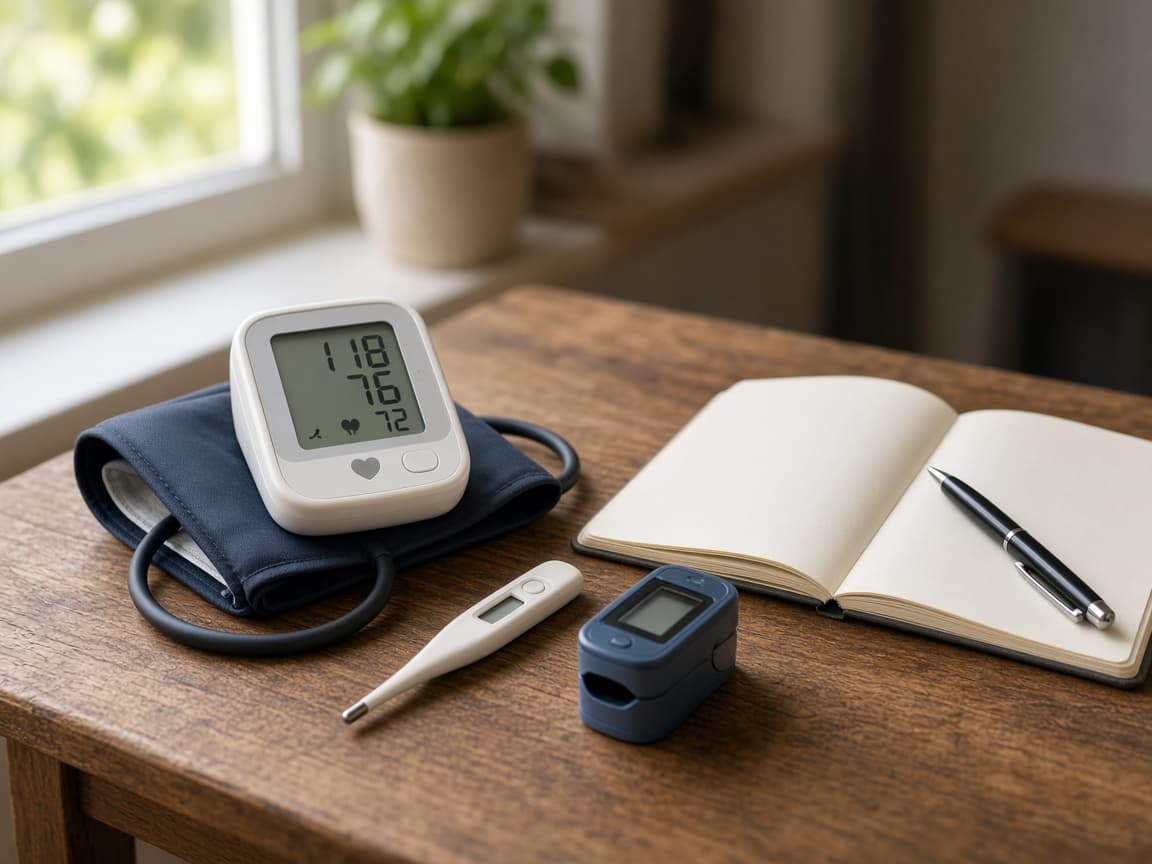
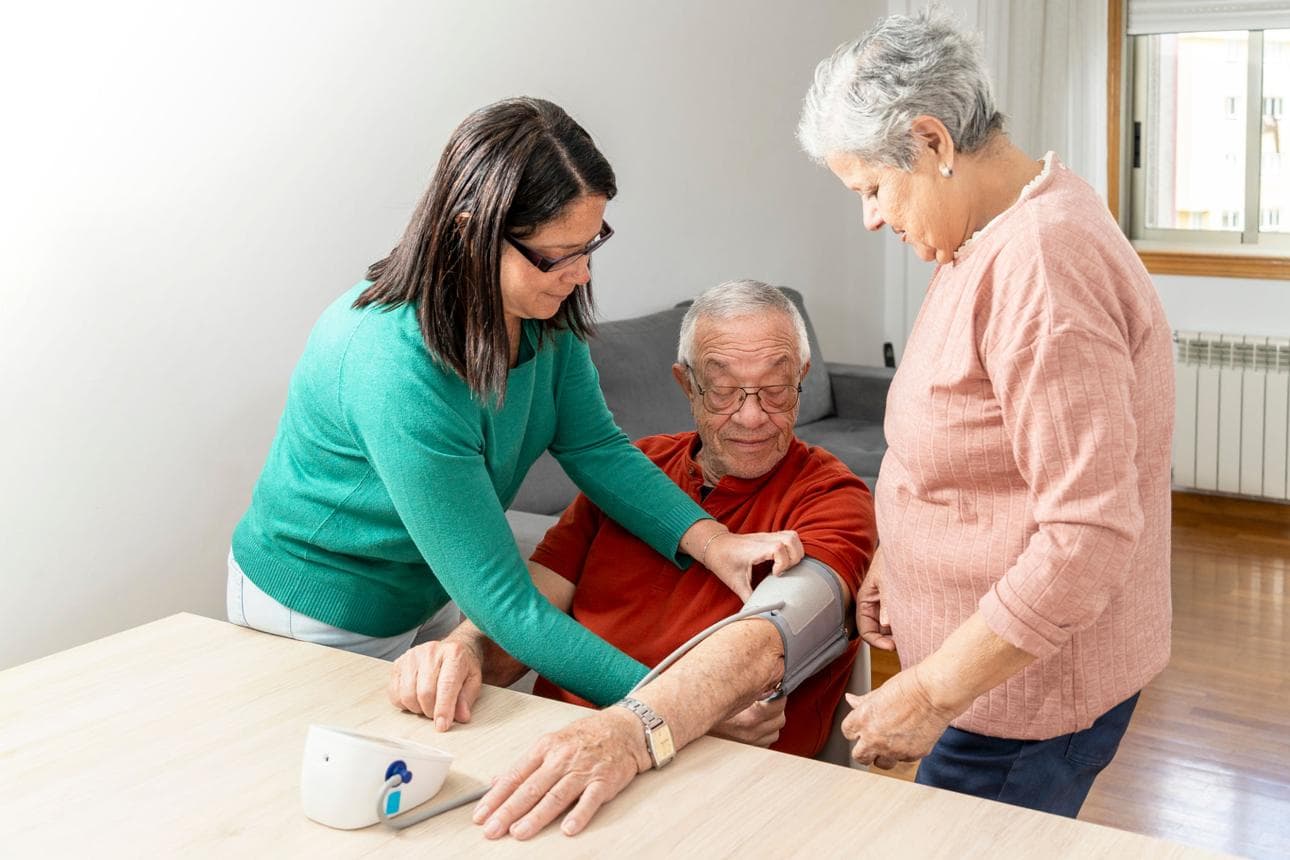
An upper-arm cuff is the device most often recommended for home checks. Wrist monitors are easier to misplace and are a poor default unless a clinician has asked for one.
Before a reading:
- Ask the person to sit quietly for about five minutes.
- Use a chair with back support. Keep the feet on the floor and the legs uncrossed.
- Rest the arm on a table so the cuff sits at heart level.
- Avoid caffeine, exercise, and smoking in the half hour before the check.
- Take two readings, one or two minutes apart, and write both down.
Do not measure over thick clothing. A cuff that is too small or too loose gives a misleading number. If the person winces, the cuff may be the wrong size. Ask a pharmacist or clinic to check the fit.
Compare the home machine with a clinic machine once, so you know whether the home device reads higher or lower. Replace batteries before the display fades. Do not decide that a medicine has failed because of one unusual morning.
Checking blood glucose
Check glucose only with the method a clinician has recommended. That may be a finger-stick meter, a laboratory test, or another device. Share lancets and strips with no one. Wash and dry the hands before a finger-stick so food on the skin does not raise the result.
Record the time of the reading and whether it was before a meal, after a meal, or at bedtime, if that is the pattern the clinic asked for. A number without that context is hard to interpret.
Low blood glucose can cause sweating, shakiness, hunger, confusion, or sudden irritability. If the person is awake and able to swallow, a clinician’s sick-day or hypoglycaemia plan should say what to give. If the person is drowsy, fitting, or cannot swallow, this is an emergency. Do not pour liquid into the mouth of someone who cannot swallow safely.
Medicines, meals, and movement
Give prescribed medicines at the times written on the label. Do not start, stop, or split a dose because a home reading looked better for a few days. Some blood pressure and diabetes medicines are unsafe to stop suddenly.
If a dose is missed, use the instruction that came with that medicine or ask the dispensing pharmacy. Do not double the next dose unless a clinician has said to do so.
Meals can follow foods the household already cooks. A useful pattern is a regular meal time, plenty of vegetables, pulses, and unsweetened drinks, with less salty pickle, instant noodles, and sugary tea. There is no single Nepali menu that treats hypertension or diabetes. A dietitian or doctor can adapt advice to the person’s kidneys, budget, and what the local market sells.
Walking and ordinary housework help many people, if a clinician has said activity is safe. Chest pain, severe breathlessness, or dizziness during movement is a reason to stop and get medical advice. Read basic exercises for elderly mobility before starting a new routine after illness or surgery.
When a reading should change the plan
Ask the treating clinician what numbers should prompt a call for this person. General education from the American Heart Association explains how clinic readings are grouped, but an older adult with diabetes, kidney disease, or a recent stroke may have a different target.
Contact the usual clinic soon, and do not wait for the next scheduled visit, if:
- Home readings are repeatedly much higher or lower than the person’s usual range.
- The person has new swelling, a persistent cough, or unexplained weight change.
- A foot wound, vision change, or burning when passing urine appears.
- Medicines are running out and a refill is not arranged.
Common mistakes
Families often check blood pressure right after climbing stairs, then treat that number as the day’s result. They also stack several home devices and average them without knowing which cuff fits. Another frequent problem is sharing diabetes strips that have been stored in heat or past their date.
Do not use another person’s medicine because the name looks similar. Do not stop a medicine because a neighbour had a side effect. Bring the actual strips, bottles, and notebook to the appointment.
Questions for the next visit
- What blood pressure and glucose range should we aim for at home?
- Which readings mean we should call, and which mean we should go to emergency care?
- What should we do on a day of fever, vomiting, or a missed meal?
- Which clinic or hospital should we use if our usual doctor is unavailable?
Professional nursing support is a separate decision. Understanding home nursing explains the difference between family care and skilled nursing. A reliable cuff and meter are covered in essential medical tools for Nepali households.
Frequently asked questions
Can we diagnose high blood pressure from a pharmacy reading?
No. A pharmacy or home reading can suggest that a check is needed. Diagnosis needs a proper clinical assessment.
Is brown rice or bitter gourd a treatment?
Food choices support the plan a clinician has made. They do not replace medicine when medicine has been prescribed, and they do not cure diabetes.
How often should we measure?
Use the schedule the clinician gave you. Measuring many times a day without a reason often creates anxiety and does not improve care.
What if the cuff hurts?
Stop and check the size and placement. Painful or repeated very high readings with symptoms need medical advice rather than another attempt with the same cuff.
This article is general education. A doctor who knows the person’s medicines, kidneys, and recent results should set the home plan.