A warm forehead in the evening is common in a Nepali house. Someone checks with the back of a hand, then with a thermometer, then starts a debate about whether the number is high enough to leave for the hospital. Fever is a raised body temperature. It is a sign. The illness behind it still has to be identified.
No single temperature always means hospital, and no single temperature always means stay home. Children and adults differ. A baby can become seriously ill quickly. An older adult can be quite unwell with a smaller rise, or with a temperature that is lower than their usual, plus confusion. Look at the person as well as the thermometer.
What families can do
Dress them in light clothing. A heavy blanket tucked "so the fever breaks" can make them more uncomfortable. The room can be comfortable. Do not sponge them with very cold water or alcohol.
Offer drinks if they can swallow safely. Small, frequent sips are easier than a large glass pushed at once. Dark urine, a dry mouth, or fewer wet nappies are reasons to read about fluids in dehydration at home and to get medical advice if they cannot keep drinks down.
Use the fever medicine already prescribed or already advised for this person, at the timing written on that instruction. Do not invent a dose from a neighbour's strip. Do not alternate two different fever medicines unless a clinician has told you to do that for this person. If you are unsure the packet is theirs, ask a pharmacist before giving it.
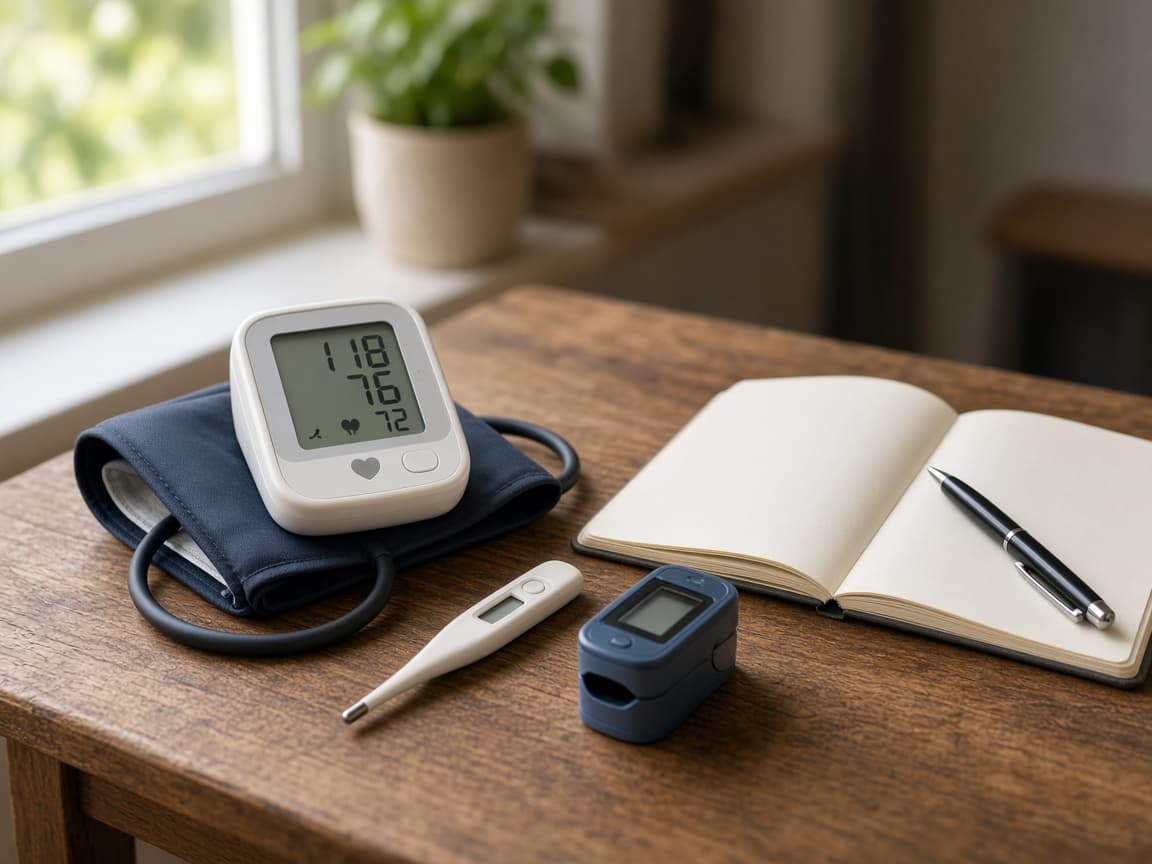
Let them rest. Eating a little is fine if they want food. Forcing a large meal does not bring a temperature down. Write the temperature, the time, and other symptoms: cough, ear pain, burning urine, a rash, vomiting, or a stiff neck.
A cough with fever often involves the chest and airways. Offer rest and fluids, and give only a medicine already prescribed for this illness. Do not start a leftover antibiotic because the evening feels worse.
Babies and children
A baby with fever needs a clinician's eye, urgently. Do not wait overnight to see if a young baby "settles" on home remedies. Tell the clinician their age, how they are feeding, and whether they are wetting as usual.
Older children often have viral illnesses that improve with rest and fluids. Even so, trust a change in behaviour. A child who is very sleepy, hard to wake, or not themselves needs urgent care. So does a child who is not passing urine, who has a seizure, or who is working hard to breathe.
Check a rash in good light. Press a clear glass gently on the skin. If the marks do not fade under the glass, get emergency help. A stiff neck with fever, a bulging soft spot on a baby's head, or a cry that is weak and different from their usual cry should not wait for morning.
Children can spike a temperature and look flushed, then improve after the medicine they were prescribed. Improvement for an hour does not cancel a rash that does not fade, or breathing that is too fast.
Adults, including older adults
In adults, a fever with a obvious cause, such as a sore throat, may be watched at home while they drink, rest, and use the advised medicine. Call the clinic if it is not settling, if they develop chest pain or breathlessness, or if they have a condition that makes infection riskier, such as pregnancy, diabetes, or treatment that affects immunity. The practical split between clinic and emergency is in when to visit a doctor.
Older people may not mount a high temperature. New confusion, a fall, waking much less than usual, or going off food can be the fever's substitute. Tell the clinic about that change even if the thermometer looks ordinary.
Some infections become an emergency. The NHS describes sepsis as a life-threatening reaction to an infection. Households are not asked to diagnose it. They are asked to act on danger signs.
Go sooner if they have a severe headache unlike their usual pain, blue or grey lips, skin that looks mottled, or they cannot complete a short sentence because of breathlessness. Bring the temperature record and a list of medicines, including any recent antibiotics.