The pain may feel like pressure, tightness, or a weight across the chest. It may travel into an arm, the jaw, the neck, or the back. Some people mainly feel sick, sweaty, or suddenly too tired to stand through a conversation. A heart attack is an emergency. Waiting to see if it eases after rest can cost the hours in which treatment does the most.
The World Health Organization groups heart attacks with other diseases of the heart and blood vessels. Households do not need to sort those names. They need to recognise a pattern and call for help.
What people often feel
Chest discomfort is the sign most families have heard about. It can be crushing, squeezing, or a band. It can sit in the centre of the chest or a little to one side. It may come with breathlessness, nausea, a cold sweat, or a sense that something is badly wrong.
Pain or heaviness can spread into the left arm, the right arm, both arms, the jaw, the neck, or the upper back. Some people feel discomfort in the upper belly and think it is a bad meal.
Women and older people sometimes have less obvious symptoms. The chest pain may be milder, or hard to describe. Breathlessness, nausea, unusual fatigue, or discomfort in the jaw, back, or upper belly may be the clearest signs. An older person may say they are only weak, or that a usual walk to the courtyard has become impossible this afternoon. Take that change seriously. Do not require a dramatic clutch of the chest before you call.
A first episode can happen in someone who has never been told they have a heart problem. Known heart disease, diabetes, or high blood pressure raise concern, and so does a first sudden illness in someone with none of those labels.
What to do, and what to leave alone
Call even if you are not sure. Say that you are worried about a heart attack, and describe the pain, the breathing, and when it started.
Do not let the person drive themselves if someone else can get help. Driving while in this pain puts them and other people on the road at risk, and a person who feels a little better in the seat may worsen on the way. If emergency services cannot reach you and a relative can drive, that relative drives. The sick person sits or lies as comfortably as they can, with a seatbelt if they are in a vehicle.
Do not give aspirin because a poster or a neighbour said it helps. A household does not know the cause of the pain, the person's bleeding risk, or their allergies. Emergency staff can decide about medicines. Do not give a relative's heart tablet, a crushed painkiller, or anything "to open the chest."
If they have been prescribed a specific medicine to take for chest pain, such as a spray or tablet already in their plan, use it only in the way that plan describes. If you cannot find that instruction quickly, do not guess. Call.
Loosen tight clothing. Keep the room aired. Stay with them. If they collapse and are not breathing normally, emergency dispatch may talk you through what to do. Follow that voice.
Sudden weakness on one side, a drooping face, or trouble speaking can be a stroke rather than a heart attack, and that is also an emergency. Those signs are listed in stroke warning signs. Call for either pattern.
After the worst moment, and the quieter warnings
Indigestion, muscle strain, and anxiety can also cause chest discomfort. Families cannot reliably sort those from a heart attack at the kitchen table. New, severe, or persistent chest pain, especially with sweat, nausea, or breathlessness, belongs in emergency care. A clinician can tell you later if it was something else.
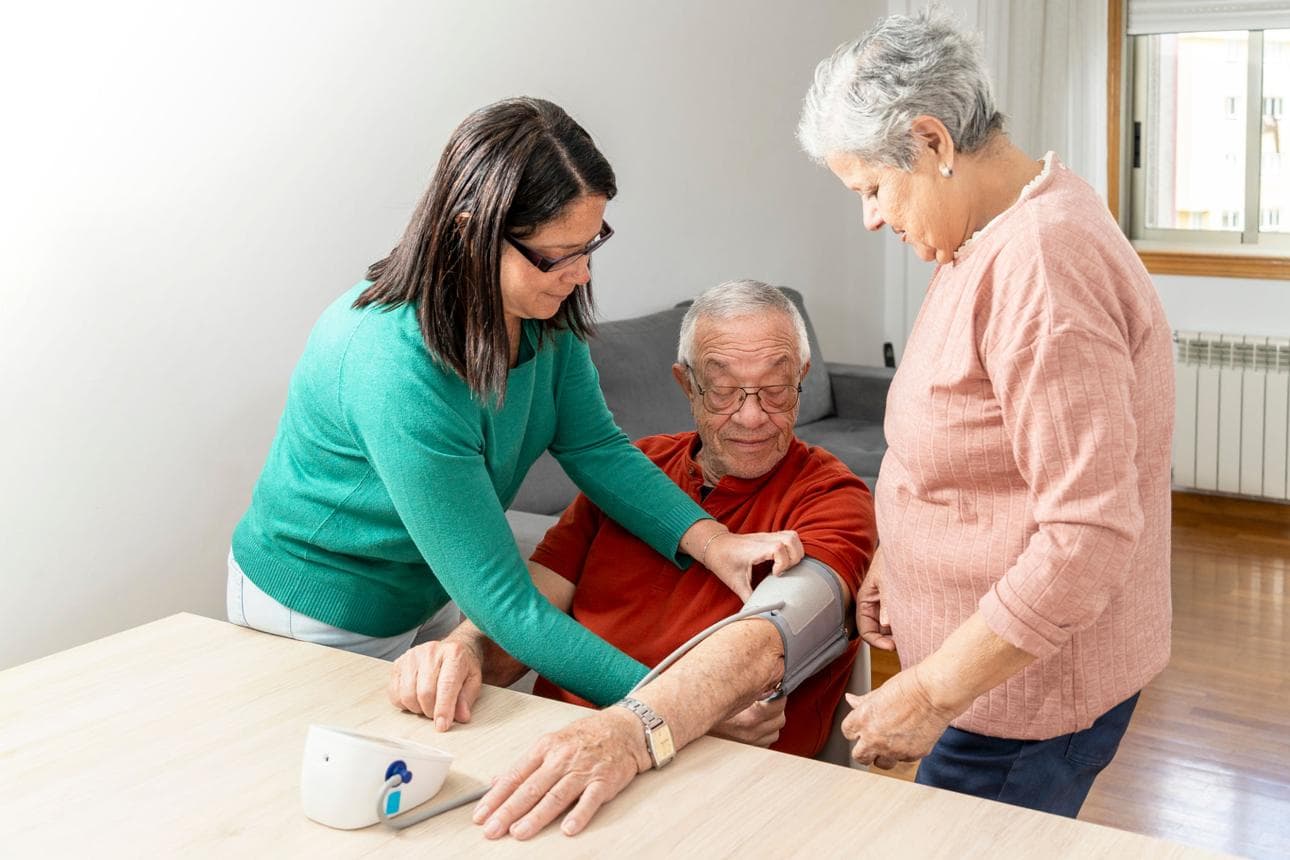
Once a person is home after a heart problem, blood pressure checks still follow the clinic's method. How to sit for a reading, and why one number does not reset the plan, is covered in managing blood pressure at home. Do not restart exercise or change tablets because they "feel back to normal" after a scare that has not been assessed.
Breathlessness that is new, fainting, a racing or very slow pulse with illness, or chest pain that returns after settling should go back to emergency care. A milder, lingering worry after a normal assessment can go to the clinic soon.
Bring a list of medicines, including blood thinners and diabetes treatment, if you can gather it without delaying the call. Tell staff about allergies. Leave the rest of the cupboard where it is.