
Chest infection symptoms can start as a cough after a cold and stay in the house for days. The person wants to lie down, the family wants an antibiotic, and someone suggests a strip left from last monsoon. Most of the useful work is simpler: rest, fluids if they can drink, and the medicine a clinician has already chosen for this illness.
The World Health Organization describes pneumonia as an infection of the lungs. Not every cough is pneumonia. A clinician decides that, using the examination and, when needed, tests. At home, the task is to support recovery and to notice when breathing itself is failing.
The ordinary days
Let them rest. Prop them up a little if lying flat makes the cough worse. Offer drinks often enough that the mouth stays moist, unless a heart or kidney clinic has set a fluid limit. If there is a fever, use light clothing, keep a record of the temperature, and give only the fever medicine already advised.
Give prescribed antibiotics exactly as the label and the clinician said, if antibiotics were prescribed for this infection. Finish the course if that is the instruction, or stop if they have told you to stop. Do not start leftover antibiotics from an old envelope. The old strip may be the wrong drug, the wrong person, damaged by damp, or past its date. It can also make a later infection harder to treat.
Cough syrup and herbal steam do not replace an assessment when breathing is hard. Steam can burn a child if a bowl is knocked. Skip that method for children.
Keep a bit of air in the room. A shut room with several people and a smoking relative makes coughing worse. Smoke outside the house, away from the person who is ill, if smoking cannot stop today.
Keeping it from spreading through the rooms
Cover coughs and sneezes with a tissue or the inner elbow, then wash the hands. Soap and water are enough. The moments that matter in a house, including before food and after the toilet, are set out in preventing infections at home.
Do not share the cup, the handkerchief, or the towel used to wipe the face of the person who is coughing. Wash that cloth in the usual hot soapy water and dry it in the sun if you can. A mask on the person who is coughing, when they can tolerate it and when they are near others, reduces spray. It does not replace handwashing.
People who are very young, very old, pregnant, or already unwell should have a little distance from the coughing person if the house allows it. Complete separation is often impossible in a small home. Handwashing and not sharing face cloths still help.
When a cough stops being a home illness
Fast breathing is a warning, in adults and especially in babies and children. Count the breaths only if you can do it without delaying help, when the person is resting or a baby is calm. What matters is breathing that looks too quick, too hard, or uses the muscles at the neck and between the ribs.
Chest pain with breathing, blue or grey lips, and confusion need urgent care. A baby who is feeding poorly, too tired to suck, or whose belly pulls in under the ribs with each breath needs urgent care. So does a child who grunts or cannot be woken properly.
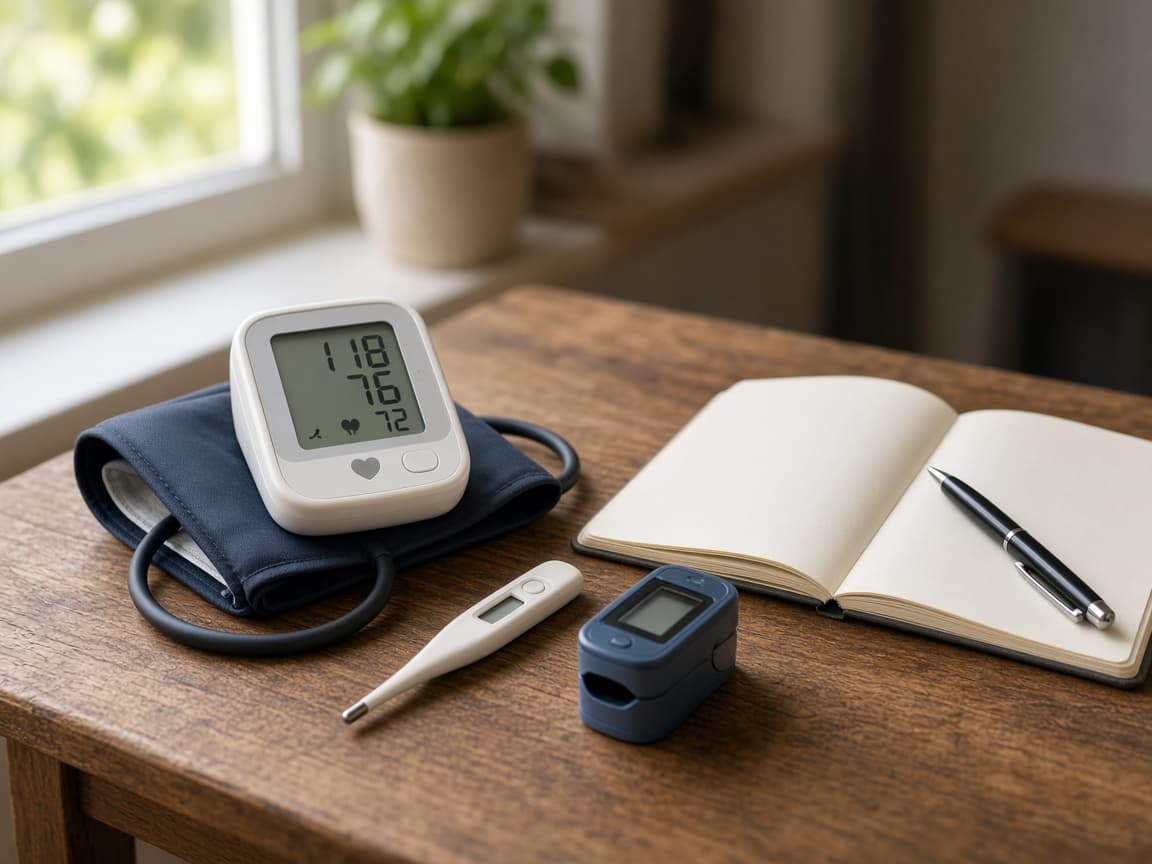
A pulse oximeter, if the house has one, is only an estimate. Cold fingers and a poor signal can mislead, and a comforting number does not cancel gasping. How to read that device is in understanding oxygen saturation.
Worsening over hours, a new rash, a stiff neck, or not passing urine are further reasons to leave home for care. Tell the clinician how many days the cough has lasted, whether there is blood in the sputum, and what medicines have already been given. Blood in sputum should be reported promptly. Do not decide on your own that it is only a burst capillary from coughing.
After the acute illness, a cough can linger. If breathing, fever, or feeding are getting worse, or an older person is newly confused, go back. If the person is slowly improving, eating, and breathing comfortably, ask the clinic when they want to see them again rather than adding new medicines from the pharmacy shelf.