
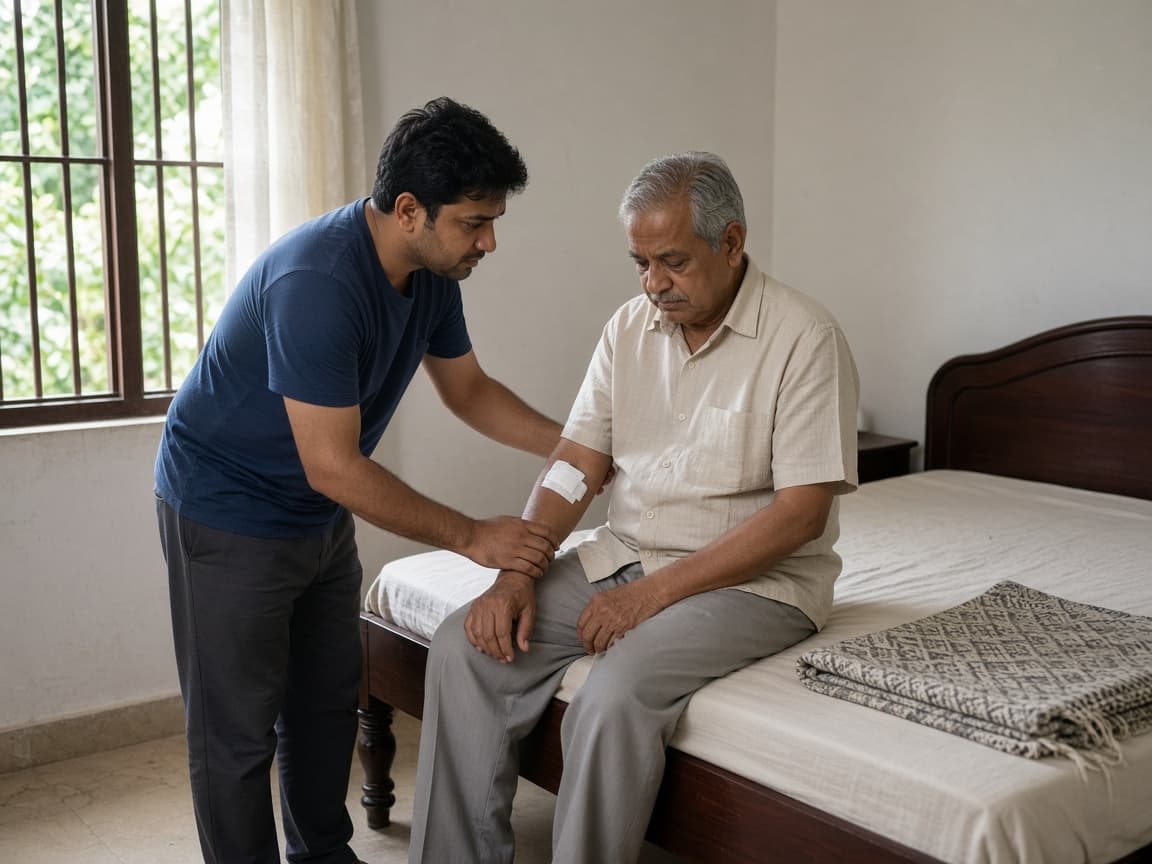
A broken hip in an older adult is usually treated with an operation. NHS hip fracture pages describe that surgery, then a stretch of rehabilitation that asks a lot of both the person and the family. Tiredness can last long after the wound looks quiet. Days of sleeping, small meals, and a short walk to the chair are a common picture. They are not a sign that effort was wasted.
Confusion can appear in older people after a hip fracture and should be reported. A person who was sharp before the fall may not know the time, may see things that are not there, or may try to climb out of bed at night. Tell the treating team the same day. New confusion can come with infection, pain, constipation, a medicine change, or the stress of the injury itself. Families should not wait a week to "see if it is just the hospital stay."
In a shared room, the person who sleeps nearest them is often the one who notices night-time restlessness. Agree who will be awake enough to hear that, and keep a light and the walking aid within reach so a confused trip to the toilet does not become a second fall.
Weight bearing is a written instruction
How much weight the leg may take is whatever the surgeon wrote. Some people are allowed to walk as comfort permits. Others must limit weight, sometimes with a walker, for a period the paper names. A family meeting does not upgrade that instruction because the person "looks steady."
Ask the physiotherapist to show the allowed walk in the corridor of your own home: the hand position, the aid, and what to do at the toilet. Moving between bed and chair is the transfer to rehearse before discharge if you can, because that is where falls happen on the first evening back.
Pain that suddenly increases, a leg that turns outward in a new way, or a feeling that the hip has shifted are reasons to stop walking and call. So is a grinding sensation that was not there after the operation. These reports need a clinician. They are not motivation problems.
Skin, medicines, and the next fall
Pressure areas need a daily look: heels, tailbone, and the skin over the operated hip if the person lies on one side for hours. Redness that stays after the pressure is moved, broken skin, or a damp dressing should be reported. Change position on the schedule the ward taught, including at night.
Give medicines as prescribed. Pain that is untreated makes breathing shallow and makes people refuse to move, which feeds more weakness. This article will not name a dose or suggest an extra tablet. If pain breaks through the prescribed plan, call the team rather than borrowing a neighbour's painkiller.
A second fall is a clinical event. Even a slide from the chair that "did not look hard" can disturb the repair. Help the person stay where they are, check for pain and a change in leg position, and contact the surgical team before trying to walk it off. Falls among older adults goes into how homes and habits contribute to falls. After a hip fracture, prevention is part of the recovery plan, not a separate project for later.
Breathlessness and chest pain can have several causes after surgery, including a clot that has travelled to the lung, a chest infection, or a heart problem. The family does not have to sort those causes out. A hot swollen calf, chest pain, a wound that opens, new confusion, or a dressing soaked with fresh bleeding needs a call to the treating team the same day. Severe breathlessness and collapse are emergencies.
Eating, bowels, and energy
Small meals and fluids, as the person can manage, support healing. Constipation is common with pain medicine and less movement, and it can worsen confusion and appetite. Mention the bowels at every review. A day of poor intake after a tiring trip home is understandable. Several days of almost no drinking, or vomiting, needs a call.
The operated leg may look longer, shorter, or more bruised than the family expects. Ask at the first review what appearance is expected for this operation, and what change should bring them back early. Photographs taken in the same light every few days help the clinic see spreading redness.
What a good week looks like
A good week is one in which the allowed transfers happened, the skin stayed intact, medicines were given as written, and any confusion was reported. Walking farther than the paper allows is not a success. Knee replacement recovery answers a different operation with different bending rules. Do not borrow that plan for a broken hip.
Rehabilitation after a hip fracture is often slow, and older people may not return to every activity they had before the fall. The early job at home is safer movement inside the surgeon's instruction, a second fall prevented, and a phone call when confusion, the wound, the calf, or the chest changes.