
Put every tablet on one list. That includes medicines a doctor prescribed and anything bought at the pharmacy because a neighbour said it helps. The World Health Organization’s medication safety work treats a full list as basic protection. People are harmed when nobody can see the whole set.
Older adults often carry more than one condition. Blood pressure tablets, diabetes tablets, a pain strip, an inhaler, eye drops, and a tonic in an unmarked bottle can all be in the same house. Each one can matter at the next visit.
The list
Use a page in the clinic folder. A note on a phone that only one person can open gets lost. Write the name printed on the strip, the strength printed next to it, the time of day they take it, and who prescribed it. If you cannot read the name, tape the empty strip to the page or bring the strip itself. Guessing a spelling creates a second medicine that does not exist.
Add pharmacy buys: pain tablets, cough syrup, vitamin jars, herbal capsules, creams. "They only take it sometimes" still belongs on the list. So does a medicine left over from a hospital stay that nobody was sure whether to continue. Circle those and ask. Do not throw them away in secret, and do not keep giving them "so they do not go to waste."
Safe medication use at home is the wider habit. This page is the household version for an older person who may not manage the tin alone.
Giving a dose
Read the label at the time you give the dose. Similar strips sit next to each other in a tin, and the evening tablet is easy to give at noon when you are rushed. Hand them water they can swallow safely. Stay until the tablet is gone. Finding it later in the bed sheet means the dose was missed, even if you already ticked the page.
Eye drops, inhalers, and insulin are still medicines. If a nurse has been asked to give injections, that task stays with the nurse unless a clinician has trained a named person and is still supervising. Understanding home nursing is clear about injections. A steady hand in the family is not the same paperwork as a taught technique.
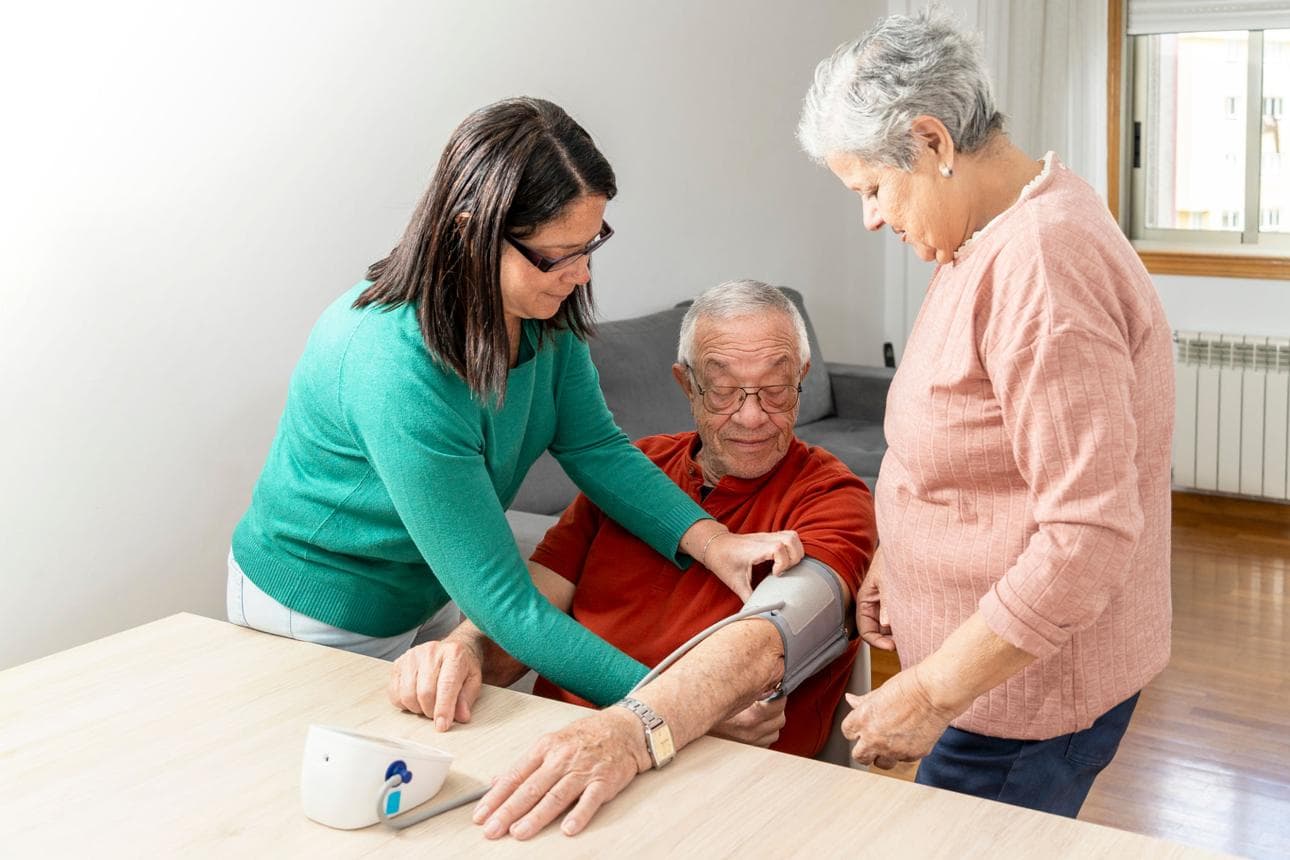
Blood pressure and diabetes medicines need their own record if the clinic asked for readings. Do not change those doses because a home reading looked good for three days.
What not to do with someone else's strip
Do not share medicines between husband and wife, or between parent and adult child. The strip may look right and still be the wrong drug, the wrong strength, or a bad idea with the other tablets already in use.
Do not cut, crush, or open a tablet because it is hard to swallow, unless a pharmacist or doctor has said that exact tablet can be crushed. Some tablets are meant to release slowly. Crushing them changes what the person receives.
Do not stop a medicine because the person feels well, feels sick, or read a frightening line on a packet. Call the prescriber. Feeling sick may be a reason to be seen. The family should leave the plan as written until the prescriber says otherwise.
Storage
Keep the tin where children cannot reach it, including grandchildren who visit and climb. A high shelf in a bedroom is often better than a kitchen cupboard at child height. Keep medicines out of the bathroom steam and out of direct sun on a windowsill. Monsoon damp softens tablets and blurs print.
Leave tablets in their strips until the dose. A mixed cup of loose tablets from several boxes is how the wrong one gets given. If a clinic has set up a labelled box with days on it, use that box only for what the clinic put in it. Do not top it up from an old supply "to save time."
Expired strips should go back to a pharmacy for advice on disposal. Do not flush a pile of tablets because the packet was in the way. Do not keep them for "an emergency" that nobody has defined.
The clinic visit
Take the list and the actual strips, including the ones bought without a prescription. Tell the clinician about dizziness, a fall, a rash, swelling, a very dry mouth, or confusion that started after a new packet. Mention missed doses honestly. A clinician who thinks every dose was taken will misread the blood pressure or the glucose.
Ask, before you leave, which medicine is new, which one stopped, and what the next dose today should be. Write it down while you are still in the room. The ride home is when the names blur.
If a different doctor adds a tablet, show them the full list before you start it. Two prescribers who cannot see each other's paper are a common way an older person ends up with overlapping pain tablets or two drugs doing the same job. The family list is how you close that gap until the clinicians talk.