The cuff comes out after morning tea. Someone sits on the wooden chair, sleeve rolled, while a relative watches the numbers settle and wonders whether this reading is the one that matters.
A single home number is a moment. The clinic is looking for a pattern, taken the same way, written down, and brought to the visit. High blood pressure often causes no feeling at all. The World Health Organization describes it as a serious condition because it raises the risk of heart attack, stroke, and kidney disease. Feeling well on a Tuesday does not tell you the pressure has settled.
How to sit for a reading
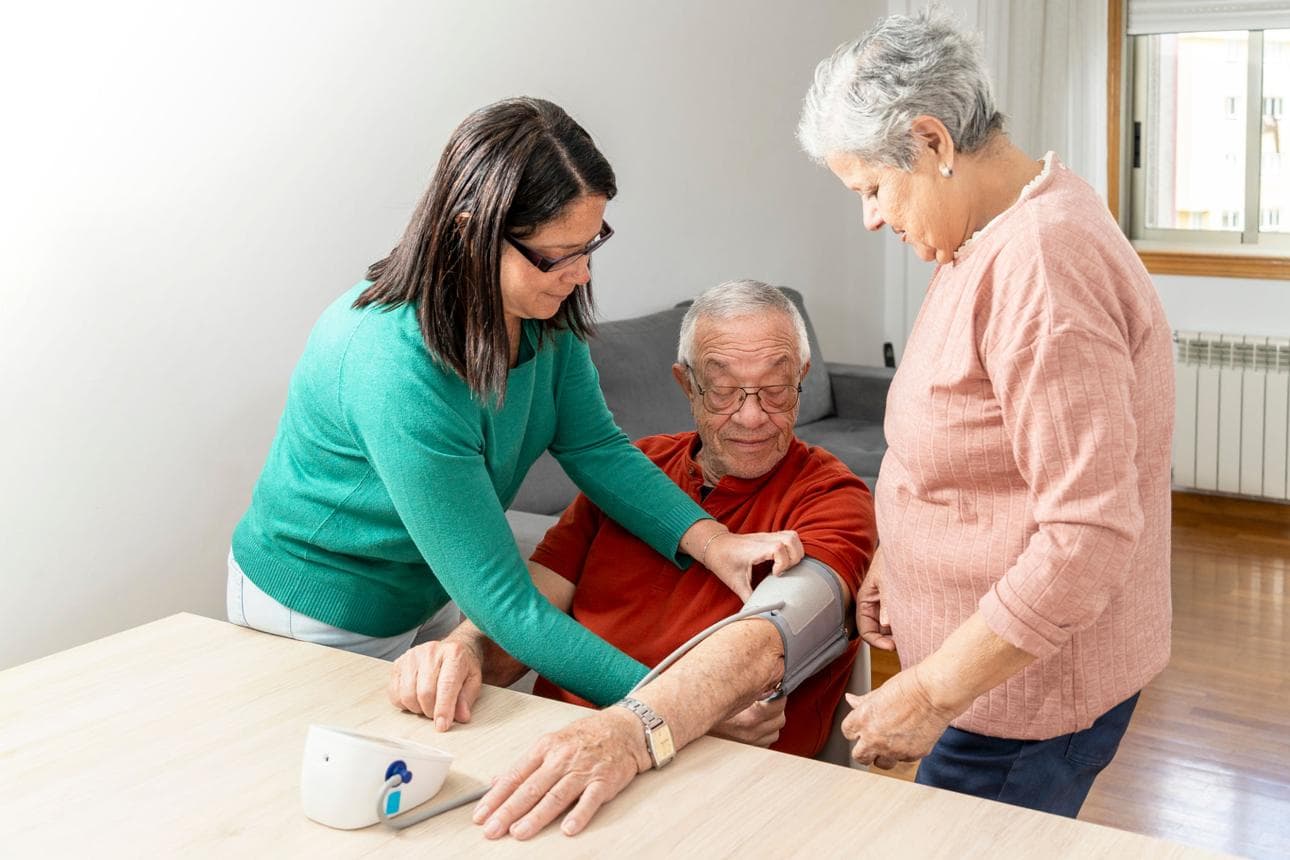
Use a chair with a back, when the house has one. The back should be supported. Both feet flat on the floor. Legs uncrossed. Rest the arm on a table or a firm cushion so the cuff sits at heart level, about the height of the middle of the chest. An arm left hanging, or held up by the person being measured, makes the number harder to trust.
Rest quietly before you start. No talking while the machine runs. Conversation, a television argument, or a child asking a question in the middle of the inflation can push the reading around.
Put the cuff on a bare arm. A sweater, a shawl, or a tight shirt sleeve under the cuff changes the result. Roll the sleeve up properly. If the rolled cloth acts like a tourniquet, take the arm out of the sleeve instead.
The cuff has to be the right size for that arm. A small cuff on a large arm, or a loose cuff that slips, gives a misleading figure. If the person winces every time, or the cuff barely closes, ask a clinic or a pharmacist to look at the fit. Use the same arm the clinic uses, unless they have told you to record both.
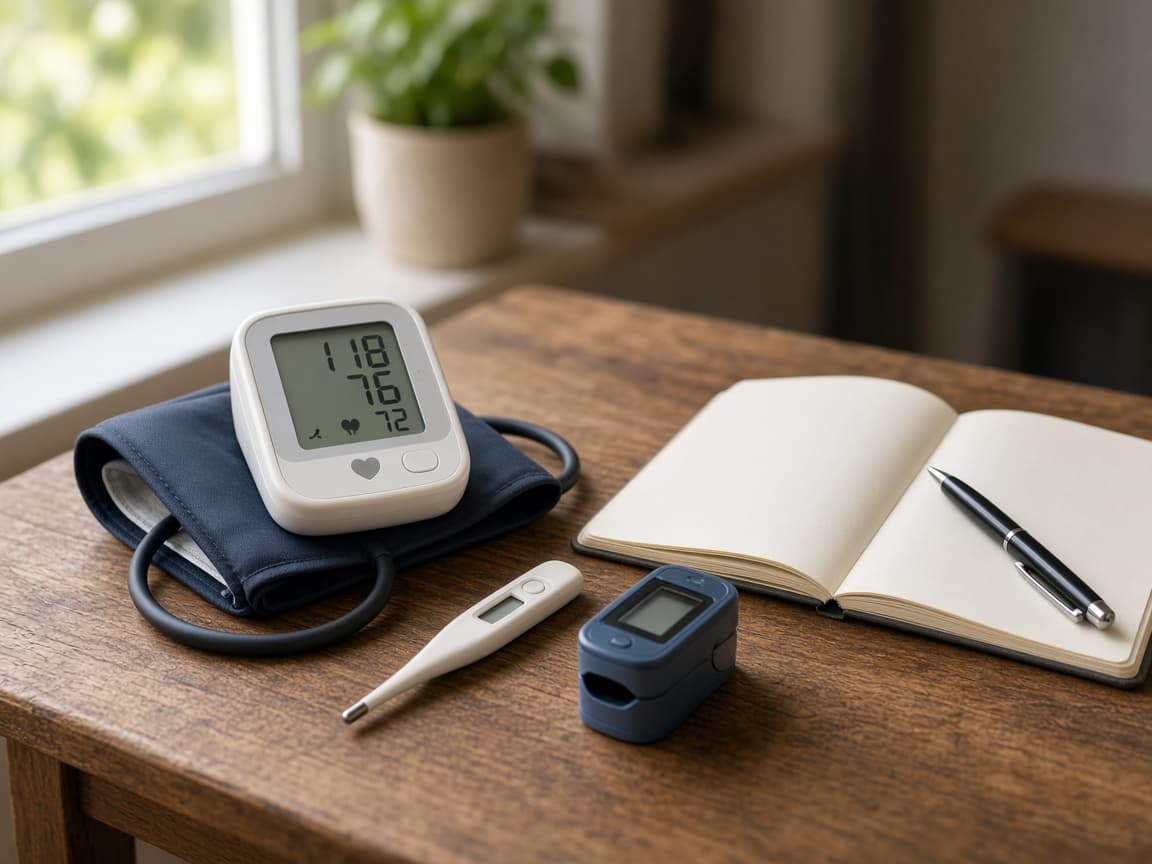
Write the date, the time, and the numbers. If the machine shows two figures, write both. Add a short note if they had just climbed stairs, smoked, had strong tea, or were in pain. If the clinic asked for two readings, take the second after a short pause and keep both. A photo of the screen helps only if someone later copies the date onto it.
What the number can and cannot say
One high reading does not diagnose high blood pressure. One normal reading does not cancel a diagnosis the clinic has already made. Pressure moves through the day. A full bladder, pain, worry, and a rushed measurement all change it.
The clinic sets the range for this person. There is no universal home target to copy from a general page. Age, diabetes, kidney disease, pregnancy, and a recent stroke or heart problem can change what they want to see. At the next visit, ask which readings should be shown at the appointment, and which readings should make you call earlier.
If diabetes is being followed in the same house, the shared routine of meals, medicines, and records is covered in managing blood pressure and diabetes at home.
Do not adjust tablets because a few mornings looked better or worse. Do not skip a dose to "see what happens," and do not add a relative's blood pressure medicine because the name looks similar. If a dose was missed, follow the instruction that came with that medicine or ask the pharmacy. Do not take two doses together unless a clinician has already told you that, for this tablet.
Running out before the next appointment is a reason to call the clinic or the pharmacy, so there is no gap. Bring the actual strips and the notebook. Memory of "it was a bit high" is less useful than the page.
When the person matters more than the screen
Look at the person as well as the display. New chest discomfort, breathlessness, a severe headache, weakness on one side, trouble speaking, or confusion is a reason to get emergency help. Taking three more readings while those symptoms are present wastes time.
Swelling of the feet, a new cough, fainting, or dizziness on standing should be told to the clinic soon, even if you are unsure the cuff is related. So should a home machine that suddenly disagrees with how the person looks. Compare the home monitor with a clinic machine once, so you know whether yours tends to sit higher or lower. Replace batteries before the display fades. Keep the device out of kitchen steam.
Chest pressure and the other signs that should send the household for help are described in heart attack symptoms. Until that help arrives, keep the person sitting or lying as they are comfortable, and stay with them. Leave the medicine box closed unless emergency staff ask what they usually take.