
The knees are stiff after sitting through the morning tea. The fingers take a minute before they can hold the cup properly. In older adults, that pattern is often osteoarthritis, a wearing and remodelling of joints that the World Health Organization describes as a common cause of pain and disability. Other kinds of arthritis exist. A clinician makes that distinction. A family article cannot.
Pain after rest, pain on stairs, and a joint that looks a little enlarged are familiar. Swelling that is new and hot, or a fever with a painful joint, is a different day.
Moving without provoking a sharp flare
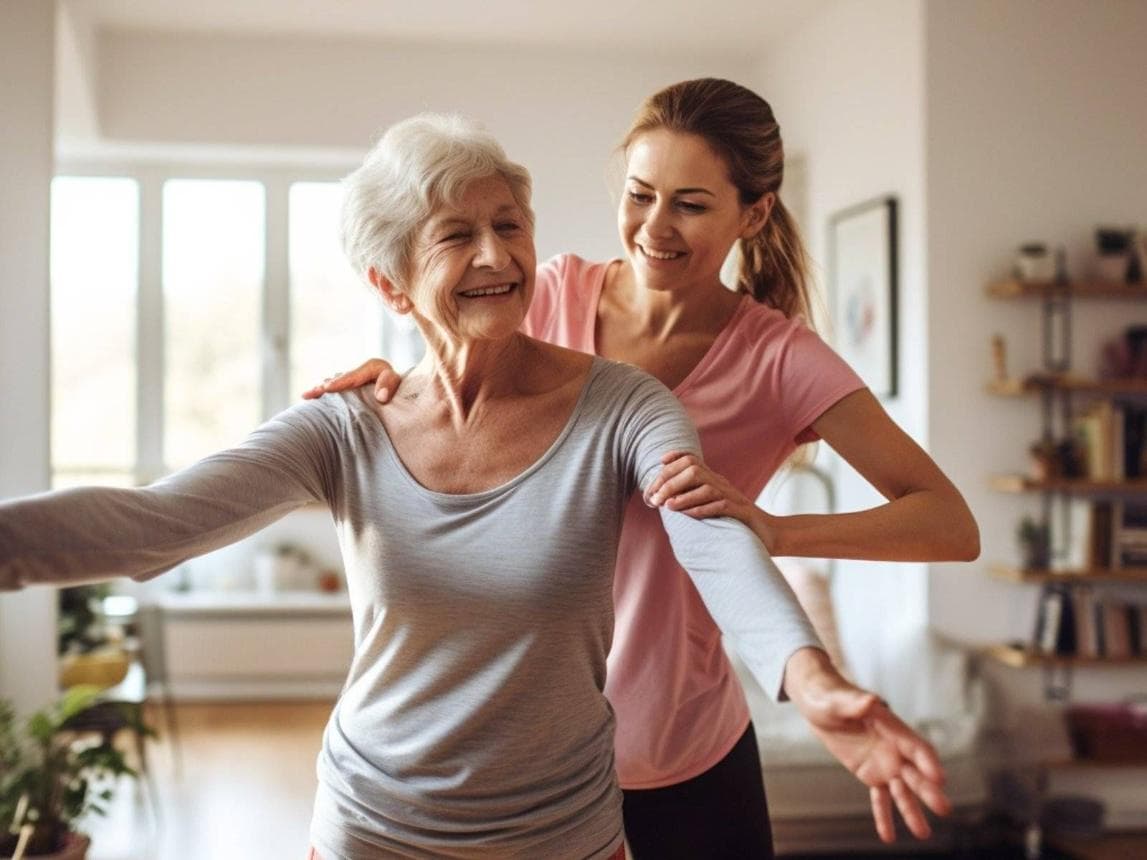
Joints that stay still get stiffer. The aim is to keep moving in ways that do not sharply worsen pain. A walk to the courtyard, standing up from the chair every so often, and the exercises a physiotherapist has already taught are the right scale for many people. The World Health Organization describes rehabilitation as support for people to stay as independent as possible in their own surroundings. That is the spirit of a home routine: repeated, tolerable, and fitted to this person's joints.
Keep the promise modest. Movement can help pain, strength, and the walk to the toilet or the shop, when it is matched to this person. It does not clear osteoarthritis. If a movement causes sharp pain, swelling that grows the same day, or a joint that gives way, stop that movement and ask the clinician or therapist before repeating it.
Simple ideas for strength and balance, with clear reasons to stop, are in basic exercises for elderly mobility. A therapist's plan for the individual is a step beyond a general list. What a home physiotherapy visit can cover is described in physiotherapy at home.
Back pain often sits alongside stiff hips or knees, because the way someone walks has changed. Do not add a heavy twisting exercise from a video because a relative's back improved.
A warm cloth on a stiff knee helps some people start the morning. It eases stiffness for a while. It does not replace movement or prescribed medicine. Do not sleep with a heating pad switched on. Do not put heat on a joint that is newly hot, red, and much more swollen than usual.
Medicines and the things families add
Take arthritis medicines as prescribed. Do not increase a pain tablet because guests are coming and the person wants to stand longer. Do not borrow an anti-inflammatory strip from someone else. Some of those tablets affect the stomach, the kidneys, the heart, and blood pressure. A pharmacist or doctor should know about kidney disease, ulcers, and blood thinners before a new pain tablet is bought.
Creams and gels prescribed for the joint can be used as the label says. Rub them on intact skin. Wash the hands afterwards so the medicine is not rubbed into an eye.
If a clinician has said weight is adding load to the knees or hips, talk about ordinary meals over months. A week of skipping dal in an older person causes weakness and dizziness on the stairs, which is its own injury risk.
A joint that needs same-day care
A joint that becomes hot, red, and much more swollen than its usual ache can be infection or gout, among other causes. Those are clinical decisions. Do not decide it is "just the arthritis" and wait for the next monthly visit. Do not lance, massage hard, or wrap it in herbs that seal the skin.
Fever with a painful joint needs same-day care. So does a joint that cannot take weight when it could yesterday, or skin over the joint that looks shiny and tight. If the person is also breathless, confused, or has a rash that is spreading fast, treat that as emergency care.
Falls change the picture. A hip or wrist that hurts after a fall, especially if the leg looks shortened or the person cannot get up as before, needs urgent assessment for a fracture. Do not walk them "to see if it loosens."
Write down which joints hurt, what they can still do, such as climb to the rooftop or sit on the floor, and which medicines they are actually taking. That description helps the next visit more than a search for a cure.